Table of Contents
Waking up drenched in sweat isn’t just uncomfortable—it’s disruptive to your sleep cycle and overall health. For hot sleepers, the quest for a cool night’s rest often feels like an endless cycle of flipping pillows and kicking off covers. But as we look toward 2026, latex mattresses have emerged as the unsung heroes of temperature regulation, offering a sophisticated solution that goes beyond simple “cooling” marketing claims. Unlike traditional memory foam that traps heat like a thermal blanket, natural latex possesses inherent breathable properties that work with your body’s thermoregulation, not against it.
The landscape of sleep technology is evolving rapidly, and understanding what makes a latex mattress truly effective for hot sleepers requires more than just scanning product descriptions. This comprehensive guide cuts through the noise, giving you the expert insights needed to make an informed decision—whether you’re a dedicated side sleeper who overheats or someone dealing with night sweats from medical conditions. We’ll explore the science behind latex cooling, decode industry certifications, and walk you through every consideration that matters for your specific sleep profile.
Top 10 Latex Mattresses
Detailed Product Reviews
1. Pure Green Organic Latex Mattress - Medium Firmness - Queen
 - Medium Firmness - Queen](https://m.media-amazon.com/images/I/51aHYq4E2gL._SL160_.jpg)
Overview: The Pure Green Organic Latex Mattress delivers a medium-firm sleep surface crafted entirely from certified organic materials. This queen-size mattress features eight inches of GOLS-certified organic latex foam wrapped in a quilted cover of organic cotton and wool, making it an exceptional choice for environmentally conscious consumers seeking a balance between support and pressure relief.
What Makes It Stand Out: This mattress distinguishes itself through its impressive stack of certifications—GOTS, GOLS, and Fair For Life Fair Trade—ensuring every component meets rigorous organic and ethical standards. The Chicago-based manufacturing represents rare domestic production in the mattress industry, while the paper-wrapped compression packaging eliminates plastic waste entirely. The medium firmness profile specifically accommodates side and back sleepers, plus couples with differing preferences.
Value for Money: While priced at a premium compared to conventional mattresses, it competes favorably with other certified organic options that often cost significantly more. The durability of latex foam provides a 15-20 year lifespan, doubling most memory foam alternatives. Without middleman markups from factory-direct sales, you’re investing in pure materials rather than marketing overhead.
Strengths and Weaknesses: Strengths: Complete organic certification chain; zero off-gassing or chemical odors; excellent motion isolation for couples; sustainable paper packaging; made in USA. Weaknesses: No mentioned sleep trial period; may feel too firm for strict side sleepers under 130 pounds; limited plushness compared to pillow-top models; heavier than synthetic alternatives for moving.
Bottom Line: Ideal for eco-conscious buyers prioritizing certified organic materials and domestic manufacturing. The medium firmness suits most sleeping positions, though those wanting a cloud-like feel should consider a softer option. A solid investment in sustainable sleep.
2. Awara Premier Luxury Hybrid King Mattress 12 Inch - Certified Organic Natural Latex - Sustainable New Zealand Wool - Fiberglass-Free - 365-Night Trial

Overview: The Awara Premier Luxury Hybrid King Mattress combines 12 inches of natural materials with premium pocketed coils to deliver a supportive sleep experience. Featuring GOLS and FSC-certified organic latex layered with sustainable New Zealand wool, this mattress targets buyers seeking chemical-free construction without sacrificing the responsive support of traditional innersprings.
What Makes It Stand Out: The industry-leading 365-night trial and lifetime warranty provide unmatched purchase confidence, allowing you to test the mattress through all four seasons. The fiberglass-free design eliminates a common health concern, while the partnership with Trees for the Future plants ten trees per purchase. Eight inches of individually wrapped steel springs create superior breathability and motion isolation compared to all-foam designs.
Value for Money: Though positioned in the luxury tier, the extensive trial period and lifetime warranty add substantial value. Comparable hybrid mattresses from brands like Avocado or Saatva often cost more while offering shorter trials. The robust coil system extends longevity beyond typical foam mattresses, making the higher upfront cost amortize over decades.
Strengths and Weaknesses: Strengths: Full year trial period; lifetime warranty; certified organic and natural materials; excellent edge support from coils; reduced motion transfer; socially responsible tree-planting initiative. Weaknesses: Heavy and difficult to maneuver; may feel too firm for side sleepers; premium price point; wool cover requires specific cleaning considerations.
Bottom Line: Perfect for buyers wanting zero-risk purchasing and the buoyant feel of a latex hybrid. The year-long trial eliminates guesswork, while the eco-conscious construction appeals to values-driven consumers. Worth the investment for king-size luxury.
3. Queen Mattress in a Box 12 Inch, Back Pain Relieving, Latex Hybrid Mattress Queen Size with Pocket Coils, Motion Isolation & Dynamic Pressure Relief & Luxurious Comfort, Medium Firm Responsive Support
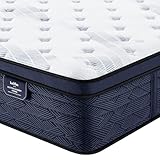
Overview: This 12-inch queen hybrid mattress specifically targets back pain sufferers through a strategic combination of high-elasticity latex, pressure-relieving memory foam, and individually wrapped pocket coils. Designed to cradle body curves while maintaining spinal alignment, it offers zoned support that adapts dynamically to different body regions.
What Makes It Stand Out: The advanced zoned support system features reinforced pocket springs that act like an “invisible arch bridge” for targeted lumbar support—a standout feature for chronic lower back discomfort. Enhanced edge support prevents sagging and maximizes usable surface area, while the open-cell latex structure and coil airflow channels actively dissipate heat for temperature-neutral sleep.
Value for Money: Positioned as a mid-range option, this mattress delivers premium features like zoned coils and latex layering at a fraction of therapeutic-brand prices. While Tempur-Pedic or Purple mattresses with similar support technology can exceed $2,000, this hybrid approach provides comparable pressure relief and durability without the brand tax, making it accessible for budget-conscious pain sufferers.
Strengths and Weaknesses: Strengths: Targeted lumbar support; excellent motion isolation; superior breathability; reinforced edges prevent roll-off; responsive latex prevents quicksand feeling; ideal for multiple sleep positions. Weaknesses: Brand lacks long-term reputation; no mentioned sleep trial or warranty details; medium-firm feel may not suit those wanting plush comfort; initial off-gassing possible.
Bottom Line: An excellent choice for back and side sleepers experiencing discomfort who need targeted support without breaking the bank. The zoned coil system genuinely helps alignment, though the absence of a trial period requires confidence in your firmness preference.
4. Pure Green Organic Latex Mattress - Firm - King
Overview: The firm version of Pure Green’s organic latex line delivers robust support for king-size sleepers needing maximum spinal alignment. Constructed with eight inches of GOLS-certified organic latex and wrapped in organic cotton and wool quilting, this mattress sacrifices plushness for uncompromising support while maintaining the brand’s signature eco-conscious credentials.
What Makes It Stand Out: Like its medium-firm sibling, this mattress boasts an unmatched certification trifecta: GOTS, GOLS, and Fair For Life Fair Trade. The Chicago factory ensures domestic craftsmanship, while paper-based compression packaging reflects genuine environmental commitment. The firm density specifically benefits back and stomach sleepers who require minimal sinkage to maintain proper posture throughout the night.
Value for Money: King-size organic mattresses often command premium prices exceeding $2,500. This model provides authentic latex durability—resisting sagging and impressions for two decades—at a competitive price point. The firm construction extends longevity further, as denser latex maintains its structural integrity longer than softer variants, delivering better cost-per-year value.
Strengths and Weaknesses: Strengths: Exceptional firm support for spinal alignment; complete organic certification; no chemical off-gassing; superior durability; made in USA; eco-friendly packaging. Weaknesses: Too firm for most side sleepers; substantial weight challenges setup; no sleep trial mentioned; higher upfront cost; minimal contouring for pressure points.
Bottom Line: Best suited for back and stomach sleepers over 150 pounds who prioritize firm, organic support over plush comfort. The certifications and durability justify the investment, but side sleepers should steer clear. A king-size commitment to sustainable, no-compromise firmness.
5. Pure Green Natural Latex Mattress Topper - Soft - 2 Inch - Queen Size (GOLS Certified Organic)

Overview: This two-inch soft latex topper offers a simple solution for transforming an overly firm queen mattress into a pressure-relieving sleep surface. Made from GOLS-certified organic latex harvested from rubber trees, it provides instant contouring comfort without the environmental guilt of synthetic memory foam alternatives.
What Makes It Stand Out: The topper’s Fair For Life Fair Trade certification ensures ethical sourcing rarely found in bedding accessories. Unlike petroleum-based toppers, natural latex’s open-cell structure actively dissipates heat, making it ideal for hot sleepers. Its ability to instantly adjust to body curves provides immediate comfort improvement, effectively “rescuing” mattresses that are too hard but otherwise structurally sound.
Value for Money: At a fraction of new mattress costs, this topper extends your existing bed’s lifespan while delivering authentic organic comfort. Comparable organic toppers from brands like Saatva or Avocado cost 30-40% more. For those hesitant about full mattress replacement, this represents a low-risk investment in sleep quality, though it cannot remedy sagging or broken springs beneath.
Strengths and Weaknesses: Strengths: GOLS certified organic; excellent temperature regulation; immediate comfort transformation; no chemical odor; sustainably harvested; extends mattress life. Weaknesses: Two inches may insufficiently cushion very firm mattresses; soft feel unsuitable for those wanting support; premium price for a topper; heavy and unwieldy to position; no attachment straps.
Bottom Line: Perfect for side sleepers or anyone needing to soften a too-firm mattress. The organic certification and cooling properties justify the cost, but manage expectations—it enhances good mattresses, not broken ones. A strategic upgrade for targeted comfort improvement.
6. Novilla Queen Size Mattress, 12 Inch Gel Memory Foam Mattress for Cool Night & Pressure Relief, Medium Plush Feel with Motion Isolating, Bliss

Overview: The Novilla 12-inch Gel Memory Foam Mattress delivers a medium-plush sleeping experience designed for hot sleepers and couples. This queen-sized bed-in-a-box combines four foam layers with cooling technology to create a breathable, pressure-relieving sleep surface that arrives compressed and ready for easy setup.
What Makes It Stand Out: The egg-crate foam layer and gel-infused memory foam work together to increase airflow by 30% compared to standard designs. Its four-layer construction specifically targets pressure points while the motion isolation technology ensures undisturbed sleep when sharing the bed. The CertiPUR-US certification guarantees no harmful off-gassing, while the skin-friendly rayon cover adds a luxurious touch.
Value for Money: Positioned in the mid-range category, this mattress offers premium features typically found in higher-priced competitors. The 12-inch profile provides substantial support and durability, while the cooling technology and motion isolation deliver tangible benefits that justify the investment over budget alternatives lacking these specialized layers.
Strengths and Weaknesses: Strengths include exceptional cooling performance, excellent motion isolation, certified safe materials, and versatile bed frame compatibility. The medium-plush feel suits most sleep positions. Weaknesses include a 72-hour recommended off-gassing period, potential firmness inconsistency in cold temperatures during expansion, and edge support that may soften over time.
Bottom Line: Ideal for hot sleepers and couples seeking pressure relief without overheating, the Novilla mattress represents excellent value. Its cooling technology and motion isolation make it a smart choice for those prioritizing comfort and disturbance-free sleep.
7. Zinus 6 Inch Twin Green Tea Memory Foam Mattress [New Version], Fiberglass Free, Medium Firm Feel, Zoned Pressure Relief, Certified Safe Foams & Fabric, Mattress in A Box

Overview: The Zinus 6-inch Green Tea Memory Foam Mattress offers a medium-firm sleep surface in a compact twin size. This updated version eliminates fiberglass while incorporating natural infusions for freshness, making it an environmentally conscious choice for children, teens, or single sleepers seeking quality on a budget.
What Makes It Stand Out: Patented zoned pressure relief technology targets specific body areas for enhanced comfort. The green tea and charcoal infusions naturally combat odors and moisture without chemicals. Being fiberglass-free addresses major safety concerns found in many budget mattresses, while the new compressed shipping box reduces carbon footprint.
Value for Money: This is a budget champion that doesn’t compromise on safety. The CertiPUR-US and OEKO-TEX certifications rival premium brands, while the 10-year warranty exceeds expectations for this price tier. It’s perfect for guest rooms, kids, or temporary living situations where quality matters but budget is primary.
Strengths and Weaknesses: Strengths include fiberglass-free construction, natural odor control, dual safety certifications, and an impressive warranty. The 250-pound weight capacity suits most individual users. Weaknesses include the 6-inch profile offering limited support for heavier adults, reduced durability compared to thicker mattresses, and minimal edge support. The thinner design may not suit all comfort preferences.
Bottom Line: An exceptional value for budget-conscious buyers prioritizing safety and natural materials. Best suited for lighter individuals, children, or occasional use where the 6-inch profile provides adequate support.
8. COTTON SLEEP 11" 100% GOTS Organic Cotton, Wool & GOLS Latex Mattress | Pocketed Coils | Bed in a Box | Fiberglass & Toxin Free | Made in USA | If It’s Not 100%, It’s a NO | Queen

Overview: The Cotton Sleep 11-inch mattress represents the pinnacle of organic bedding, combining GOTS-certified cotton and wool with GOLS-certified latex and pocketed coils. This queen-sized bed-in-a-box delivers a clean, toxin-free sleep environment manufactured entirely in the USA for discerning eco-conscious consumers.
What Makes It Stand Out: The rigorous GOTS and GOLS certifications ensure every component meets strict organic standards. Unlike foam competitors, the hybrid design with pocketed coils provides superior airflow and responsive support. The “If It’s Not 100%, It’s a NO” philosophy guarantees zero fiberglass, petrochemical foams, or synthetic additives, creating a truly natural sleep surface.
Value for Money: While priced at a premium, this mattress justifies the investment through certified organic materials, domestic manufacturing, and exceptional durability. The multi-layered construction rivals luxury brands costing significantly more, making it a smart long-term investment for those prioritizing material purity over initial cost.
Strengths and Weaknesses: Strengths include complete organic certification, excellent temperature regulation, robust edge support from coils, and toxin-free construction. The responsive latex-coil combination suits most sleep positions. Weaknesses include a higher price point that may deter budget buyers, potential firmness adjustment period for those accustomed to memory foam, and substantial weight due to coil construction.
Bottom Line: For uncompromising buyers seeking verified organic materials and American craftsmanship, this mattress delivers exceptional quality. The investment pays dividends in health benefits and durability.
9. Latex for Less 2-Sided Natural Latex Mattress, King, Medium, Handcrafted in USA, GOTS Certified Organic Cotton, Natural Wool, 9 inches

Overview: The Latex for Less 9-inch mattress revolutionizes versatility with its innovative two-sided design, offering both medium and firm comfort levels in one king-sized bed. Handcrafted in the USA using GOTS-certified organic cotton and natural wool, this mattress caters to couples with differing firmness preferences or individuals whose needs change over time.
What Makes It Stand Out: The flippable design essentially provides two mattresses for the price of one, featuring a medium side and a firm side surrounding an 8-inch natural latex core. This adaptability eliminates the commitment to a single firmness level. The domestic artisan craftsmanship ensures superior quality control while supporting local economies and reducing environmental impact through shorter shipping distances.
Value for Money: Though premium-priced, the dual-firmness feature doubles the functional value. The 8-inch solid latex core provides exceptional durability, often lasting 15+ years. For couples debating between medium and firm, this eliminates compromise or return hassles, making it economically smart despite the higher upfront cost.
Strengths and Weaknesses: Strengths include unmatched versatility, certified organic materials, excellent motion isolation, and natural temperature regulation. The handcrafted quality ensures consistent construction. Weaknesses include significant weight that makes flipping challenging, a price point exceeding single-firmness competitors, and potential firmness being too extreme for those preferring plush comfort.
Bottom Line: Perfect for undecided buyers or couples with different preferences. The dual-firmness design offers long-term flexibility that justifies the premium investment.
10. 100% Natural Latex Mattress, 1/2/3/4inch Latex Foam Bed Pad 7 Zone Green Natural Organic Latex Mattress Topper Back & Joint Support No Deformation,King,76"×80"×4"

Overview: This 4-inch king-sized latex topper transforms existing mattresses rather than replacing them. Crafted from 100% natural latex with a precision 7-zone design, it adds pressure relief and cooling performance to any bed surface, offering an eco-friendly upgrade path for those satisfied with their current mattress support.
What Makes It Stand Out: The specialized 7-zone construction targets different body areas with varying firmness levels for optimal spinal alignment. The honeycomb pore structure creates superior ventilation compared to memory foam toppers. Available in multiple thicknesses (1-4 inches), it provides customizable comfort enhancement without the waste of discarding a functional mattress.
Value for Money: This topper delivers latex benefits at a fraction of full mattress cost. For mattresses that are too firm or sleeping hot, it’s a cost-effective alternative to replacement. The 4-inch version offers substantial transformation, while thinner options provide subtle improvements, making it accessible across budgets.
Strengths and Weaknesses: Strengths include pure natural latex construction, excellent pressure point relief, outstanding cooling properties, and motion isolation. The 7-zone design provides targeted support unmatched by uniform toppers. Weaknesses include requiring a supportive base mattress, potential latex smell initially, and the 4-inch version’s price approaching budget mattress territory. Thinner options may not provide sufficient transformation.
Bottom Line: Ideal for extending mattress life or adjusting firmness. Choose the 4-inch for maximum impact or thinner versions for subtle improvements. A sustainable, cost-effective upgrade.
Why Latex Mattresses Are a Game-Changer for Hot Sleepers
The fundamental advantage of latex lies in its cellular structure. Natural latex foam features an open-cell design with microscopic air channels that allow continuous airflow throughout the mattress core. This isn’t a surface-level cooling treatment that wears off after months of use—it’s a permanent structural benefit that actively works every night. Unlike gel-infused foams that temporarily absorb heat before becoming saturated, latex maintains consistent breathability by promoting convective heat transfer away from your body.
Hot sleepers in 2026 are increasingly discovering that temperature regulation isn’t just about feeling cool when you fall asleep; it’s about maintaining thermal neutrality throughout the entire sleep cycle. Latex excels here because it responds instantly to pressure changes while maintaining its ventilated structure. When you shift positions, fresh air circulates through the areas you’ve just left, preventing the heat buildup that plagues denser foam materials. This dynamic cooling performance makes latex particularly valuable for combination sleepers who move frequently during the night.
Understanding Latex Types: Dunlop vs. Talalay
Not all latex is created equal, and the manufacturing process significantly impacts cooling performance. The two primary production methods—Dunlop and Talalay—create distinctly different sleeping experiences that hot sleepers need to understand before investing.
The Dunlop Process: Density and Durability
Dunlop latex undergoes a simpler, more energy-efficient manufacturing process where liquid latex is poured into molds, vulcanized, and washed. The result is a denser, heavier foam with a slightly firmer feel on the bottom side due to natural sedimentation during processing. For hot sleepers, Dunlop’s higher density translates to exceptional durability but slightly less airflow compared to its counterpart. However, this density also means it provides robust support without collapsing, which prevents the “sinking” feeling that restricts air circulation around your body. In 2026’s market, Dunlop cores are often used as supportive base layers where their stability and breathability create an excellent foundation for cooler sleep.
The Talalay Process: Airy Comfort and Consistency
Talalay latex involves a more complex process where the mold is only partially filled, then vacuum-sealed to expand the latex before being flash-frozen and vulcanized. This creates a more consistent, lighter, and airier foam with uniform cell structure throughout. For hot sleepers, Talalay offers superior immediate breathability and a more buoyant feel that minimizes body contact surface area. The 2026 generation of Talalay latex has seen improvements in processing techniques that enhance its natural cooling properties while maintaining the plush comfort that pressure-point sufferers crave. Many premium designs now feature Talalay comfort layers over Dunlop support cores for optimal temperature control.
Mattress Construction: All-Latex vs. Hybrid Designs
The architecture of your mattress dramatically influences its cooling capabilities. Understanding the structural differences helps hot sleepers prioritize features that align with their specific overheating patterns.
All-Latex Mattresses: Pure Performance
An all-latex mattress uses latex foam for every layer, from the comfort top to the support core. This construction maximizes the material’s natural breathability, creating uninterrupted airflow from surface to base. For hot sleepers who generate significant body heat, all-latex designs eliminate the heat-trapping transition zones that can occur when different materials interface. The uniformity also means consistent temperature regulation across the entire sleep surface—no hot spots where foam types change. In 2026, we’re seeing more zoned all-latex designs that vary firmness through density changes rather than material switches, maintaining cooling efficiency while providing targeted support.
Hybrid Latex Mattresses: The Best of Both Worlds
Hybrid designs combine latex comfort layers with coil support systems, typically pocketed springs. The coil layer introduces a massive air chamber beneath the latex, creating enhanced ventilation through the mattress’s entire height. For extremely hot sleepers or those in warm climates, this additional airflow corridor can make a noticeable difference. The space between coils acts as a heat sink, drawing warm air down and away from the sleep surface. Modern hybrids in 2026 feature micro-coil layers and strategic perforations in the latex that align with coil gaps, creating a chimney effect that accelerates heat dissipation. However, the trade-off includes slightly reduced motion isolation and the potential for coil-related noise over time.
Key Cooling Features to Look for in 2026
The latex mattress market continues innovating, and several emerging technologies specifically address thermal regulation. Knowing what features genuinely work versus marketing fluff is crucial for making a smart investment.
Breathable Cover Materials
The fabric encasing your mattress acts as the first line of defense against heat buildup. In 2026, look for covers made from natural fibers like organic cotton, bamboo-derived rayon, or Tencel lyocell. These materials wick moisture and allow air permeability far superior to polyester blends. Some advanced covers incorporate phase-change materials (PCMs) microencapsulated into the yarn, which actively absorb and release heat to maintain a stable microclimate. Avoid covers with thick quilting or wool padding directly beneath the surface unless the wool is specifically integrated as a thin, breathable layer for moisture management.
Ventilation and Airflow Design
Beyond the latex itself, manufacturers are now engineering specific ventilation patterns. Precision-drilled holes through the latex layers create vertical air channels that connect the cover to the mattress core. The diameter, spacing, and pattern of these perforations significantly impact performance—larger holes increase airflow but can affect support consistency. The 2026 standard includes zone-specific ventilation, with larger perforations in heat-prone areas like the torso and smaller ones where support is critical, such as the lumbar region. Some designs feature convoluted or egg-crate textured latex that increases surface area for heat exchange while reducing material contact with your body.
Phase-Change Materials and Advanced Cooling Technologies
While latex is naturally cool, some manufacturers enhance it with PCMs that change from solid to liquid at specific temperatures, absorbing excess heat until the temperature drops. The latest 2026 implementations integrate these materials into the latex itself rather than just the cover, creating a more stable cooling effect that lasts through the night. Graphene-infused latex is another emerging technology, leveraging graphene’s exceptional thermal conductivity to create heat pathways that distribute temperature evenly across the mattress. Be cautious of “cooling gels” that are simply cosmetic additives—the effective technologies are those permanently integrated into the material structure.
Firmness Levels and Sleep Positions for Hot Sleepers
Your preferred sleep position determines how much surface area contacts the mattress, directly affecting heat buildup. The right firmness level optimizes both support and airflow for your specific needs.
Side Sleepers: Pressure Relief Without Heat
Side sleepers need softer surfaces that cushion shoulders and hips, but excessive sinking traps heat by increasing body contact. Medium-soft to medium latex (around 4-5 on the firmness scale) provides the sweet spot—enough give for pressure relief while maintaining enough resilience to keep you “on top” of the mattress rather than “in” it. This buoyancy creates micro-air pockets between your body and the foam, allowing continuous ventilation. For 2026 models, look for zone-specific support with softer latex under shoulders and firmer latex under the waist to minimize sinkage while protecting pressure points.
Back Sleepers: Spinal Alignment and Temperature Control
Back sleepers distribute weight more evenly, making medium-firm to firm latex (6-7 on the scale) ideal for keeping the spine neutral while preventing heat concentration. The key is finding a mattress that supports the lumbar without creating pressure points that force you to shift frequently. A firmer latex surface ensures minimal sinkage, which means less foam enveloping your body and superior air circulation. In 2026, many back-sleeper-specific designs feature a thin, plush Talalay top layer for initial comfort over a firm Dunlop core, combining cooling performance with proper alignment.
Stomach Sleepers: Support and Airflow
Stomach sleepers face the biggest overheating challenge because their entire front surface contacts the mattress. Firm latex (7-8 on the scale) is non-negotiable to prevent pelvic sinkage that strains the spine. The firmness also ensures you’re sleeping on the mattress surface, maximizing airflow around your torso. For hot-sleeping stomach sleepers, all-latex designs often outperform hybrids because coils can create pressure points on the ribcage and hips. Look for 2026 models with reinforced lumbar zones and perforated comfort layers that vent heat from your core efficiently.
Certifications That Matter for Health and Quality
When investing in a latex mattress, certifications verify that you’re getting genuine natural latex without harmful additives—and they often correlate with better breathability and performance.
GOLS and GOTS: The Gold Standards
The Global Organic Latex Standard (GOLS) ensures your latex contains at least 95% certified organic raw material and meets strict environmental and social criteria throughout production. GOLS-certified latex undergoes minimal processing, preserving its natural open-cell structure. Similarly, the Global Organic Textile Standard (GOTS) certifies that cover materials like cotton and wool are genuinely organic and free from chemical finishes that could impede breathability. For hot sleepers, these certifications matter because synthetic additives and chemical flame retardants can reduce airflow and off-gas compounds that affect respiratory comfort during sleep.
eco-INSTITUT and OEKO-TEX: Additional Peace of Mind
eco-INSTITUT certification from Germany tests for VOC emissions, formaldehyde, and other pollutants that compromise indoor air quality—critical for hot sleepers who breathe more heavily during warm nights. OEKO-TEX Standard 100 ensures every component, from threads to zippers, is free from harmful substances. In 2026, look for these certifications specifically on the latex foam itself, not just the cover. Some manufacturers achieve certifications on the final assembled product, which provides more comprehensive protection than component-level certification alone.
Durability and Longevity: A Long-Term Investment
A quality latex mattress represents a significant financial commitment, but its exceptional lifespan makes it cost-effective over time. Natural latex resists sagging and body impressions far better than synthetic foams, maintaining its supportive structure and cooling properties for 15-20 years with proper care. This durability directly impacts temperature regulation—as foams break down and compress, they lose their ventilation channels and trap more heat. The 2026 market includes enhanced warranties specifically covering indentation depth and loss of support, which are your best indicators of long-term cooling performance. When evaluating options, prioritize manufacturers offering at least 10-year warranties with specific language about maintaining original firmness and height.
Price Considerations and Value in 2026
Latex mattress pricing varies dramatically based on construction, certifications, and origin. In 2026, expect to invest between $1,500 and $3,500 for a queen-size all-latex or hybrid model that genuinely serves hot sleepers. Budget options under $1,000 often use synthetic latex blends or thin latex layers over cheap foam bases that compromise breathability. Conversely, premium models above $3,500 may include luxury features with diminishing returns for cooling performance alone. The sweet spot for hot sleepers typically falls in the $2,000-$2,800 range, where you get certified natural latex, advanced ventilation designs, and quality covers without paying for unnecessary luxury additions. Consider the cost-per-year over the mattress’s lifespan rather than the upfront price—a $2,500 mattress lasting 15 years costs $167 annually, far less than replacing a $800 foam mattress every 4-5 years.
Sleep Trials, Warranties, and Return Policies
Even with perfect research, you can’t truly assess a mattress’s cooling performance until you’ve slept on it through various room temperatures and seasons. The industry standard for sleep trials has extended to 100-120 nights in 2026, with some companies offering full-year trials specifically for temperature-sensitive customers. When evaluating trials, confirm there’s no mandatory break-in period that prevents returns during hot summer months. Warranty terms should explicitly cover sagging beyond 1 inch, as even slight depressions compromise airflow. Pay special attention to return policies—some manufacturers require you to donate the mattress locally, which can be challenging logistically, while others offer white-glove pickup services that simplify the process if the cooling performance doesn’t meet expectations.
Maintenance and Care for Optimal Cooling Performance
Proper maintenance preserves the ventilation properties that keep latex mattresses cool. Rotate your mattress 180 degrees every 3-6 months to ensure even wear and prevent compression of airflow channels in high-pressure zones. Use a breathable foundation—slatted bases with gaps no wider than 3 inches allow air circulation underneath, while solid platforms can trap heat beneath the mattress. Avoid waterproof mattress protectors unless they’re specifically designed for breathability; many block airflow and counteract latex’s natural cooling. In 2026, we’re seeing more latex-compatible protectors made from phase-change material fabrics that maintain waterproofing without sacrificing ventilation. Spot clean spills promptly with mild soap and water, as moisture can temporarily block air channels and promote mold growth if left untreated.
Who Should (and Shouldn’t) Choose a Latex Mattress?
While latex excels for many hot sleepers, it’s not universally ideal. Understanding the fit for your specific situation prevents costly mistakes.
Ideal Candidates for Latex Mattresses
You’re an excellent candidate if you: sleep hot but need pressure relief, have allergies to dust mites or mold (natural latex is inherently resistant), prioritize eco-friendly materials, want a responsive surface that doesn’t restrict movement, or share a bed with a partner who has different temperature preferences. Latex’s ability to feel cool to one person while not feeling cold to another makes it uniquely suited for couples with mismatched thermoregulation needs. Additionally, if you’re a heavier individual (over 230 pounds), latex’s durability and support prevent the excessive sinkage that amplifies heat retention.
Potential Drawbacks to Consider
Latex may not suit you if: you’re on a strict budget under $1,000, prefer the deep contouring “hug” of memory foam, have a latex allergy (though most allergies are to the proteins in liquid latex, which are removed during processing), or desire zero motion transfer (latex has some bounce). The material’s natural resilience can also feel too firm for sleepers under 130 pounds who don’t exert enough pressure to activate the comfort layers. Finally, if you need a mattress primarily for a guest room used infrequently, latex’s premium price may not justify its benefits over a simpler cooling solution.
Your Complete Buying Checklist for 2026
Before finalizing your purchase, run through this comprehensive checklist:
- Latex Type: Confirm whether it’s natural, organic (GOLS-certified), blended, or synthetic
- Construction: Decide between all-latex or hybrid based on your heat severity
- Firmness: Match to your sleep position and body weight
- Ventilation: Verify perforation patterns and hole diameters in product specs
- Cover Material: Ensure it’s natural fiber with moisture-wicking properties
- Certifications: Look for GOLS, GOTS, eco-INSTITUT, and OEKO-TEX
- Trial Period: Minimum 100 nights with no mandatory break-in during summer
- Warranty: At least 10 years covering sagging beyond 1 inch
- Foundation Compatibility: Confirm your base allows adequate airflow
- Return Process: Understand who handles pickup and any associated costs
- Manufacturing Origin: Latex from Sri Lanka or Southeast Asia often indicates higher quality rubber trees
- Layer Configuration: Check if softer layers are on top for comfort with firmer support below
- Edge Support: Reinforced edges prevent sagging that compromises perimeter cooling
- Coil Count (for hybrids): Minimum 800 pocketed coils in queen for proper ventilation
- Chemical Additives: Verify no chemical flame retardants—wool barriers are preferable
Frequently Asked Questions
1. Will a latex mattress actually keep me cool if I suffer from severe night sweats?
Natural latex’s open-cell structure provides superior breathability compared to most foam alternatives, but severe night sweats require a multi-pronged approach. Pair your latex mattress with moisture-wicking bedding, a breathable foundation, and bedroom temperature control between 65-68°F. The latex will prevent heat buildup, but managing ambient conditions and humidity remains crucial for extreme cases.
2. How does latex compare to gel memory foam for cooling?
Gel memory foam absorbs heat temporarily but eventually saturates and retains warmth throughout the night. Latex actively promotes continuous airflow, making it more effective for sustained temperature regulation. While gel foam feels cool initially, latex maintains consistent thermal neutrality without the “recharging” period that gel requires.
3. Can I use an electric blanket or heated mattress pad with a latex mattress?
Yes, but with caution. Use low settings and avoid prolonged high heat, which can accelerate latex oxidation over many years. Modern latex mattresses handle occasional gentle warming fine, but consistent high temperatures may slightly reduce the material’s lifespan. For cold winters, consider warming the bed before sleep, then turning it off once you’re comfortable.
4. Do I need a box spring with a latex mattress?
No, and traditional box springs can actually hinder cooling. Opt for platform beds with slats spaced 2-3 inches apart, adjustable bases, or specially designed latex-compatible foundations. These allow air circulation underneath, which is essential for the mattress to breathe and regulate temperature effectively.
5. How long does it take for a latex mattress to “break in” for optimal cooling?
Latex reaches about 90% of its final feel within the first week, but full break-in occurs over 30-60 days as the cell structure fully adapts to your body patterns. Cooling performance is immediate, though—you won’t need to wait for ventilation benefits. The break-in period primarily affects firmness and contouring, not breathability.
6. Will a latex mattress feel too firm and create pressure points?
This depends on the latex type and firmness level you choose. Talalay latex offers a softer, more pressure-relieving surface, while Dunlop provides firmer support. Medium to medium-soft options (4-5 firmness) deliver excellent pressure relief for most sleepers. The material’s natural responsiveness prevents the “stuck” feeling while cushioning joints effectively.
7. Are latex mattresses heavier than other types, and does this affect setup?
Yes, latex mattresses are significantly heavier—often 2-3 times the weight of memory foam equivalents. A queen all-latex model can weigh 150-180 pounds. This density reflects quality but means you’ll likely need two people for setup. Consider white-glove delivery services that include installation, especially for larger sizes.
8. How do I clean a latex mattress if I spill something on it?
Immediately blot (don’t rub) spills with a clean, dry cloth. For stains, use a mild solution of water and gentle soap, apply sparingly with a cloth, then blot dry with towels. Allow to air dry completely before remaking the bed. Never saturate the latex or use harsh chemicals, which can damage the cell structure and compromise cooling performance.
9. Will my latex mattress develop body impressions over time that affect cooling?
High-quality latex resists impressions far better than memory foam. Most warranties cover sagging beyond 1 inch, but quality latex often performs well beyond that threshold. Even after years of use, it maintains its resilience and ventilation channels. Rotating the mattress regularly virtually eliminates permanent impressions and ensures consistent cooling across the surface.
10. Is there a difference in cooling performance between organic and non-organic latex?
Organically certified latex (GOLS) typically undergoes less chemical processing, which can preserve more of the natural open-cell structure. However, the difference in cooling performance is minimal compared to the quality of the manufacturing process itself. Both can be excellent for hot sleepers if they’re natural latex with proper ventilation design. Prioritize overall construction quality and ventilation features over organic certification alone if cooling is your primary concern.
See Also
- The 10 Ultimate Latex Mattresses for Hot Sleepers in 2026
- The 10 Best Latex Mattresses for Hot Sleepers in 2026
- The 10 Ultimate Best Gel Memory Foam Mattresses for Hot Sleepers in 2026
- 10 Top-Rated Innerspring Mattresses for Stomach Sleepers in 2026
- The 10 Most Revolutionary Hybrid Mattresses for Hot Sleepers in 2026