Table of Contents
The dining room has long been the heart of the home—a place where families gather, friends celebrate, and memories are made. But as our living spaces evolve and our lifestyles become more dynamic, the traditional static dining table is undergoing a radical transformation. Enter 2026, a year that’s redefining what it means to dine, work, and entertain at home. The extendable dining table, once a simple mechanical afterthought, has emerged as a centerpiece of smart design, sustainable innovation, and technological integration.
Today’s revolutionary extendable dining tables aren’t just about adding a few extra seats for holiday dinners. They’re sophisticated, multi-functional pieces that adapt to your life in real-time—expanding at the touch of a button, transforming surfaces to suit different activities, and even integrating with your smart home ecosystem. Whether you’re furnishing a compact urban apartment or a spacious family home, understanding these innovations will help you invest in a piece that grows with you, not against you.
Top 10 Extendable Dining Tables
Detailed Product Reviews
1. VASAGLE MAEZO Collection - Extendable Dining Table for 4/6/8, Kitchen Table with Tapered Legs, Curved Transitions, for Dining Room, Kitchen, Home Office, Honey Brown UKDT090K01V1
 Table for 4/6/8, Kitchen Table with Tapered Legs, Curved Transitions, for Dining Room, Kitchen, Home Office, Honey Brown UKDT090K01V1](https://m.media-amazon.com/images/I/51fBDh4EmhL._SL160_.jpg)
Overview: The VASAGLE MAEZO dining table delivers mid-century modern aesthetics with practical flexibility. Extending from 55.1 to 70.8 inches, it accommodates 4-8 people seamlessly. The honey-brown veneered surface resists heat up to 140°C, while solid wood legs support 265 pounds. Its tapered legs and curved transitions create a refined silhouette suitable for dining rooms, kitchens, or home offices.
What Makes It Stand Out: The 0.04-inch gap safety feature prevents pinched fingers during extension—a thoughtful detail competitors often overlook. The dual-stage extension system (55.1" to 63" to 70.8") offers more granular size options than typical tables. Bottom latches secure the leaf firmly, eliminating wobble. The mid-century design language remains consistent whether compact or fully extended, making it a style-forward choice for modern homes.
Value for Money: Priced in the mid-range for extendable tables, it balances quality materials and safety engineering. Comparable solid wood tables often cost 20-30% more without heat resistance or finger-safety features. The three-size versatility effectively replaces multiple tables, offering strong ROI for growing families or those who frequently entertain. The durable veneer prevents costly refinishing.
Strengths and Weaknesses: Strengths:
- Superior safety gap design prevents finger injuries
- Three length options provide exceptional flexibility
- Heat-resistant surface handles hot dishes without damage
- Mid-century aesthetic remains cohesive at any size Weaknesses:
- 265 lb capacity lags behind some competitors
- Veneer may chip with heavy use
- Extension leaves require separate storage
Bottom Line: An excellent choice for style-conscious buyers prioritizing safety and versatility. Ideal for apartments and homes needing flexible seating without sacrificing design integrity.
2. 43.3in-59in Extendable Round Dining Table for 4-8,Modern Kitchen Oval Dining Table with Removable Leaves Space Saving,Wood Base with Storage Shelf for Kitchen Living Room (Walnut)
,Wood Base with Storage Shelf for Kitchen Living Room (Walnut)](https://m.media-amazon.com/images/I/51vF2mzV7BL._SL160_.jpg)
Overview: This round-to-oval transforming table maximizes space efficiency in compact homes. Starting at 43.3 inches, it expands to 59 inches long, seating 4-8 people. The cross-shaped base includes a 20.55-inch storage shelf for tableware, while the MDF construction features scratch and water resistance. The modern farmhouse aesthetic integrates easily into various decors.
What Makes It Stand Out: The integrated leaf storage beneath the tabletop solves the common problem of misplacing extension panels. The cross-base shelf provides functional storage without compromising legroom—uncommon in pedestal designs. Its circular footprint maximizes seating density, allowing closer proximity for conversations. The silent rail system ensures smooth, one-person operation without disturbing household members.
Value for Money: This table punches above its weight class with built-in storage and leaf organization typically found in premium models costing twice as much. The MDF construction keeps costs down while delivering adequate durability for moderate use. For apartment dwellers, it eliminates the need for separate storage furniture, effectively saving both space and money.
Strengths and Weaknesses: Strengths:
- Built-in leaf storage prevents clutter
- Cross-base shelf adds functional storage
- Round design maximizes intimate seating
- Smooth, quiet extension mechanism Weaknesses:
- MDF construction less durable than solid wood
- 59-inch maximum length limits large gatherings
- Walnut finish may vary from photos
Bottom Line: Perfect for small spaces and budget-conscious buyers who need smart storage solutions. Best for apartments and casual dining rather than heavy daily use.
3. Muwuele Solid Wood Extendable Dining Table for 4-8 People with Seamless Extension from 47.2 to 63 Inches, Easy Assembly, Expandable Tables for Small Spaces, Dining Room, Kitchen, Living Room, Walnut

Overview: Crafted from 100% FAS-grade rubberwood, this Muwuele table offers premium solid wood construction at an accessible price point. It extends from 47.2 to 63 inches, seating 4-8 people comfortably. The hidden lift system enables smooth, silent expansion, while thicker angled legs support 300 pounds. The seamless design features tightly fitted panels and rounded corners for safety and easy cleaning.
What Makes It Stand Out: The genuine solid rubberwood construction distinguishes it from MDF-heavy competitors, providing superior durability and a more substantial feel. The hidden lift expansion mechanism operates faster and more elegantly than traditional leaf systems, requiring minimal effort. FAS-grade wood represents the highest quality lumber grade, ensuring fewer knots and consistent grain patterns throughout.
Value for Money: Solid wood tables typically command premium pricing, but this model delivers FAS-grade construction comparable to tables costing $800-1200. The 300-pound capacity and durable finish reduce long-term maintenance costs. For buyers seeking authentic wood furniture without the luxury markup, this represents exceptional value that appreciates with age rather than deteriorating.
Strengths and Weaknesses: Strengths:
- 100% solid FAS-grade rubberwood construction
- Superior 300-pound weight capacity
- Faster, smoother hidden lift mechanism
- Seamless tabletop with safety-rounded corners Weaknesses:
- Table only—chairs not included
- Limited to two size options
- Rubberwood is softer than oak or maple
Bottom Line: A top-tier choice for solid wood purists seeking durability and timeless appeal. Excellent investment for families wanting authentic furniture that lasts decades.
4. HOMBIX Extendable Dining Table, Transformer Folding Console Table for 10-12 People, Space Saving Dining Room Table for Apartments & Homes, Walnut

Overview: The HOMBIX Transformer redefines space-saving versatility, collapsing to a 20.1-inch console and expanding to an impressive 118.5-inch banquet table. Five removable leaves enable incremental sizing for 2-14 people. The aluminum telescopic mechanism with central iron leg support handles 660 pounds. The 0.8-inch high-gloss MDF surface resists moisture, heat, and wear, making it ideal for multifunctional spaces.
What Makes It Stand Out: No other table in this category offers such extreme size range—from slim console to 10-foot banquet table. The aluminum telescopic mechanism provides commercial-grade stability unmatched by wood-framed extenders. Pre-assembled top reduces setup to 15 minutes. The ability to function as a daily console table for entryways makes it uniquely suited to ultra-small apartments where permanent dining tables aren’t feasible.
Value for Money: While priced higher than basic extendable tables, it effectively replaces three pieces of furniture: console, regular dining table, and banquet table. The 660-pound capacity and durable finish ensure longevity that justifies the investment. For studio apartments or homes without dedicated dining rooms, the space savings alone provide substantial value.
Strengths and Weaknesses: Strengths:
- Extreme size versatility (20.1" to 118.5")
- Massive 660-pound weight capacity
- Console mode for ultra-compact storage
- 15-minute assembly with pre-assembled top Weaknesses:
- High-gloss finish shows fingerprints
- MDF construction despite premium price
- Requires storage space for five leaves
- Console mode too narrow for practical daily dining
Bottom Line: Revolutionary for micro-apartments and frequent entertainers. Best for those needing extreme flexibility rather than daily large-table use. Premium pricing justified by unmatched versatility.
5. Jocoevol 47″–63″ Extendable Round Dining Table for 4–8 with Dust-Proof 2-Tier Storage Shelf Space Saving Expandable Wood Oval Circle Dinner Furniture with Pedestal Base (Black)

Overview: This Jocoevol round table combines intimate dining with clever storage solutions. Expanding from 47 to 63 inches, it seats 4-8 people comfortably. The pedestal base features a unique dust-proof 2-tier storage shelf for tableware and essentials. The 36mm-thick MDF tabletop resists heat, scratches, and water, while the black finish suits modern and classic interiors. The stable pedestal design maximizes legroom and allows chair tucking.
What Makes It Stand Out: The dust-proof 2-tier storage system is a rarity, keeping stored items clean in a typically hard-to-maintain area. The 47-inch starting diameter offers more daily-use surface area than typical 42-inch models, making it more practical for families of 4-6. The pedestal base’s open design facilitates complete chair storage underneath, saving more space than leg-supported tables when not in use.
Value for Money: Mid-range pricing includes premium features like double-tier storage and superior thickness (36mm) typically found in higher-end tables. The dust-proofing adds practical value by reducing cleaning time. For families needing both storage and flexible seating, it eliminates the cost of separate storage units while delivering solid performance.
Strengths and Weaknesses: Strengths:
- Dust-proof 2-tier storage shelf
- Generous 47-inch starting diameter
- Pedestal base allows full chair tucking
- 36mm thick tabletop for durability Weaknesses:
- Black finish shows dust prominently
- MDF construction limits long-term durability
- Pedestal can restrict some seating positions
- Extension mechanism less refined than premium brands
Bottom Line: Excellent for families prioritizing storage and space efficiency. The dust-proof shelving and generous proportions make it a practical centerpiece for busy households. Best suited for moderate daily use.
6. PatioPerk 54.3-84.5 Extendable Dining Room Table for 4–10, Space-Saving Family Dining Table with Slide-Out Extension Leaves, Modern Dining Table for Apartment Small Space (Black)

Overview: The PatioPerk table addresses a common small-space dilemma: needing flexibility without sacrificing style. This rectangular table compresses to 54.3 inches for daily use by four, then extends to 84.5 inches to accommodate up to ten guests. The integrated slide-out leaf system eliminates the hassle of storing separate components, making it ideal for apartment dwellers and busy families who value convenience. Its sleek black finish and clean lines suit modern interiors, while the heat- and scratch-resistant surface promises durability.
What Makes It Stand Out: The self-contained extension mechanism is the star feature—no heavy lifting or hunting for stored leaves. This design alone sets it apart from traditional extendable tables. The 300-pound weight capacity and reinforced support structure ensure stability whether you’re serving dinner, helping with homework, or using it as a temporary workspace. Its ability to transition seamlessly from dining table to activity center adds remarkable versatility for growing families.
Value for Money: Priced in the mid-range for extendable tables, it delivers excellent value by replacing the need for multiple furniture pieces. Comparable tables with similar extension capabilities often cost 20-30% more, especially those with integrated leaf systems. The durable, low-maintenance surface reduces long-term replacement costs, making it a smart investment for renters and homeowners alike.
Strengths and Weaknesses: Pros: Effortless slide-out extension; no separate leaf storage; sturdy 300-lb construction; versatile for dining and work; scratch-resistant surface. Cons: Black finish shows dust and fingerprints; extension range is moderate compared to some competitors; limited style options. The rectangular shape may not suit all room layouts.
Bottom Line: This table is an excellent choice for small-space living where convenience trumps all. The innovative slide-out system and solid construction make it perfect for families who frequently host but lack storage. While the color options are limited, its functionality and durability justify the investment for apartment and condo residents.
7. 43-95 Inch Long Round Extendable Dining Table for 4-10, Space Saving Oval Large Dinner Kitchen Table with 3 Leaf, 2 Storage, Fluted Mid Century Modern Dining Room Table for Living Room, Wood, Oak
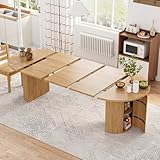
Overview: This oval extendable table delivers maximum flexibility with a dramatic size range from 43 to 95 inches, seating four to ten people comfortably. Its mid-century modern aesthetic features fluted details and warm walnut tones, making it a stylish centerpiece for dining rooms or open living areas. The built-in storage cabinets within the legs solve a critical small-space problem, eliminating the need for separate buffets or sideboards while keeping dining essentials close at hand.
What Makes It Stand Out: The integrated leg storage is a game-changer—most extendable tables force you to find separate leaf storage. The three-leaf system allows for more granular size adjustments than single-leaf designs. Its oval shape softens room aesthetics while maximizing seating capacity, and the premium MDF construction with heavy-duty hardware ensures smooth operation even after repeated use.
Value for Money: This sits at the higher end of the mid-range market, but the built-in storage justifies the premium. Purchasing a separate table and storage unit would easily cost $200-400 more. The durable MDF tabletop, while not solid wood, offers excellent scratch resistance and easy cleaning, providing long-term value for families who use their dining table daily.
Strengths and Weaknesses: Pros: Massive 95-inch maximum length; built-in storage eliminates clutter; mid-century style; oval shape seats many comfortably; thickened base prevents wobbling. Cons: Complex assembly with two separate packages; MDF construction may disappoint solid wood purists; extension leaves require manual insertion; larger footprint when fully compressed than some competitors.
Bottom Line: Ideal for design-conscious buyers needing maximum extension and integrated storage. This table excels in open-plan homes where it can serve as both dining surface and storage solution. Be prepared for assembly challenges, but the functionality and style make it worth the effort for serious entertainers.
8. Jocoevol 47″–63″ Extendable Round Dining Table for 4–8 with Dust-Proof 2-Tier Storage Shelf Space-Saving Expandable Dining Room Table Wood Oval Circle Dining Table with Pedestal Base (Natural)

Overview: The Jocoevol table targets the sweet spot for small to medium households, expanding from 47 to 63 inches to seat four to eight people. Its round pedestal base design maximizes legroom and allows chairs to tuck completely underneath, making it perfect for compact apartments and kitchens. The natural wood finish and 36mm-thick MDF top provide a substantial look, while the hidden two-tier dust-proof storage shelf keeps dining essentials organized without cluttering the surface.
What Makes It Stand Out: The dust-proof storage enclosure is a thoughtful touch rarely seen in this price range, protecting stored items from spills and debris. The pedestal base offers superior stability compared to four-legged designs while creating a more open feel in tight spaces. The 36mm tabletop thickness exceeds most competitors, providing a premium feel and enhanced durability against heat and scratches.
Value for Money: Positioned as a mid-range option, it punches above its weight with features typically found in pricier models. The combination of pedestal stability, dust-proof storage, and thick tabletop construction offers strong value. While it doesn’t extend as far as some competitors, its quality materials and smart design make it a worthwhile investment for households of six to eight.
Strengths and Weaknesses: Pros: Stable pedestal base; dust-proof storage; thick 36mm tabletop; excellent legroom; chairs tuck away neatly; heat- and scratch-resistant. Cons: Limited extension (63" max) seats only eight; smaller compressed size may feel cramped for four; natural finish may not suit all decors; assembly can be tricky solo.
Bottom Line: This is the perfect choice for apartments and small dining areas prioritizing everyday comfort over maximum capacity. The pedestal design and dust-proof storage solve real small-space problems. If you rarely host more than eight, this table’s quality construction and thoughtful features make it a superior option to cheaper alternatives.
9. Fingertip WD 59"-86" Extendable Dining Table for 6-10 Person, Wooden Dining Room Table, Modern Extendable Table for Gatherings, Meeting for Small Kitchens, Dining Office Areas(Natural)

Overview: The Fingertip WD table offers straightforward functionality for those needing flexible seating from six to ten people. Extending from 59 to 86 inches, it skips complex features in favor of a clean, modern design that works in dining rooms, kitchens, or even conference rooms. Constructed from engineered wood with a natural finish, it aims to balance affordability with versatility, targeting budget-conscious buyers who still want expandability without frills.
What Makes It Stand Out: Its claim to versatility across multiple room types—dining, office, meeting spaces—is notable, as most tables target only residential use. The three-size extension system provides options for 6, 8, or 10 people, offering more flexibility than single-leaf designs. The emphasis on easy installation with included tools and clear instructions addresses a major pain point for many furniture buyers.
Value for Money: This represents the budget-friendly end of extendable tables, making it accessible for first-time homeowners or renters. While engineered wood won’t match MDF or solid wood durability, the price point allows buyers to get multi-person seating capacity without breaking the bank. Comparable budget tables often lack the smooth extension mechanism this promises.
Strengths and Weaknesses: Pros: Affordable price point; seats up to ten; multi-room versatility; easy assembly; modern minimalist design. Cons: “Engineered wood” construction raises durability concerns; generic aesthetic lacks character; no built-in storage; limited color options; may wobble under heavy use according to some user patterns.
Bottom Line: A solid entry-level option for occasional hosts who prioritize price over premium features. It delivers core functionality—expandable seating for ten—without unnecessary frills. While not heirloom quality, it’s practical for apartments, small offices, or as a starter piece. Consider your long-term durability needs before purchasing.
10. Einhomn Modern Extendable Dining Table for 4-6, 63" Farmhouse Kitchen Table, Rectangular Dining Room Tables for Dining, Kitchen, Office, Living Room, Wooden Tables, Space Saving (Espresso)

Overview: The Einhomn table brings farmhouse charm to the extendable market, targeting smaller households that need flexibility for four to six people. It expands from 47.3 to 63 inches using smooth sliding tracks, with a reinforced metal frame supporting up to 330 pounds. The espresso finish and clean lines suit rustic and modern farmhouse decors, while the right-angled edges allow flush placement against walls—perfect for narrow dining nooks or multi-use spaces.
What Makes It Stand Out: The metal frame construction with triangular reinforcement distinguishes it from all-wood competitors, promising superior stability and longevity. The farmhouse aesthetic is rare in extendable tables, which tend toward modern or traditional styles. Its ability to tuck chairs completely underneath maximizes floor space when not in use, a crucial feature for compact apartments and kitchens.
Value for Money: Mid-range pricing with premium structural support makes this a strong value proposition. Metal-framed tables typically cost 25% more, yet this includes a scratch-resistant MDF laminate top that maintains the farmhouse look. For buyers wanting rustic style without sacrificing modern functionality, it offers better value than buying a non-extendable farmhouse table.
Strengths and Weaknesses: Pros: Sturdy metal frame; farmhouse aesthetic; chairs tuck completely away; right-angled edges fit walls perfectly; 330-lb capacity; quick 40-minute assembly. Cons: Limited to six people maximum; smaller extension range; espresso finish may clash with lighter decors; MDF top despite metal frame; no storage features.
Bottom Line: Best suited for style-conscious buyers with modest space and seating needs. The farmhouse design and robust metal frame make it ideal for small homes wanting character plus functionality. While it won’t host large dinner parties, its space-saving design and sturdy construction excel in apartments and open-plan kitchens where four to six is the norm.
The Evolution of Extendable Dining Tables in 2026
From Clunky to Cutting-Edge: A Design Revolution
Remember the extendable tables of yesterday? Those wobbly, leaf-laden monstrosities that required Herculean strength and a degree in engineering to operate? The landscape has shifted dramatically. Modern extension mechanisms have moved from manual labor to sophisticated automation, with precision-engineered systems that glide silently into place. The focus has shifted from mere functionality to seamless integration—where the extension leaves are hidden so perfectly that you’d never know they exist until you need them.
Smart Materials Redefining Durability
The materials revolution is perhaps the most significant shift we’re seeing. Self-healing polymers, nano-engineered wood composites, and memory metals are no longer science fiction. These smart materials respond to stress, temperature changes, and daily wear in ways that traditional hardwood simply cannot. A surface that automatically repairs minor scratches? That’s the new baseline expectation for premium extendable tables in 2026.
Key Revolutionary Features to Look For
Automated Extension Mechanisms
Gone are the days of wrestling with heavy wooden leaves under your table. The latest automated systems use whisper-quiet linear actuators and magnetic alignment technology. With a simple voice command or smartphone tap, your table can extend from an intimate four-seater to a banquet-ready twelve-top in under 30 seconds. Look for models with battery backup systems—these ensure your table functions even during power outages, a crucial feature that separates thoughtful design from gimmicky tech.
Integrated Smart Technology
The smartest tables of 2026 don’t just extend—they anticipate. Built-in sensors detect when you’re setting the table for a large group and can suggest optimal configurations. Some models integrate with your calendar, automatically extending when they detect a dinner party scheduled. The most advanced versions even sync with your smart lighting and climate control, creating an ambient dining experience that adjusts as your guest list grows.
Space-Saving Innovations
For urban dwellers, revolutionary doesn’t mean bigger—it means smarter. The newest designs incorporate vertical extension mechanisms that rise from a compact console to a full-height dining surface. Others feature rotating cores that unfold like a blossom, maximizing surface area while minimizing footprint. These solutions are particularly valuable in studio apartments where every square foot counts.
Multi-Functional Surface Technologies
Why settle for just a dining surface when your table can do more? Electrochromic surfaces allow you to switch from a warm wood grain finish for dining to a sleek white workspace with a double-tap. Some tables feature embedded projectors that transform the surface into an interactive workspace or entertainment hub. The most practical innovation? Integrated heating and cooling zones that keep dishes at optimal temperature during extended meals.
Material Innovations Transforming the Market
Self-Healing Finishes
The frustration of finding a scratch on your investment piece is becoming obsolete. Self-healing finishes use microcapsules filled with resin that rupture when damaged, automatically filling scratches and restoring the surface. For families with children or frequent entertainers, this technology alone can justify a premium price point. The healing process typically completes within 24-48 hours at room temperature, though some advanced formulations work in as little as 6 hours with gentle heat application.
Sustainable Composite Materials
Environmental consciousness drives material innovation in 2026. Bio-composites made from agricultural waste, mycelium-based substrates, and recycled ocean plastics are creating surfaces that rival traditional hardwood in beauty and exceed it in durability. These materials often feature carbon-negative production processes and are fully recyclable at end-of-life—a critical consideration for environmentally responsible consumers.
Temperature-Responsive Surfaces
Imagine a table that subtly warms when you place your hands on it, or cools automatically when you set down a hot dish. Phase-change materials (PCMs) integrated into tabletops absorb and release thermal energy, maintaining a comfortable surface temperature regardless of conditions. This isn’t just about comfort—it’s about protecting the table from thermal shock and extending its lifespan significantly.
Size and Space Optimization Strategies
Micro-Apartment Solutions
Revolutionary design for small spaces means thinking in three dimensions. Look for tables that mount to walls and fold flat when not in use, or models that transform from coffee table height to dining height with integrated lift mechanisms. The most innovative designs incorporate storage within the base for extension leaves, linens, and even diningware, eliminating the need for separate storage furniture.
Scaling for Entertaining
The best extendable tables offer modular scalability, not just one or two predetermined sizes. Systems with multiple leaf options—some as narrow as 12 inches—allow you to add seating capacity incrementally. This granular control means you’re never stuck with a table that’s awkwardly too large or frustratingly too small. Pay attention to weight distribution engineering; a well-designed table should feel as stable at 96 inches as it does at 60 inches.
Visual Space Expansion Techniques
Clever design tricks can make your dining area feel larger regardless of table size. Mirrored extension mechanisms that reflect light, transparent acrylic leaves that maintain sightlines, and monochromatic color schemes that create visual continuity all contribute to a more spacious feeling. Some 2026 models even incorporate subtle LED edging that casts light onto the floor, creating the illusion of floating and expanding the perceived space.
Style Meets Function: Design Aesthetics
Minimalist Transformers
The minimalist trend has evolved beyond simple lines and neutral colors. Today’s minimalist extendable tables hide their complexity beneath surfaces so clean they appear sculpted from a single material. The magic lies in invisible seams and micro-thin gaps—engineered to be imperceptible to the eye but functional for expansion. These pieces prove that simplicity and sophistication can coexist with mechanical complexity.
Statement Piece Extensions
For those who view their dining table as art, 2026 offers dramatic transformations that become conversation starters. Tables that unfold like origami, surfaces that ripple open in concentric circles, or designs where the entire base reconfigures during extension. These statement pieces prioritize wow-factor while maintaining functionality, perfect for design-conscious consumers who refuse to compromise on either form or function.
Seamless Integration with Modern Decor
The most successful extendable tables of 2026 don’t scream “transformer furniture.” They blend so seamlessly with your decor that guests are genuinely surprised when you expand them. Look for consistent material flows from static to extended portions, hidden hardware that matches your finish exactly, and design languages that complement contemporary, transitional, and even traditional interiors.
The Technology Integration Revolution
Built-In Wireless Charging
Strategic placement of wireless charging coils throughout the tabletop means no more hunting for outlets during dinner parties. The latest implementations use magnetic resonance technology that works through surfaces up to 50mm thick, allowing for complete concealment. Smart power management prevents overheating and optimizes charging speed based on device type—essential features that separate premium implementations from basic add-ons.
IoT Connectivity and App Control
Your table can now be part of your connected home ecosystem. IoT-enabled models connect to platforms like Matter and HomeKit, allowing for automation routines. Imagine your table extending automatically when you start cooking a large meal, or contracting when you activate “movie night” mode. The best apps don’t just control extension—they provide maintenance reminders, usage analytics, and even suggest optimal cleaning schedules based on your household’s patterns.
LED Integration and Ambiance Control
Integrated LED systems have moved beyond simple under-table lighting. Programmable strips embedded within the table’s structure can highlight place settings, provide task lighting for food preparation, or create ambient effects that sync with music. Color temperature control—from warm 2700K for intimate dinners to crisp 5000K for workspace mode—adds another layer of functionality. Look for diffused implementations that prevent harsh glare and create a premium feel.
Durability and Maintenance Considerations
Weather-Resistant Indoor Tables
The line between indoor and outdoor furniture is blurring. Advanced nano-coatings make wood and composite surfaces impervious to moisture, UV damage, and temperature fluctuations without altering their appearance. This means your extendable dining table can handle spilled wine, steamy dishes, and even the occasional potted herb centerpiece without showing wear. The technology has become so effective that manufacturers now offer extended warranties against water rings and heat marks—a previously unheard-of promise.
Stain-Repellent Nanocoatings
Spill a glass of red wine? Watch it bead up and roll off without leaving a trace. The latest hydrophobic and oleophobic coatings create a protective barrier at the molecular level, repelling liquids and oils while remaining completely invisible to the touch. Unlike traditional sealants, these don’t require reapplication and won’t yellow over time. For families, this technology transforms the dining experience from stressful to stress-free.
Modular Component Replacement
Revolutionary design means thinking long-term. The best extendable tables feature modular components—extension leaves, mechanism parts, even surface panels—that can be replaced individually if damaged. This approach extends the furniture’s lifespan dramatically and reduces waste. Some manufacturers offer subscription services for component updates, allowing you to refresh your table’s style or technology without replacing the entire piece.
Budget Considerations and Value
Entry-Level Innovations
Revolutionary features aren’t limited to luxury price points. In 2026, mass-market brands have democratized many innovations, offering manual tables with advanced materials and clever engineering at accessible prices. These models might lack the IoT integration and full automation of premium options, but they deliver on the core promise of seamless extension and durable construction. The key is identifying which features you’ll actually use versus those that sound impressive but add unnecessary cost.
Premium Features Worth the Investment
When does it make sense to splurge? Automated mechanisms typically justify their cost if you extend your table more than twice weekly. Self-healing finishes offer the best ROI for households with children or pets. IoT integration becomes valuable when it’s part of a broader smart home ecosystem—otherwise, it’s often just another app you’ll forget to use. Prioritize features that solve real problems in your specific lifestyle.
Long-Term Cost of Ownership
The sticker price tells only part of the story. Consider warranty length (premium tables now offer 10-25 year coverage), energy consumption for automated models (most use less than $5/year in electricity), and potential repair costs. Tables with modular designs and readily available parts cost significantly less to maintain over their lifetime. Factor in resale value too—well-maintained revolutionary tables from reputable manufacturers retain 60-70% of their value after five years, far outpacing traditional furniture.
Environmental Impact and Sustainability
Carbon-Neutral Manufacturing
Leading manufacturers in 2026 have achieved carbon-neutral production through renewable energy, optimized logistics, and carbon offset programs. Some go further with carbon-negative processes that sequester more CO2 than they emit. Look for third-party certifications like Climate Neutral Certified or B Corp status—these verify claims and ensure transparency throughout the supply chain.
Recyclable Extension Components
The circular economy has reached furniture design. Revolutionary tables now feature components made from mono-materials that can be fully recycled without disassembly. Extension leaves crafted from single-polymer composites, metal mechanisms designed for infinite recyclability, and finishes that separate cleanly during processing. This design philosophy ensures your table won’t end up in a landfill at end-of-life.
Forest Stewardship and Material Sourcing
For wood tables, certification matters more than ever. FSC certification is now the baseline; look for additional credentials like PEFC or SFI for North American woods. Some manufacturers provide blockchain-tracked sourcing, allowing you to trace your table’s wood back to the specific forest stand. This transparency drives responsible forestry and ensures you’re not contributing to deforestation.
Installation and Setup Essentials
Professional vs. DIY Assembly
Automated extendable tables with integrated technology often require professional installation to maintain warranties. The complexity of aligning precision mechanisms and connecting smart features means a single misstep can compromise functionality. However, many manual high-end tables are designed for tool-free assembly using cam-lock systems that ensure perfect alignment. Always check the manufacturer’s requirements—some will void warranties if their certified technicians don’t perform the initial setup.
Space Preparation Requirements
Before your table arrives, prepare your space meticulously. Automated tables require proximity to power outlets (typically within 6 feet) and sufficient clearance for extension—both in length and width. Account for chair movement; you’ll need 36-42 inches of clearance on all sides when fully extended. For IoT-enabled models, verify your Wi-Fi signal strength at the installation location—weak signals cause frustrating connectivity issues.
Electrical and Connectivity Needs
Most automated tables operate on standard 120V outlets, but some premium models offer battery-powered operation for true placement flexibility. For smart features, ensure your home network supports the required protocols (Wi-Fi 6E is becoming standard for IoT furniture). Consider installing a dedicated smart home hub nearby to ensure reliable communication and reduce latency for time-sensitive operations like extension.
Troubleshooting Common Issues
Mechanism Maintenance
Even the most advanced mechanisms require periodic care. Listen for changes in motor sound—unusual noises often indicate needed lubrication or alignment issues. Most manufacturers recommend annual professional servicing for automated systems, which typically costs $150-300. For manual tables, quarterly cleaning of tracks and application of dry lubricant prevents the sticking and misalignment that plague neglected mechanisms.
Surface Care Protocols
Self-healing finishes don’t mean zero maintenance. Avoid abrasive cleaners that can damage the nano-coatings; mild soap and water remain the gold standard. For temperature-responsive surfaces, never place items hotter than 200°F directly on the table—while the PCMs provide protection, extreme heat can overwhelm the system. Wipe spills promptly even on hydrophobic surfaces; prolonged exposure can eventually compromise the coating.
Technology Integration Problems
Connectivity issues are the most common complaint with smart tables. If your table won’t respond to app commands, first check for firmware updates—manufacturers regularly release patches that improve stability. For persistent problems, resetting the table’s network settings and reconnecting to your smart home hub often resolves conflicts. Keep the manufacturer’s technical support contact handy; many offer dedicated furniture tech support lines separate from general customer service.
Frequently Asked Questions
How much should I expect to pay for a truly revolutionary extendable dining table in 2026?
Entry-level models with basic automation and smart materials start around $2,500, while mid-range options with full IoT integration and premium finishes typically run $5,000-$8,000. True statement pieces with cutting-edge technology and bespoke materials can exceed $15,000. The sweet spot for most households is $4,000-$6,000, where you’ll find durable construction, reliable automation, and practical smart features without unnecessary frills.
Are automated extendable dining tables safe for homes with young children?
Modern automated tables include multiple safety features like obstacle detection sensors that stop extension if a hand or object is in the path, and child-lock modes that require PIN codes or app authentication to operate. The mechanisms are fully enclosed with no pinch points. However, supervision is still recommended during operation, and most manufacturers suggest disabling voice control to prevent accidental activation by children.
How long do the batteries last in battery-powered extendable tables?
Premium models with lithium-iron-phosphate batteries typically provide 200-300 extension cycles per charge, translating to 6-12 months of normal use. Batteries are designed for 10+ year lifespans and can be replaced by technicians for $200-400. Most tables seamlessly switch to AC power when the battery runs low, ensuring you’re never stuck with a table that won’t extend.
Can I retrofit my existing traditional extendable table with smart features?
While some aftermarket kits exist for adding wireless charging pads and basic LED lighting, full automation and IoT integration require precision-engineered mechanisms that can’t be retrofitted safely. The structural modifications needed would compromise the table’s integrity and void any warranties. It’s more cost-effective to invest in a new table designed with these features from the ground up.
What happens if the extension mechanism fails after the warranty expires?
Reputable manufacturers keep replacement parts available for 15-20 years. A failed actuator typically costs $300-600 to replace, while more complex mechanism issues might run $800-1,200. Tables with modular designs allow for component-level repairs rather than full mechanism replacement. Many owners find that professional servicing every 2-3 years prevents most major failures entirely.
Do self-healing finishes really work on deep scratches?
Self-healing technology effectively repairs micro-scratches and shallow scuffs up to 0.3mm deep. Deeper gouges that penetrate the finish layer won’t fully heal but will become less noticeable as the resin fills the void. For deeper damage, manufacturers offer spot-repair kits that activate the healing agents more aggressively. The technology works best on matte and satin finishes; high-gloss surfaces show repairs more visibly.
How do I clean and maintain hydrophobic nanocoatings?
Avoid harsh chemicals, abrasive pads, and steam cleaners, which can degrade the nano-coating over time. Use pH-neutral cleaners and soft microfiber cloths. The coating is permanent and doesn’t require reapplication, but its performance can diminish after 5-7 years of heavy use. Professional refresh treatments costing $200-300 can restore full hydrophobic properties if you notice liquids beginning to absorb rather than bead.
Are there extendable dining tables suitable for outdoor use?
Yes, 2026’s material advances have created true indoor-outdoor extendable tables. Look for IP65-rated mechanisms, UV-stable smart materials, and weather-resistant electronics. These tables function perfectly indoors but can withstand direct sun, rain, and temperature extremes. They typically cost 30-40% more than indoor-only models but eliminate the need for separate outdoor dining furniture.
How much weight can extended tables support compared to their compact size?
Well-engineered tables maintain consistent weight distribution regardless of extension state, supporting 75-100 lbs per seat (300-400 lbs for a four-top, 900-1,200 lbs for a twelve-top). The key is the leg positioning and internal support structure. Premium models feature dynamic load balancing that adjusts support points as the table extends, preventing sagging even at maximum length.
Will my extendable dining table become obsolete as technology advances?
Leading manufacturers design with future-proofing in mind. IoT-enabled tables receive firmware updates that add features and improve compatibility. Modular construction allows you to upgrade components like wireless charging modules or LED systems without replacing the entire table. Some brands offer technology upgrade programs, letting you swap outdated smart features for current versions at a fraction of the original cost. The core furniture piece should remain relevant for decades, with technology components upgradable every 5-7 years.
See Also
- The 10 Most Revolutionary Farmhouse Dining Tables of 2026
- The 10 Most Revolutionary Wood Dining Tables of 2026
- 10 Most Revolutionary Extendable Dining Tables with Silent Glide Rails in 2026
- 10 Most Durable Extendable Dining Tables Based on Real Family Reviews in 2026
- 10 Most Durable Wood Dining Tables After 8 Months of Daily Use in 2026