Table of Contents
If you’ve ever settled into an office chair only to hear an ominous creak or felt the seat sink uncomfortably beneath you, you already understand the frustration of standard seating not built for your frame. For heavy users and those with taller-than-average builds, finding an office chair isn’t just about comfort—it’s about safety, productivity, and protecting your long-term health. The market has evolved dramatically, and 2026 brings with it a new generation of big and tall office chairs engineered with advanced materials, smarter ergonomics, and a deeper understanding of diverse body types.
But here’s the challenge: not all “heavy-duty” labels carry equal weight, and flashy marketing often obscures critical specifications that make or break your investment. This comprehensive guide cuts through the noise, equipping you with the expert knowledge to identify genuine quality, understand the engineering principles that matter, and make an informed decision that supports you through years of productive work. Whether you’re shopping for your home office or outfitting an entire corporate space, these insights will transform you from a hopeful buyer into a confident expert.
Top 10 Big Tall Office Chairs
Detailed Product Reviews
1. Big and Tall Office Chair 700lbs with Ergonomic W Wide Thick Seat Cushion, Oversized Mesh Desk Chair with Adjustable Lumbar Support, Computer Chair with Upgraded 4D Armrests
, Computer Chair with Upgraded 4D Armrests](https://m.media-amazon.com/images/I/41KswGOjUPL._SL160_.jpg)
Overview: This heavy-duty office chair accommodates users up to 700 pounds with its oversized W-shaped seat cushion measuring 5.1 inches thick. The ergonomic design features high-density foam reinforced with 28 built-in spring pockets, delivering mattress-like comfort while distributing weight evenly. A breathable mesh backrest and comprehensive adjustability make it suitable for extended work sessions without compromising support.
What Makes It Stand Out: The W-shaped cushion with integrated springs is genuinely innovative, providing sofa-like comfort rarely found in office seating. The 4D armrests adjust in every direction, while the lumbar support moves up, down, forward, and backward for precise positioning. The S-shaped backrest rocks up to 135°, and every component—from the silver-plated base to the SGS-certified 4-stage gas cylinder—speaks to heavy-duty engineering built for serious durability.
Value for Money: For users requiring 700-pound capacity, this chair offers exceptional value, typically priced well below commercial-grade alternatives that often cost twice as much. You’re getting premium features like 4D armrests and spring-enhanced cushioning at a mid-range price point, making it a smart investment for long-term reliability and comfort that won’t strain your budget.
Strengths and Weaknesses: Pros include outstanding weight capacity, superior cushioning technology, extensive adjustability, and breathable mesh backing. Cons are its substantial footprint that may overwhelm smaller offices, and the utilitarian aesthetic lacks the executive presence some professionals prefer. Assembly requires two people due to the chair’s considerable weight.
Bottom Line: An outstanding choice for big and tall users who prioritize function over form. The innovative spring cushion system and robust construction deliver genuine comfort and reliability that justifies every dollar spent.
2. GTRACING Big and Tall Gaming Chair 400lbs Heavy Duty Office Chair with Foot Rest & Ergonomic Pocket Spring Lumbar Support, High Back 3D Saddle Shaped Cushion for Back Pain Relief, Matte-Black
, High Back 3D Saddle Shaped Cushion for Back Pain Relief, Matte-Black](https://m.media-amazon.com/images/I/41uOFQeAhUL._SL160_.jpg)
Overview: The GTRACING Big and Tall Gaming Chair supports up to 400 pounds with a design that bridges gaming aesthetics and office functionality. It features a 3D saddle-shaped cushion, built-in spring lumbar support, and reclines from 90° to 150° with an included footrest. The high-back design wraps around the user for immersive support during long sessions, whether working or gaming.
What Makes It Stand Out: The integrated footrest and spring-based lumbar support system set this apart from typical office chairs. The dual-layer high-density sponge with built-in springs provides segmented body support that adapts to your curves. The deluxe embossed PU leather offers durability while maintaining a premium look that’s pet-friendly and easy to clean, blending style with practicality.
Value for Money: Positioned competitively for the gaming chair market, it offers features like footrests and spring cushioning typically found in more expensive models. The 400-pound capacity and robust metal frame provide durability that cheaper gaming chairs lack, making it a solid mid-range investment that delivers premium comfort without the premium price tag.
Strengths and Weaknesses: Strengths include the versatile recline with footrest, spring lumbar support, wide saddle cushion, and durable construction. Weaknesses involve the gaming aesthetic that may not suit traditional offices, PU leather that can be less breathable than mesh, and the footrest mechanism adding complexity. The 400-pound capacity is lower than some dedicated big-and-tall office chairs.
Bottom Line: Ideal for gamers or home office users wanting gaming chair features with genuine heavy-duty support. The footrest and spring cushioning provide excellent comfort, though the styling limits its professional environment appeal.
3. Serta Fairbanks Big & Tall Executive Office Chair, Ergonomic Comfy High-Back ComputerChairs with Lumbar Support, Semi-Plush Seat Cushion, Padded Armrests, Nylon Swivel Base, Bonded Leather, Black

Overview: The Serta Fairbanks Executive Chair brings the mattress brand’s comfort expertise to office seating with a 350-pound capacity. This high-back chair features a 22.5-inch wide seat with layered body pillows and semi-plush cushioning. The ergonomic design includes subtle spinal contouring from upper back to lumbar region, upholstered in smooth bonded leather for a traditional executive aesthetic.
What Makes It Stand Out: Serta’s reputation for comfort translates into generous padding using quality non-toxic foam layers. The well-cushioned headrest provides dedicated neck support often missing in executive chairs. Available in four colors (Black, Chestnut Brown, Gray, Cognac), it offers aesthetic versatility while maintaining a classic executive presence that fits traditional office decor seamlessly.
Value for Money: As a brand-name chair, it’s moderately priced for the executive category. You’re paying for Serta’s comfort engineering and bonded leather upholstery rather than maximum weight capacity or advanced adjustability. It competes well with other mid-range executive chairs but lacks the heavy-duty credentials of specialized big-and-tall models, positioning it as a comfort-first choice.
Strengths and Weaknesses: Pros include trusted brand comfort, attractive bonded leather finish, multiple color options, and straightforward assembly. Cons are the 350-pound capacity limiting heavier users, no advanced lumbar adjustment, and bonded leather’s potential durability concerns over time. The semi-plush cushioning may feel too soft for those preferring firm support.
Bottom Line: A solid executive chair for users up to 350 pounds who value brand reputation and classic styling over maximum capacity and advanced ergonomic features. Perfect for traditional office environments.
4. La-Z-Boy Delano Big & Tall Executive Office Chair, Ergonomic Mid-Back Body Pillow Lumbar Support, ComfortCore Memory Foam Cushion, Mahogany Wood Arms & Swivel Base, Bonded Leather, Chestnut Brown

Overview: The La-Z-Boy Delano Executive Chair combines mid-century modern aesthetics with ergonomic support for users up to 350 pounds. Featuring mahogany wood arms and base overlays, bonded leather upholstery, and ComfortCore memory foam cushioning, this chair prioritizes sophisticated design alongside functional comfort for professional environments that demand visual impact.
What Makes It Stand Out: The mahogany wood accents create an unmistakably premium executive presence unmatched by metal-based chairs. La-Z-Boy’s ComfortCore memory foam provides targeted pressure relief, while the plush body pillows offer moderate lumbar support. The mid-back design with gentle curves and sloping arms delivers both style and substance in a package that elevates office decor.
Value for Money: Positioned at the higher end of the mid-range market, you’re investing in the La-Z-Boy name and genuine wood details. While more expensive than mesh alternatives, it costs significantly less than true luxury executive chairs with similar materials. The aesthetic value justifies the premium for design-conscious buyers seeking furniture that makes a statement.
Strengths and Weaknesses: Strengths include stunning wood accents, quality memory foam cushioning, quiet dual casters for carpeted floors, and fingertip controls. Weaknesses are the 350-pound capacity, mid-back design that may not suit taller users, and bonded leather’s long-term wear concerns. The wood components require more careful maintenance than metal.
Bottom Line: An excellent choice for executives wanting furniture that makes a statement. The wood details and La-Z-Boy comfort justify the price, though heavier users should consider higher-capacity alternatives.
5. Sweetcrispy Big and Tall Office Desk Chair with Lumbar Support, 500lbs Heavy Duty Mesh Ergonomic Computer Chair with 4D Armrest and Wide Comfy Seat, Wheels for Adult

Overview: The Sweetcrispy Big and Tall Office Chair supports up to 500 pounds with a mesh ergonomic design focused on breathability and adjustability. The extra-large seat measures 22" x 26.77" with 4.33" of thickness, featuring a waterfall front edge to reduce calf pressure. 4D metal armrests and adjustable lumbar support provide comprehensive customization for diverse body types.
What Makes It Stand Out: This chair delivers heavy-duty capacity with mesh breathability rarely combined at this price point. The adjustable lumbar support moves forward and backward for precise spinal alignment, while the 4D metal armrests offer durability plastic versions can’t match. The waterfall seat edge demonstrates thoughtful ergonomic design for circulation during extended sitting periods.
Value for Money: Exceptional value for a 500-pound capacity chair with mesh construction and 4D armrests. It undercuts many competitors while offering superior breathability and adjustability. The SGS and BIFIMA certifications on the 3-stage cylinder provide confidence in the construction quality relative to the price, making it a budget-friendly heavy-duty option.
Strengths and Weaknesses: Pros include 500-pound capacity, breathable mesh, 4D metal armrests, adjustable lumbar, and excellent value. Cons involve a less premium aesthetic compared to leather executive chairs, potential mesh durability concerns over time, and the brand lacks the name recognition of Serta or La-Z-Boy. Assembly may be challenging due to weight.
Bottom Line: A top pick for heavy users in warm climates or long sitting durations. The mesh breathability, robust adjustability, and 500-pound capacity create an unbeatable combination for practical comfort and durability.
6. Dowinx Big and Tall Office Chair with Pocket Spring Cushion,High Back Computer Gaming Chairs with Adjustable Armrests,Executive Desk Chairs with Lumbar Support and Footrest,PU Leather-Brown

Overview: The Dowinx Big and Tall Office Chair targets users seeking sofa-level comfort in a workspace seat. Its dual-layer backrest design combines soft cushioning with structural support, while pocket springs in the seat cushion adapt independently to body weight. With reclining capabilities from 90° to 135° and a retractable footrest, it transitions between productivity and relaxation modes.
What Makes It Stand Out: The independent pocket spring system—rare in office chairs—delivers dynamic support that traditional foam can’t match. The double-layered backrest addresses a common failure point in big-and-tall seating by preventing sagging. Users can choose between PU leather or breathable tech cloth, a flexibility most competitors don’t offer. The adjustable padded armrests and included footrest enhance versatility for both gaming marathons and executive tasks.
Value for Money: This chair sits in the mid-to-premium price range, justified by its sofa-inspired engineering and material options. Comparable gaming chairs with similar features typically cost 20-30% more, while standard office chairs lack the ergonomic depth. The one-year repair service provides peace of mind, though it’s shorter than some warranties in this category.
Strengths and Weaknesses: Strengths: Superior seat comfort from pocket springs; customizable materials; robust recline range; footrest inclusion; double-layer backrest prevents deformation. Weaknesses: Weight capacity isn’t explicitly stated, raising concerns for truly heavy users; one-year warranty lags behind three-year offerings from rivals; PU leather version may trap heat during extended use.
Bottom Line: Ideal for comfort-conscious users prioritizing seat quality over maximum weight rating. Best suited for home offices and gaming setups where plush support trumps minimalist aesthetics. Verify weight limits before purchasing if you exceed 300 pounds.
7. GABRYLLY Ergonomic Office Chair, High Back Home Desk Chair with Headrest, Flip-Up Arms, 90-120° Tilt Lock and Wide Cushion, Big and Tall Mesh Chairs for Man Woman, Black Task Chair

Overview: The GABRYLLY Ergonomic Chair delivers targeted support for users 5'5" to 6'2" through its four-point support system (head, back, hips, hands). Its mesh construction prioritizes breathability for 4-8 hour sitting sessions, while the 400-pound capacity accommodates a wide range of body types. Flip-up arms allow desk clearance in compact spaces.
What Makes It Stand Out: The 400-pound weight capacity combined with a three-year warranty sets a durability benchmark. Flip-up arms that fold 45° provide genuine space-saving utility, unlike decorative flip functions. The mesh seat—often a weak point in mesh chairs—uses abrasion-resistant material designed for long-term resilience. Its 25.6-inch width accommodates broader builds without restrictive side bolsters.
Value for Money: Positioned as a value-leader in the ergonomic category, it undercuts premium mesh chairs by $100-150 while matching their warranty length. The 400-pound capacity and comprehensive adjustability typically appear in chairs costing twice as much. For users within the height range, it’s a cost-effective alternative to Steelcase or Herman Miller entry-level models.
Strengths and Weaknesses: Strengths: Exceptional 400-pound capacity; three-year warranty; breathable mesh for all-day comfort; flip-up arms save space; 20" wide seat accommodates various builds. Weaknesses: Limited 90-120° recline range; mesh may feel too firm for plush-seat enthusiasts; height range excludes users under 5'5" or over 6'2"; lumbar support isn’t independently adjustable.
Bottom Line: A top-tier value proposition for big-and-tall users seeking ergonomic support over cushioning. Perfect for warm climates and long workdays. Not ideal if you prefer sink-in comfort or need deep recline for napping.
8. COMHOMA Big and Tall Office Chair, High Back Leather Gaming Chair with Footrest, Executive Ergonomic Office Chair with Pocket Spring Lumbar Support and with Outward Fixed Soft Armrests
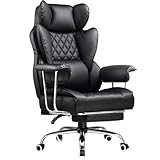
Overview: COMHOMA’s executive chair emphasizes full-body ergonomics with 3D-wrapping lumbar support that conforms to neck, shoulder, and spine curves. The pocket spring lumbar system pairs with dual-layer foam and fiber for sofa-like embrace. Designed for users 5'1" to 6'2", it supports 300 pounds through a BIFMA-certified base and SGS-3 gas lift rated for 120,000 cycles.
What Makes It Stand Out: Metal armrest frames provide durability nylon can’t match, while the outward-fixed soft armrests position arms naturally without wobble. The oversized adjustable lumbar pillow offers personalized support beyond built-in systems. Its 10cm height adjustment range suits shorter big-and-tall users often ignored by competitors. The spring-based lumbar support maintains breathability better than solid foam.
Value for Money: Mid-range pricing delivers premium features: metal armrests, certified components, and pocket spring lumbar support. While the 300-pound capacity trails some rivals, the component quality justifies the cost. Comparable chairs with metal armrests and certified bases typically start $50-75 higher. The 15-30 minute assembly time saves professional setup fees.
Strengths and Weaknesses: Strengths: Metal armrest frames prevent breakage; pocket spring lumbar maintains support; BIFMA/SGS certifications ensure safety; accommodates shorter users; quick assembly; 135° recline with footrest. Weaknesses: 300-pound capacity limits heavier users; fixed armrest position may not suit all desk heights; no explicit warranty length mentioned; outward armrest design reduces side-to-side mobility.
Bottom Line: Excellent for users under 300 pounds wanting durable armrests and certified construction. The height range makes it uniquely suitable for shorter big-and-tall individuals. Heavy users should look to the 400-pound alternatives.
9. COMHOMA Big and Tall Office Chair 400LBS Wide Ergonomic Gaming Chair with Deluxe Embossing Designed Leather with Foot Rest,150°Reclining Adjustable Armrests Pocket Spring Back Support and Pillow

Overview: This 400-pound capacity COMHOMA model merges executive aesthetics with gaming functionality. The embossed four-leaf clover PU leather provides scratch-resistant sophistication, while the hugging wingback design and pocket spring lumbar support deliver immersive comfort. A 90-150° recline range and integrated footrest support work-to-relaxation transitions. Height-adjustable armrests and a widened, wingless seat accommodate diverse sitting positions.
What Makes It Stand Out: The 150° recline exceeds typical 135° limits, enabling near-flat resting positions. Deluxe embossing elevates visual appeal beyond standard PU leather chairs. The wingback design provides lateral support without restricting movement, while the pocket spring lumbar system maintains elasticity. The combination of 400-pound rating, BIFMA-certified metal base, and SGS Class 4 gas lift ensures heavy-duty reliability.
Value for Money: Priced competitively with premium gaming chairs, it offers superior weight capacity and embossed aesthetics. The 400-pound rating and certified components typically command $400+ prices; this delivers similar durability for less. While warranty details aren’t specified, the component certifications provide inherent quality assurance. The embossing adds executive flair that justifies a slight premium over basic leather chairs.
Strengths and Weaknesses: Strengths: 400-pound weight capacity; 150° deep recline; embossed leather aesthetics; pocket spring lumbar support; wingback hugging comfort; adjustable armrests; certified base and gas lift. Weaknesses: No stated warranty length; wingback style may appear too “gamer” for conservative offices; PU leather breathability concerns; unspecified seat width may be narrow for some big-and-tall users.
Bottom Line: Perfect for heavy users wanting gaming-chair features with executive styling. The deep recline and 400-pound rating make it versatile for home offices. Verify seat dimensions if you need extra-wide seating, and confirm warranty terms before purchase.
10. EXCEBET Big and Tall Office Chair with Footrest, PU Leather High Back Executive Office Chair 400lbs, Ergonomic Computer Chairs Lumbar Support for Heavy People (Blue)

Overview: EXCEBET’s executive chair combines a spring-reinforced cushion with high-density sponge for cross-legged sitting flexibility. The 400-pound capacity targets heavy users through a BIFMA-approved metal base and SGS Class 4 gas cylinder. FSC-certified wood in the cushion frame demonstrates environmental responsibility. The deluxe embossing pattern on breathable PU leather enhances both aesthetics and airflow.
What Makes It Stand Out: The spring-embedded cushion provides dynamic support rarely seen in executive chairs, preventing bottoming out. FSC-certified wood construction adds sustainability credibility. The generous seat dimensions explicitly accommodate cross-legged sitting—a detail most chairs overlook. Adjustable armrests with soft pads and a retractable footrest complete the multifunctional design. Rigorous durability testing exceeds basic certification requirements.
Value for Money: Premium pricing reflects premium materials: certified components, sustainable wood, and spring-enhanced cushioning. Comparable 400-pound chairs with similar certifications start at this price point; the spring cushion and embossing add value. The 20-30 minute assembly is reasonable for this complexity. While warranty length isn’t stated, the component certifications and testing provide confidence.
Strengths and Weaknesses: Strengths: 400-pound capacity; spring-reinforced cushion prevents compression; FSC-certified wood frame; BIFMA/SGS certifications; breathable embossed PU leather; accommodates cross-legged sitting; adjustable armrests and footrest. Weaknesses: No explicit warranty period; blue color may limit office compatibility; assembly time longer than some rivals; PU leather still less breathable than mesh; unspecified lumbar adjustability.
Bottom Line: A robust choice for heavy users prioritizing cushion longevity and sustainable materials. The spring-embedded seat and cross-legged accommodation suit active sitters. Confirm warranty details and consider color options for professional environments. Ideal for home offices where comfort and capacity outweigh minimalist design.
Understanding the Unique Needs of Big and Tall Users
Standard office chairs are typically designed for users up to 250 pounds and under 6'2", leaving millions of workers with inadequate support. The biomechanics of larger bodies create distinct pressure points, weight distribution patterns, and range-of-motion requirements that generic seating simply cannot accommodate. When your chair isn’t engineered for your frame, you risk accelerated wear, structural failure, and serious health complications including sciatica, chronic lower back pain, and circulatory issues.
Anthropometric data reveals that big and tall users require specific dimensional adjustments beyond simple weight capacity increases. Seat depth must accommodate longer femurs without cutting off circulation behind the knees. Backrest height needs to support the entire spinal column, not just the lumbar region. Armrests must be positioned further apart while maintaining ergonomic alignment. Understanding these fundamental differences is your first step toward making a purchase that actually serves your body.
Weight Capacity: The Non-Negotiable Starting Point
Static vs. Dynamic Weight Ratings
Manufacturers often advertise impressive weight capacities, but the fine print tells the real story. Static weight ratings measure what the chair can support when completely still, while dynamic ratings account for the forces generated when you sit down, shift position, or lean back. A chair rated for 400 pounds static might only support 300 pounds dynamic—critical information that’s often buried in technical specifications. Always look for dynamic weight capacity, as this reflects real-world use.
Safety Margins and Engineering Standards
Smart buyers select chairs with weight capacities that exceed their body weight by at least 20%. This safety margin accounts for daily wear, material fatigue, and the additional stress of movement. Look for chairs tested to BIFMA (Business and Institutional Furniture Manufacturers Association) standards, which require rigorous testing of components under repeated stress cycles. For 2026 models, many manufacturers are adopting the enhanced BIFMA X5.41 standard specifically for heavy-duty seating, representing the gold standard in safety validation.
Seat Dimensions: Where Comfort Begins
Width and Depth Considerations
The ideal seat width should provide 1-2 inches of clearance on each side of your hips—any more and you lose lateral support; any less and the sides dig into your thighs. For most heavy users, this means a seat pan measuring at least 22 inches wide. Seat depth is equally crucial: you should be able to sit back against the backrest with 2-3 fingers of space between the seat edge and the back of your knees. This typically requires a depth of 21-23 inches, adjustable on premium models.
Waterfall Edge Design
A proper waterfall edge—where the front of the seat curves gently downward—prevents pressure on the popliteal artery and reduces leg fatigue. For heavier users, this feature must be reinforced with high-density foam that won’t compress over time, maintaining that critical contour that promotes healthy circulation during eight-hour workdays.
Backrest Height and Lumbar Support Essentials
High-Back vs. Mid-Back Configurations
Tall users over 6'3" should prioritize high-back chairs that extend to the upper thoracic region, providing complete spinal support and an integrated headrest positioned correctly for your height. Mid-back designs might be adequate for users under 6'2", but they often leave the shoulder blades unsupported, encouraging slouching and forward head posture that compounds over time.
Dynamic Lumbar Systems
Static lumbar support is outdated technology. Modern big and tall chairs feature dynamic systems that adjust both depth and height, responding to your movements throughout the day. For 2026, look for pneumatic lumbar support that can be fine-tuned in 1/4-inch increments, and chairs that offer lumbar positioning ranges of 6-8 inches vertically to accommodate varying torso lengths. The sweet spot should align with your L4-L5 vertebrae, regardless of your sitting position.
Material Matters: Durability vs. Comfort
Mesh Technology for Heavy Users
Traditional wisdom suggested heavy users avoid mesh, but 2026’s reinforced woven matrices have changed the game. Look for chairs with dual-layer mesh systems where a supportive underlayer bears the weight while a breathable outer layer maintains airflow. The key specification is tensile strength—quality heavy-duty mesh should exceed 300 pounds per square inch tensile rating. Avoid single-layer mesh, which will sag and create pressure points within months.
Upholstered Options: Leather, Vinyl, and Fabric
Genuine leather offers unmatched durability and comfort but requires maintenance and comes at a premium. For heavy daily use, top-grain leather with a thickness of 1.2mm or greater provides the best balance of suppleness and strength. Commercial-grade vinyl has improved dramatically, with modern formulations offering leather-like breathability and reinforced backing that prevents splitting. If choosing fabric, demand abrasion resistance ratings of 100,000 double rubs or higher—anything less will show wear quickly.
Base and Caster Strength: The Foundation of Safety
Five-Star Base Engineering
The base is literally the foundation of your safety. For heavy-duty applications, insist on aluminum or reinforced nylon bases—never standard plastic. The critical measurement is base diameter: look for 28 inches or greater for optimal stability. The connection points where the cylinder meets the base should be reinforced with metal inserts, and the welds (if applicable) should be continuous, not spot-welded.
Caster Materials and Floor Compatibility
Caster failure is a common point of catastrophic chair collapse. For users over 300 pounds, opt for 3-inch diameter casters minimum, with either polyurethane or rubber wheels. Hard plastic casters crack under heavy loads. Consider your flooring: soft casters for hard floors, hard casters for carpet. Many 2026 models feature load-sensitive casters that automatically adjust resistance based on weight distribution—a worthwhile innovation that prevents unwanted rolling and reduces floor damage.
Adjustability Features That Actually Matter
Armrest Articulation
4D armrests (adjustable height, width, depth, and angle) are non-negotiable for big and tall users. The width adjustment is particularly critical—look for armrests that can position 20-22 inches apart at their maximum setting. Pay attention to the adjustment mechanism: metal internal components last far longer than plastic, and locking mechanisms should click positively into place without wobbling.
Tilt Mechanism Tension Control
Standard tilt tension controls lack the range needed for heavier users. Seek chairs with dedicated heavy-duty tilt mechanisms that offer tension adjustment ranges specifically calibrated for higher weights. The best systems provide independent control of tilt tension and tilt lock angle, allowing you to find your perfect recline resistance without feeling like you’re fighting the chair or sinking too easily.
Ergonomic Design Principles for Larger Bodies
Weight Distribution Engineering
Premium big and tall chairs employ advanced weight distribution mapping to eliminate pressure points. The seat pan should feature a slight cup shape that cradles the sit bones while distributing weight across the entire thigh surface. The backrest must offer progressive resistance—firmer in the lumbar region, more forgiving in the thoracic area—to support the natural S-curve of the spine under heavier loads.
Pressure Mapping and Foam Density
Foam quality directly impacts longevity and comfort. Look for multi-density foam systems with a firm base layer (2.5+ pounds per cubic foot density) topped with a comfort layer (1.8-2.0 PCF). Memory foam toppers should be at least 2 inches thick and gel-infused to prevent heat buildup. Some 2026 models incorporate pressure-sensing technology that subtly adjusts support zones throughout the day—an innovation worth considering if your budget allows.
Warranty and Return Policies: Reading the Fine Print
Weight-Specific Warranty Clauses
Many manufacturers advertise generous warranties that become void if you exceed unstated weight limits. Scrutinize warranty documents for specific language about weight capacity—reputable brands will explicitly state coverage for users up to the chair’s rated capacity. Be wary of “limited lifetime” warranties that only cover components for 1-2 years for heavy users.
Return Shipping Realities
Heavy-duty chairs weigh 60-80 pounds, making returns expensive. Before purchasing, calculate potential return shipping costs, which can exceed $200. Some premium manufacturers offer free return shipping within a trial period—a significant value that justifies a higher upfront cost. Document the unboxing process with photos to protect yourself from damage disputes.
Price vs. Value: Investing in Your Health
Budget Tier Realities ($300-$600)
In this range, you’ll find chairs that meet basic weight requirements but compromise on adjustability and materials. Expect nylon bases, standard foam, and 2-3 year lifespans under heavy use. While suitable for occasional use, daily heavy users will find these chairs degrade quickly, often costing more long-term through frequent replacements.
Premium Investment Justification ($800-$1500)
This sweet spot delivers commercial-grade components, extensive warranties, and ergonomic features that genuinely improve health outcomes. When amortized over a 7-10 year lifespan, a $1200 chair costs less than $0.50 per day—far less than the potential medical costs of poor seating. Consider this: a herniated disc from inadequate support can cost thousands in medical bills and lost productivity.
Assembly Considerations for Heavy-Duty Chairs
Component Weight and Solo Assembly
Heavy-duty chairs ship in 3-4 boxes with components weighing up to 50 pounds each. Solo assembly is possible but risky—dropping a metal base on your foot or struggling with the heavy cylinder can cause injury. Enlist help or consider white-glove assembly services, which typically cost $75-$150 but ensure proper setup and maintain warranty validity.
Tool Quality and Instructions
Cheap included tools strip easily under the torque needed for heavy-duty bolts. Use your own socket set for assembly. Quality manufacturers provide video tutorials and clearly labeled hardware; if the instructions are vague or the parts unlabeled, consider it a red flag about the company’s attention to detail.
Maintenance Tips for Longevity
Monthly Inspection Checklist
Develop a routine: check caster tightness, examine the cylinder for oil leaks, test tilt mechanism smoothness, and inspect upholstery for stress tears. Tighten any loose bolts—vibration from daily use gradually loosens hardware. Catching issues early prevents cascade failures that can render a chair unusable.
Cleaning Protocols for Different Materials
Mesh requires gentle vacuuming with a soft brush attachment monthly; never use harsh chemicals that degrade the weave. Leather needs conditioning every 3-4 months to prevent cracking—use pH-balanced leather conditioners, not generic “furniture polish.” For fabric, invest in a steam cleaner designed for upholstery; surface cleaning only drives grime deeper into the fibers.
Common Mistakes to Avoid When Shopping
Overlooking Seat Height Range
Many heavy users focus on weight capacity but ignore seat height specifications. Tall users need chairs that extend to at least 22 inches from floor to seat pan to maintain 90-degree knee angles. Conversely, shorter heavy users (under 5'8") need chairs that lower sufficiently to prevent feet dangling, which impairs circulation.
Choosing Style Over Substance
The market is flooded with “executive style” big and tall chairs that prioritize plush aesthetics over ergonomic function. Thick padding that feels luxurious in a showroom quickly compresses and creates pressure points. Focus on chairs that look industrial—quality mechanics often wear humble aesthetics. That sleek leather throne might be hiding a plastic base and mediocre mechanism.
The Future of Big and Tall Office Seating (2026 Trends)
Smart Integration and Biometric Feedback
Emerging chairs now feature embedded sensors that monitor sitting duration, posture shifts, and even heart rate variability through seat contact. While still evolving, this technology provides actionable data about your sitting habits. The most promising development is haptic feedback that gently vibrates when you’ve been static too long, encouraging micro-movements that reduce pressure injury risk.
Sustainable Heavy-Duty Materials
2026 marks a shift toward recycled aluminum bases and bio-based polyurethane foams that maintain high performance while reducing environmental impact. These materials often outperform traditional options in durability testing. Look for Cradle to Cradle certification, which verifies the chair’s entire lifecycle sustainability without compromising the robustness heavy users require.
How to Test a Chair Before Committing
In-Showroom Evaluation Protocol
When testing in person, sit fully back and check for at least 1 inch of clearance on each side. Rock gently side-to-side—any wobbling indicates a weak base. Lean back completely; the recline should feel controlled, not abrupt. Most importantly, sit for a minimum of 15 minutes; pressure points reveal themselves over time, not in initial impressions.
Home Trial Best Practices
If purchasing online, maximize the trial period: use the chair exclusively for the first week to identify issues early. Keep all packaging pristine for potential returns. Test every adjustment mechanism within the first 48 hours—defects often appear immediately. Document any concerns with photos and contact customer service promptly; waiting until day 29 of a 30-day trial weakens your position.
Frequently Asked Questions
What’s the difference between “big and tall” and “heavy-duty” office chairs?
“Big and tall” specifically addresses both weight capacity and dimensional sizing for taller users, including extended backrests and higher seat ranges. “Heavy-duty” may only increase weight capacity without adjusting proportions for height. A 6'5" user needs a big and tall chair, while a 5'8" heavy user might only need heavy-duty sizing.
How much weight capacity should I actually look for if I weigh 280 pounds?
Select a chair rated for at least 350-400 pounds dynamic capacity. This 25-40% safety margin accounts for the impact force when sitting down (which can exceed 1.5x your static weight), material fatigue over time, and any additional items you might keep on the chair. BIFMA testing shows chairs perform optimally when loaded at 60-70% of their maximum rating.
Are mesh chairs really suitable for users over 300 pounds?
Yes, but only premium reinforced mesh with a tensile strength rating above 300 PSI and a dual-layer construction. Avoid single-layer mesh regardless of marketing claims. Look for weight-specific mesh technologies introduced in 2025-2026 that use graduated weave density—tighter in high-load areas, more open for breathability.
Will a big and tall chair damage my hardwood floors?
It depends entirely on the casters. Standard hard plastic casters will damage any floor under heavy loads. Specify soft polyurethane or rubber casters rated for your weight and floor type. Many quality chairs now include floor-type selection at purchase. Consider a tempered glass floor mat for ultimate protection—plastic mats crack under heavy-duty chairs.
What if I’m 6'2" and 220 pounds—do I really need a big and tall chair?
You’re in the gray zone. While within standard chair limits, you’ll likely find big and tall chairs more comfortable due to deeper seat depth and higher backrests. However, you don’t need the maximum 400-500 pound capacity. Look for “tall” specific models that offer dimensional adjustments without the premium cost of extreme weight capacity you won’t use.
How long should a quality big and tall office chair realistically last?
With daily use by a user at 80% of the chair’s rated capacity, expect 7-10 years from a premium model, 4-6 years from a mid-tier, and 2-3 years from budget options. The cylinder typically fails first. Keep a 12-year-old chair only if you’ve replaced major components and the frame shows no stress cracks.
Can I replace parts myself when something breaks?
Most components—casters, armrests, cylinders—are user-replaceable with basic tools. However, base replacement requires significant disassembly and may void warranty if not done by authorized service. Purchase from manufacturers that sell replacement parts directly; some budget brands don’t support component-level repair, forcing complete replacement.
Will these chairs fit under a standard 29-inch desk?
Many big and tall chairs have higher minimum seat heights that may not lower enough for standard desks. Always check the seat height range, not just the maximum. Tall users often need a higher desk anyway to maintain proper elbow angles. Consider a height-adjustable desk as part of your ergonomic investment.
Are there stylish options that don’t look like industrial equipment?
Absolutely. 2026 designs have evolved significantly, with Scandinavian-influenced aesthetics using premium wood accents, sleek aluminum frames, and designer fabrics that maintain 400+ pound capacities. The key is shopping brands that specialize in heavy-duty residential furniture rather than commercial office suppliers.
What certifications beyond BIFMA should I demand?
Look for GREENGUARD Gold certification for low chemical emissions, especially important with the adhesives and foams in heavy-duty chairs. For users with mobility concerns, FDA registration as a medical device (rare but valuable) indicates clinical testing. ISO 9001 manufacturing certification ensures consistent quality control across production runs.
See Also
- 10 Must-Have Big and Tall Office Chairs for 400-lb Users in 2026
- The 10 Best Big and Tall Office Chairs for 400-lb Users in 2026
- 10 Big and Tall Office Chairs for 400 lb Users in 2026
- 10 Best Value Big and Tall Office Chairs for Heavy Duty Use in 2026
- 2026’s Top 10 Big and Tall Office Chairs for Heavy Users