Table of Contents
Your lower back throbs by 2 PM. Your shoulders creep toward your ears during Zoom calls. That afternoon slump isn’t just fatigue—it’s your body screaming for help after hours of slouching. Traditional office chairs, even the expensive “ergonomic” ones, often fail to solve the root problem: they let you sink into bad habits. Enter the kneeling office chair, a revolutionary seating solution that’s transforming how we think about workplace wellness. Unlike conventional chairs that encourage passive sitting, kneeling chairs promote active engagement of your core muscles and naturally align your spine, forcing you to stop slouching without conscious effort. This year, more professionals are discovering that the key to eliminating back pain isn’t more lumbar support—it’s a complete reimagining of how we sit.
But not all kneeling chairs are created equal. Understanding the mechanics behind these unique seats, knowing which features matter most, and learning how to transition properly can mean the difference between life-changing comfort and wasted money. Whether you’re a remote worker battling WFH posture or an office manager seeking solutions for your team, this comprehensive guide will equip you with everything you need to make an informed decision about integrating kneeling chairs into your daily routine.
Top 10 Kneeling Office Chairs
Detailed Product Reviews
1. Ergonomic Kneeling Chair, Adjustable Stool for Home and Office - Improve Your Posture with an Angled Seat - Thick Comfortable Moulded Foam Cushions - Brake Casters
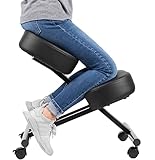
Overview: This ergonomic kneeling chair offers a modern solution for posture-conscious users seeking relief from traditional seating. Featuring a 3-inch vinyl cushion and adjustable height from 21 to 28 inches, it accommodates various body types while promoting spinal alignment through its angled design.
What Makes It Stand Out: The brake caster system provides controlled mobility, allowing you to lock the chair in place when needed. The sturdy metal base supports up to 250 pounds while maintaining a sleek, all-black aesthetic that fits professional and home environments. The thick molded foam cushions distinguish it from thinner alternatives.
Value for Money: Positioned as a mid-range ergonomic solution, this chair delivers solid construction and functional features without premium pricing. The durable metal frame and quality casters ensure longevity, making it a worthwhile investment compared to replacing cheaper models annually.
Strengths and Weaknesses: Strengths include robust build quality, effective brake casters, generous cushioning, and straightforward height adjustment. The vinyl upholstery offers easy cleaning but may lack breathability for extended use. Users must acclimate gradually, and the 250-pound capacity may not suit all users. Initial assembly requires attention to ergonomic positioning.
Bottom Line: Ideal for office workers and home users committed to improving posture. Allow 1-2 weeks for muscle adaptation and ensure proper desk height compatibility for optimal results.
2. NYPOT Ergonomic Kneeling Chair with Adjustable Seats - Knee Chair for Posture Correction & Kneel Rocking Stool for Desk - Back Pain Relief for Home and Office, Supports 250 pounds - 5 Years Warranty
 for Home and Office, Supports 250 pounds - 5 Years Warranty](https://m.media-amazon.com/images/I/41J95ODAMAL._SL160_.jpg)
Overview: The NYPOT kneeling chair combines posture correction with dynamic movement through its innovative rocking mechanism. Designed for standard 29-35 inch desks, it helps distribute weight between hips and legs while encouraging natural spinal alignment during extended work sessions. The adjustable seat accommodates various user heights comfortably.
What Makes It Stand Out: Its gentle rocking motion actively reduces stiffness by shifting pressure points, a feature rarely found in static kneeling chairs. The 5-year warranty demonstrates manufacturer confidence, while its multifunctional design accommodates cross-legged sitting, meditation, and yoga positions, making it exceptionally versatile for creative workspaces and home offices alike.
Value for Money: The extended warranty alone adds significant value, covering potential issues long after purchase. The chair’s versatility eliminates need for multiple seating solutions, offering excellent return on investment for users who alternate between work and wellness activities throughout their day.
Strengths and Weaknesses: Strengths include the therapeutic rocking motion, smooth height adjustability, comprehensive warranty, and adaptable seating positions. Initial shin and lower back discomfort is common during the adjustment period. Proper seat height matching with desk height is critical to avoid pressure points. The 250-pound weight capacity is standard but not exceptional for larger users.
Bottom Line: Perfect for users seeking active sitting solutions. The rocking feature and warranty make it a standout choice, though patience is required during the initial adaptation phase for maximum benefit.
3. TUJOBA Modern Ergonomic Saddle Seat Kneeling Chair with Backrest, 360 Degrees Swivel Mobile Angled Posture Stool for Office, Black Leather

Overview: This premium saddle-style kneeling chair merges traditional ergonomic benefits with executive-level comfort. Featuring a distinctive saddle seat, integrated backrest, and 360-degree swivel, it targets professionals who spend long hours seated while frequently moving between tasks. The height adjusts from 17.75 to 23.625 inches to suit various workstations.
What Makes It Stand Out: The saddle design naturally tilts the pelvis forward, enhancing posture correction beyond standard flat seats. The backrest provides occasional support without compromising the kneeling concept, while smooth-rolling casters enable quiet, effortless mobility. With a 330-pound capacity, it accommodates a broader user range than most competitors, making it genuinely inclusive.
Value for Money: While priced higher than basic models, the leather upholstery, enhanced weight capacity, and professional aesthetic justify the premium. It essentially combines a kneeling chair and task stool, offering dual functionality that eliminates need for separate purchases, ultimately saving money for serious users.
Strengths and Weaknesses: Strengths include superior build quality, leather durability, higher weight capacity, swivel functionality, and backrest support. The saddle shape may require adjustment for users accustomed to traditional seats. Its specialized design suits professionals like dentists and artists but may be excessive for casual home use. Leather requires periodic maintenance to prevent cracking.
Bottom Line: An excellent investment for professionals seeking top-tier ergonomic support. The enhanced features and durability make it worth the premium price for daily, intensive use in demanding work environments.
4. NYPOT Ergonomic Kneeling Chair with Adjustable Seats - Knee Chair for Posture Correction & Kneel Rocking Stool for Desk - Back Pain Relief for Home and Office, Supports 250 pounds - 5 Years Warranty

Overview: The NYPOT kneeling chair delivers dynamic posture support through its unique rocking base and adjustable design. Engineered for desk heights between 29-35 inches, it promotes upright sitting by redistributing weight across hips and legs, reducing spinal compression during long work periods. The cushioned seat adjusts smoothly to fit various user heights and preferences.
What Makes It Stand Out: Beyond standard kneeling functionality, this chair transforms into a cross-legged meditation seat, yoga chair, or alternative posture stool. The gentle rocking mechanism keeps your body subtly active, improving circulation and focus. The comprehensive 5-year warranty provides exceptional peace of mind rarely seen in ergonomic furniture at this price point.
Value for Money: This chair’s multi-position capability effectively replaces several seating options, delivering outstanding value. The lengthy warranty protects your investment, while the durable construction ensures years of reliable use, making it more economical than buying multiple specialized chairs for different purposes.
Strengths and Weaknesses: Strengths include versatile usage modes, therapeutic rocking action, robust height adjustment, and industry-leading warranty. New users should expect a 1-2 week adaptation period with potential shin discomfort. Proper ergonomic setup is essential to prevent lower back strain. The 250-pound weight limit is adequate for most but not all users, and desk height compatibility requires verification.
Bottom Line: A versatile, well-supported choice for users wanting more than static posture correction. The rocking feature and warranty make it particularly attractive for home office wellness integration and creative professionals.
5. TinyHaven Ergonomic Kneeling Chair with Wooden Frame - Adjustable Height Office Chair with Soft Padding for Back Pain Relief, Posture Correcting Home & Office Desk Chair Wood

Overview: The TinyHaven chair brings natural materials to ergonomic design with its solid wood frame and 24 adjustable angle combinations. Supporting up to 250 pounds, it emphasizes personalized comfort through precise customization, allowing users to achieve the optimal 60-70 degree thigh-to-calf angle for reduced spinal pressure. This chair merges traditional craftsmanship with modern ergonomic science.
What Makes It Stand Out: Unlike metal-framed competitors, the wooden construction offers aesthetic warmth and sustainable appeal that complements home offices and natural decors. The extensive angle adjustment system provides unparalleled customization for individual body mechanics, while the gentle rocking mechanism promotes circulation during long sessions. The obtuse seat angle specifically targets natural, open posture alignment.
Value for Money: Wooden ergonomic chairs typically command premium prices, but this model offers competitive value through its comprehensive adjustability and durable construction. The solid wood frame ensures longevity surpassing many metal alternatives, while the high-density foam maintains comfort through years of daily use, justifying the investment over cheaper, less adaptable options.
Strengths and Weaknesses: Strengths include exceptional adjustability with 24 combinations, attractive wood finish, supportive cushioning with slow rebound, and therapeutic rocking motion. Users should start with 20-30 minute sessions to adapt gradually. Wood frames, while sturdy, may be heavier than metal and susceptible to scratches. The natural aesthetic may not suit all modern office environments.
Bottom Line: An excellent choice for eco-conscious users wanting maximum customization. The wood construction and extensive adjustability make it ideal for dedicated posture improvement regimens and those preferring natural materials.
6. Giantex Ergonomic Kneeling Chair for Office, Knee Stool Chair w/Adjustable Height and Seat Angle to Relieve Pain, Posture Desk Chair w/Lockable Universal Wheels, Thick Padded Cushions, Black (1)

Overview: The Giantex Ergonomic Kneeling Chair delivers a feature-rich alternative to traditional office seating, designed to alleviate lower back pressure through its angled seat and padded knee support. This mobile stool combines adjustability with practical mobility for dynamic work environments.
What Makes It Stand Out: The standout feature is its 4-inch thick high-density sponge cushions—significantly thicker than many competitors—providing exceptional comfort for extended use. The adjustable seat angle allows precise customization beyond simple height changes, while lockable universal wheels offer both mobility and stationary stability. The waterproof PVC leather upholstery adds practical maintenance benefits.
Value for Money: Positioned in the mid-range category, this chair justifies its price through premium cushioning and enhanced adjustability. While basic kneeling chairs start around $80-100, the Giantex model’s thicker padding, angle adjustment, and locking wheels make it a worthwhile upgrade for users prioritizing comfort and versatility.
Strengths and Weaknesses: Strengths include superior cushion thickness, adjustable seat angle, lockable wheels for safety, waterproof upholstery, and reinforced metal base construction. Weaknesses center on PVC leather’s limited breathability compared to fabric, and the 5.5-inch height range may not accommodate very tall or short users optimally.
Bottom Line: Ideal for office workers seeking substantial comfort and adjustability, the Giantex chair excels for those transitioning to kneeling chairs. Its lockable wheels and thick padding make it particularly suitable for users needing reliable, long-term postural support.
7. AtHope Ergonomic Cross Legged Office Chair with Wheels - Adjustable Height for Meditation, ADHD Desk & Yoga - Wide Criss Cross Design with Lumbar Support, Kneeling Chair - Black

Overview: The AtHope Ergonomic Cross Legged Office Chair redefines flexible seating by accommodating multiple postures—including cross-legged, squatting, and kneeling—making it uniquely suited for active sitters, meditation practitioners, and individuals with ADHD who require positional variety throughout the day. This innovative design challenges conventional single-purpose ergonomic furniture.
What Makes It Stand Out: Its revolutionary 360-degree rotating footrest sets this chair apart, enabling seamless posture transitions without moving the entire unit. The fixed lumbar support maintains spinal alignment across all sitting positions, while FSC-Certified wood construction demonstrates environmental responsibility. This versatility makes it a hybrid solution for work, meditation, and therapeutic use.
Value for Money: As a specialized multi-position chair, it commands a premium over standard kneeling chairs. However, its ability to replace separate meditation cushions, kneeling stools, and traditional office chairs justifies the investment for users who would otherwise purchase multiple seating solutions.
Strengths and Weaknesses: Strengths include unmatched positional flexibility, innovative rotating footrest, consistent lumbar support, sustainable materials, and suitability for ADHD users. Weaknesses involve a potentially larger footprint than conventional kneeling chairs, and the cross-legged design may not provide the same focused spinal alignment as traditional kneeling chairs for strict posture correction.
Bottom Line: Perfect for yoga enthusiasts, meditation practitioners, and fidgety sitters seeking one chair for multiple purposes. The AtHope chair prioritizes versatility over traditional kneeling posture, making it best for users who value movement variety and mindfulness integration.
8. Flash Furniture Posey Mobile Wooden Kneeling Office Chair for Improved Posture, Height-Adjustable Ergonomic Office Kneeling Chair, Natural/Black

Overview: The Flash Furniture Posey Mobile Wooden Kneeling Chair offers a minimalist, budget-friendly entry into ergonomic kneeling seating. With its natural wood frame and compact dimensions, this chair targets users seeking basic posture improvement without advanced features or premium pricing.
What Makes It Stand Out: The chair’s natural wood aesthetic distinguishes it from metal-and-plastic competitors, complementing home offices and modern decors. Its breathable fabric upholstery addresses a common complaint about synthetic leather’s heat retention. The compact 26.5-inch depth makes it ideal for small spaces where larger ergonomic chairs won’t fit.
Value for Money: This represents one of the most affordable options in the kneeling chair market, typically priced 30-40% below mid-range models. While it lacks thick padding and advanced adjustability, it delivers core kneeling benefits at a fraction of the cost, making it an excellent trial purchase.
Strengths and Weaknesses: Strengths include attractive wood finish, breathable fabric covering, lightweight portability, dual-wheel casters for mobility, and accessible pricing. Weaknesses feature only 2-inch foam padding (thinner than recommended for all-day use), limited height adjustment range, smaller seat dimensions that may restrict larger users, and absence of wheel locks.
Bottom Line: Best suited for budget-conscious buyers, students, or those testing the kneeling chair concept before investing in a premium model. The Posey chair works well for shorter work sessions but may prove uncomfortable for full-day use due to its minimal cushioning.
9. VIVO DRAGONN DN-CH Kneeling Chair, Metal, Black, One Size Fits All

Overview: The VIVO DRAGONN DN-CH Kneeling Chair positions itself as a durable, heavy-duty option for users requiring robust support and extensive height adjustability. Its all-metal construction and wide adjustment range accommodate diverse body types and workspace configurations, from traditional desks to standing desk setups.
What Makes It Stand Out: The exceptional 21-31 inch height range surpasses most competitors, making this chair suitable for both standard desks and standing desk conversions. The sturdy metal frame supports up to 250 pounds, addressing a common limitation of lighter-duty models. Its sleek, minimalist all-black design integrates seamlessly into professional environments without drawing unnecessary attention.
Value for Money: This chair occupies the mid-range price segment while offering heavy-duty specifications typically found in premium models costing $50-100 more. The extensive height range alone adds significant value, eliminating the need to purchase separate chairs for different desk heights and making it adaptable to future workspace changes.
Strengths and Weaknesses: Strengths include impressive height adjustability, high weight capacity, durable metal construction, smooth-rolling casters, and modern aesthetic. Weaknesses involve unspecified cushion thickness (likely standard 2-3 inches), lack of wheel locks for stability, and no mention of breathable fabric options.
Bottom Line: An excellent choice for taller users, standing desk owners, or those needing maximum weight capacity. The DRAGONN chair prioritizes adjustability and durability over plush comfort, making it ideal for users who value customization and robust construction over cushioned luxury.
10. Predawn Adjustable Ergonomic Kneeling Chair – Custom Height Rocking Posture Stool with Thick Cushions, Solid Wood Frame, Knee Support Seat for Adults, Office or Meditation Use (Onyx Black)

Overview: The Predawn Adjustable Ergonomic Kneeling Chair represents a premium offering that combines solid wood craftsmanship with dynamic functionality. Its unique rocking mechanism engages core muscles while maintaining spinal alignment, appealing to users seeking active sitting beyond static posture support.
What Makes It Stand Out: The rocking feature distinguishes this chair from static kneeling stools, promoting micro-movements that enhance focus and core engagement. The solid wood frame provides exceptional durability and aesthetic warmth, while 5-year warranty coverage demonstrates manufacturer confidence. Thick high-density foam cushions with breathable linen fabric address both comfort and temperature regulation.
Value for Money: While priced at the premium end, the Predawn chair justifies its cost through solid wood construction (versus particle board or metal), generous cushioning, and industry-leading warranty terms. Comparable wooden kneeling chairs lack the rocking mechanism and extended warranty, making this a compelling long-term investment.
Strengths and Weaknesses: Strengths include the active rocking motion, durable solid wood frame, thick comfortable cushions, breathable linen upholstery, excellent warranty coverage, and suitability for both work and meditation. Weaknesses involve the rocking motion’s learning curve, higher price point, and potential instability for users preferring completely stationary seating.
Bottom Line: Ideal for mindfulness practitioners, creative professionals, and users wanting active sitting benefits. The Predawn chair excels as a dual-purpose work and meditation stool, making it worth the premium for those prioritizing quality materials, dynamic movement, and long-term durability.
What Exactly Is a Kneeling Office Chair?
A kneeling office chair fundamentally reimagines the sitting experience by redistributing your body weight between your buttocks and your shins. The design typically features a forward-tilting seat and a padded knee rest, creating an open hip angle of approximately 110 to 130 degrees. This positioning automatically encourages an upright posture without requiring constant mental reminders to “sit up straight.”
The Biomechanics of Active Sitting
Traditional chairs create a 90-degree hip angle that compresses your lumbar discs and forces your spinal erector muscles to work overtime. Kneeling chairs shift your pelvis forward, allowing your spine to stack naturally like a Jenga tower with perfect alignment. Your weight distributes across three contact points—seat, left knee pad, right knee pad—which reduces pressure on any single area. This “active sitting” requires subtle micro-movements for balance, engaging your transverse abdominis and multifidus muscles throughout the day. Think of it as replacing your static office chair with a gentle core workout that happens unconsciously while you answer emails.
How It Differs From Conventional Ergonomic Chairs
Standard ergonomic chairs attempt to fix bad posture with more padding, adjustable armrests, and pronounced lumbar support. But they still operate on the same flawed principle: passive sitting. You can slouch in even the most expensive task chair by simply leaning forward or sinking into the seat pan. Kneeling chairs make slouching physically impossible. The forward tilt means if you try to round your shoulders, you’ll immediately feel unstable. There’s no backrest to lean on, no way to collapse into a C-shaped spine. It’s architectural design enforcing good posture, not willpower.
The Silent Epidemic: How Slouching Destroys Your Body
Slouching isn’t just a bad habit—it’s a biological stressor triggering cascading health consequences. Every inch your head drifts forward of your shoulders adds ten pounds of pressure to your cervical spine. Multiply that across eight-hour workdays, five days a week, fifty weeks a year, and you’re looking at serious cumulative damage.
The Immediate Effects on Your Workday
Within minutes of slouching, your diaphragm becomes compressed, reducing oxygen intake by up to 30%. Your brain, now slightly oxygen-deprived, experiences measurable drops in cognitive function and focus. Blood flow to your extremities decreases as your chest cavity collapses, leading to that familiar afternoon brain fog. Your digestive organs get squished, slowing metabolism and contributing to post-lunch energy crashes. These aren’t minor inconveniences—they’re performance inhibitors costing you productivity and creativity.
Long-Term Consequences Nobody Warns You About
Chronic slouching permanently remodels your spine’s architecture. The anterior head carriage creates a condition called “tech neck,” where your cervical vertebrae actually change shape. Your pectoral muscles shorten and tighten while your rhomboids and lower traps weaken, creating a muscular imbalance nearly impossible to reverse with occasional stretching. The compressed lumbar discs accelerate degenerative disc disease, and the constant pelvic tilt can lead to sacroiliac joint dysfunction. By retirement age, many desk workers have spines that look decades older than their chronological age.
Why Your Spine Craves a Kneeling Chair
The human spine evolved for movement, not eight hours of static sitting. Kneeling chairs honor this biological reality by creating dynamic stability—your body makes constant tiny adjustments, keeping spinal fluid circulating and preventing the stiffness associated with traditional seating.
Natural Spinal Alignment Explained
In a properly adjusted kneeling chair, your ears align over your shoulders, your shoulders over your hips, creating a neutral spine that requires zero muscular effort to maintain. The open hip angle allows your pelvis to remain in its natural anterior tilt, preserving the lumbar curve that traditional chairs flatten. Your weight distributes along your femurs rather than your ischial tuberosities (sit bones), reducing pressure on the sciatic nerve. This alignment mirrors the posture of toddlers, who instinctively sit with perfect spinal curves before we train them into chairs.
Core Engagement Without the Gym
That subtle balancing act required in a kneeling chair? It’s a low-grade isometric contraction of your entire core cylinder. Unlike crunches that target only rectus abdominis, active sitting engages the deep stabilizing muscles that support your spine. Over an eight-hour workday, this adds up to thousands of mini-contractions, building endurance in the exact muscles that prevent back pain. You won’t develop a six-pack, but you will develop the functional strength that makes carrying groceries or playing with your kids pain-free.
Circulation Benefits That Boost Productivity
The open angle of kneeling chairs prevents the dreaded “chair edge compression” where the seat pan cuts off blood flow to your legs. Your femoral arteries remain unrestricted, delivering oxygen-rich blood to your muscles and brain. Many users report feeling more energized at 4 PM than they did at 10 AM, simply because their cardiovascular system isn’t fighting against their furniture. The slight elevation of your knees also encourages venous return, reducing ankle swelling and that heavy-leg sensation after long meetings.
Essential Features That Separate Good from Great
Not every kneeling chair delivers on its promises. The market ranges from $50 novelty items to $500+ professional-grade seating, and the differences aren’t always visible in product photos. Understanding construction quality and ergonomic adjustability helps you spot value.
Height Adjustability: The Non-Negotiable Feature
Your kneeling chair must match your specific leg length and desk height. Look for pneumatic or manual height adjustment spanning at least 5-7 inches. The ideal range should accommodate users from 5'2" to 6'4". Without this flexibility, you’ll either strain your shoulders to reach your keyboard or compress your knees against the pads. Some premium models offer independent seat and knee pad adjustments, allowing you to fine-tune the angle and distance—worth the investment if multiple people use the chair.
Seat and Knee Pad Materials: Comfort vs. Durability
Memory foam feels luxurious for the first month but compresses permanently under daily use. High-density polyurethane foam (2.5+ lb density) maintains its shape for years. The upholstery matters too: breathable mesh prevents the sweaty-back syndrome common in leather or vinyl options, while durable fabric weaves resist pilling. For knee pads, look for contoured designs that distribute pressure across your shins rather than concentrating it on your kneecaps. Removable, washable covers extend the chair’s lifespan significantly.
Frame Strength and Weight Capacity
Most kneeling chairs use wood, steel, or aluminum frames. Solid hardwood (birch or beech) offers aesthetic appeal but check the joint construction—dowels and glue fail under stress. Steel frames provide the best strength-to-weight ratio, with powder-coated finishes resisting scratches. Weight capacity tells you about build quality: chairs rated for 250+ pounds typically use thicker gauge steel and reinforced welding. Avoid anything under 200 pounds capacity for daily use.
Base Stability: Casters, Rockers, or Fixed?
Wheeled casters offer mobility but reduce stability, which can be unnerving for new users. Look for dual-wheel casters with safety locks that prevent rolling when weight is applied. Rocking bases create a gentle forward-back motion that enhances active sitting but require a learning curve. Fixed bases provide maximum stability but sacrifice flexibility. For most office environments, locking casters provide the best compromise—roll into position, then lock for secure sitting.
Angle Adjustment: Customizing Your Tilt
The angle between seat and knee pads dramatically affects comfort. Too steep (over 30 degrees) and you’ll feel like you’re falling forward; too shallow (under 15 degrees) and you lose the postural benefits. Premium chairs offer adjustable angles between 15-30 degrees, letting you start gentle and increase the tilt as your core strengthens. Some designs use rocker bases that naturally adjust to your movements, while others have fixed angles that must match your body type exactly.
The Transition Period: What Nobody Tells You
Switching to a kneeling chair isn’t like upgrading from a cheap office chair to a Herman Miller. It’s a fundamental change in how your body supports itself, and the adjustment period catches many users off guard.
Week One: Managing Initial Discomfort
Your first day might feel amazing—novelty and excitement masking muscle fatigue. Day two and three tell the real story. Your shins might feel tender where they contact the pads. Your lower back might ache as underused muscles wake up. Your feet might tingle as circulation patterns shift. This isn’t failure; it’s adaptation. Limit initial sessions to 1-2 hours, alternating with your old chair. Use a small cushion on the knee pads initially, removing it as your body adjusts. The discomfort typically peaks at day five and resolves by day ten.
Building Up Your Sitting Endurance
Think of it like training for a marathon. Start with 30-minute intervals, adding 15 minutes each day. By week three, most users can sit comfortably for three to four hours continuously. Full-day comfort usually arrives by week six. Track your progress in a journal—note when discomfort appears, which activities feel best in the kneeling position, and how your posture feels at day’s end. This data helps you fine-tune your setup and recognize improvement.
Hybrid Approaches for Skeptics
Not ready to commit full-time? Many users find success with a hybrid approach: kneeling chair for computer work requiring focus, traditional chair for phone calls and meetings. Some pair a kneeling chair with a standing desk, rotating between three positions throughout the day. This variety prevents any single repetitive stress pattern and lets you ease into the transition without selling your existing furniture.
Pro Tips for Optimizing Your Kneeling Chair Experience
Even the perfect kneeling chair performs poorly if your overall workspace ignores ergonomic principles. The chair is one piece of a holistic setup.
Desk Height Compatibility
Your desk must accommodate the forward-leaning position. Standard 29-inch desks often force your shoulders into a shrugged position on kneeling chairs. Measure from your bent elbows to the floor while seated—this is your ideal keyboard height. Many users find a 27-28 inch desk works better, or they use keyboard trays to lower their typing surface. Monitor height becomes critical too: the top of your screen should align with your eyes, preventing the forward head posture you’re trying to eliminate.
Foot Positioning Secrets
Here’s a little-known fact: your feet shouldn’t dangle. In a proper kneeling position, your toes point back, and the tops of your feet rest lightly on the floor behind you. This provides a third contact point for stability. If your chair is too high, your feet lift off completely, increasing knee pressure. If too low, your ankles over-flex. Some chairs include footrests or rockers that support your feet, reducing strain on your shins and improving circulation.
When to Take Breaks
Active sitting engages muscles, and muscles fatigue. Even after full adaptation, you need movement breaks every 45-60 minutes. Stand up, walk around, or do a quick doorway chest stretch. These breaks aren’t a sign of failure—they’re essential for preventing overuse injuries. Set a silent alarm to remind yourself; your body will tell you when it’s ready for a break if you listen.
Red Flags: Avoid These Common Pitfalls
The kneeling chair market includes gems and junk in equal measure. Knowing what to avoid saves money and prevents injury.
The Overcorrection Trap
Some users, excited by the concept, immediately choose the steepest angle and longest sitting sessions. This overcorrection strains the very muscles you’re trying to strengthen. Start conservative. A 15-degree seat angle feels barely different from a traditional chair but still provides benefits. Gradually increase as your body adapts. Pain is a signal, not a badge of honor.
Ignoring Build Quality for Aesthetics
Minimalist Scandinavian designs look gorgeous in Instagram photos but often sacrifice adjustability for clean lines. That beautiful single-piece wood frame might not fit your torso length. Prioritize function over form. A slightly clunky-looking chair with independent adjustments serves you better than a sleek design that forces your body into its predetermined shape.
One-Size-Fits-All Fallacies
Manufacturers love claiming their chair “fits everyone from 5’ to 6'5”." Physics and anatomy make this impossible. If you’re under 5'4", you need a chair with a lower minimum height and closer knee pad distance. If you’re over 6'2", you need extended seat depth and higher weight capacity. Don’t trust universal claims—measure your inseam, torso length, and desk height before purchasing.
Integrating Kneeling Chairs Into Modern Workspaces
The rise of hybrid work and flexible offices creates new opportunities—and challenges—for kneeling chair adoption.
Home Office Setups
In home offices, you have complete control. Position your kneeling chair where you have the best natural light. Use a small side table for your coffee—balancing a mug on your main desk while kneeling takes practice. Consider a chair mat to protect hardwood floors from casters. The aesthetic flexibility of home offices means you can choose a chair that matches your decor without corporate restrictions.
Corporate Environments
Office managers face different challenges. Kneeling chairs in open-plan offices may draw curious looks. Start with a pilot program: provide two chairs for volunteers and collect data on comfort and productivity. Many companies find kneeling chairs work brilliantly in focus pods or quiet rooms, while traditional chairs remain in conference areas. The key is offering choice rather than mandating change.
Standing Desk Combinations
The ultimate ergonomic setup pairs a kneeling chair with a height-adjustable desk. Lower the desk for kneeling work, raise it for standing meetings. This combination eliminates the static sitting that causes damage while giving your body continuous positional variety. Users report 80% reductions in back pain when alternating between these two positions versus traditional sitting all day.
Caring for Your Investment
A quality kneeling chair should last 5-10 years with proper maintenance. Neglect turns a $300 chair into a $300 paperweight in 18 months.
Cleaning and Maintenance Routines
Vacuum the fabric weekly to prevent grit from abrading the upholstery. Spot-clean spills immediately with mild soap—let it air dry completely before sitting. Monthly, check all bolts and screws; the constant micro-movements can loosen hardware. Annually, lubricate any pneumatic cylinders with silicone spray. For wood frames, apply furniture polish quarterly to prevent drying and cracking.
When to Replace Worn Components
Knee pads compress first, typically after 2-3 years of heavy use. Many manufacturers sell replacement pads—take advantage of this rather than buying a whole new chair. Casters wear down on carpet, becoming noisy and less mobile. Replace them when you notice resistance. If the frame develops any wobble or creak, stop using it immediately and contact the manufacturer; structural failure can cause injury.
Frequently Asked Questions
How long does it take to get used to a kneeling chair?
Most users experience an adjustment period of 1-3 weeks. Initial discomfort in the shins and lower back is normal as your body adapts. Start with 30-60 minute sessions and gradually increase duration. By week six, most people can use the chair comfortably for full workdays.
Can kneeling chairs cause knee problems?
When used correctly, kneeling chairs actually reduce knee strain by distributing weight across your shins, not your kneecaps. Problems arise from improper fit—if the knee pads press directly on your kneecaps or your knees extend too far over the pads. Always ensure the pads contact your shins, not your knees, and take regular breaks.
Are kneeling chairs suitable for tall or short people?
Yes, but you must choose an appropriately sized model. Tall users (over 6'2") need chairs with extended seat depth and higher weight capacities. Petite users (under 5'4") require lower minimum heights and closer knee pad positioning. Look for models with independent adjustability rather than “universal” designs.
Will a kneeling chair fix my existing back pain?
Kneeling chairs can significantly reduce chronic lower back pain for many users by improving spinal alignment and reducing disc compression. However, they’re not medical devices. Consult a physical therapist or physician before using one if you have diagnosed spinal conditions, recent injuries, or severe pain.
Can I use a kneeling chair all day?
While possible after full adaptation, most ergonomic experts recommend positional variety. Alternate between kneeling, standing, and walking throughout the day. Even with perfect posture, static positions create repetitive stress. The ideal routine includes 45-60 minute kneeling sessions followed by movement breaks.
Do kneeling chairs work with standing desks?
Absolutely. Kneeling chairs pair perfectly with height-adjustable desks. Lower the desk for focused kneeling work, raise it for standing tasks. This combination provides continuous postural variation, which is the gold standard for workplace ergonomics.
What’s the ideal seat angle for a kneeling chair?
Beginners should start with a 15-20 degree forward tilt. As core strength improves, you can increase to 25-30 degrees for more active sitting. The optimal angle lets you sit upright without feeling like you’re falling forward or leaning back. Premium chairs offer adjustable angles to accommodate this progression.
Are there weight limits for kneeling chairs?
Quality kneeling chairs typically support 250-300 pounds. Always check the manufacturer’s specifications and choose a chair rated well above your body weight. Exceeding weight limits compromises stability and can cause structural failure. Heavy-duty models are available for users requiring higher capacities.
How do I know if a kneeling chair fits me properly?
Sit in the chair with your hips slightly higher than your knees. Your shins should rest comfortably on the pads without pressure on your kneecaps. Your feet should point back with toes touching the floor. When typing, your elbows should bend at 90 degrees with wrists straight. If you feel strain in your neck, shoulders, or lower back, the fit is wrong.
Can pregnant women use kneeling chairs?
Many pregnant women find kneeling chairs relieve lower back pressure, but this varies by trimester and individual circumstances. The open hip angle can be comfortable as the belly grows, but balance changes may make the chairs feel unstable. Always consult your healthcare provider and consider models with extra stability features and easy exit/entry.
See Also
- Stop Slouching with the 10 Best Posture-Correcting Office Chairs This Year
- Stop Sciatica Pain with the 10 Best Kneeling Office Chairs This Year
- Stop Discomfort with the 10 Best Big and Tall Office Chairs This Year
- Stop Neck Strain with the 10 Best Office Chairs with Headrests This Year
- Stop Leg Numbness with the 10 Best Office Chairs This Year