Table of Contents
Your home theater is more than just a screen and speakers—it’s the command center for immersive entertainment, family movie nights, and gaming marathons that stretch into the early morning hours. Yet while most enthusiasts obsess over display specs and audio configurations, the humble TV stand remains the most overlooked component of a truly cinematic setup. In 2026, this essential piece of furniture has evolved far beyond a simple surface to hold your television. Modern home theater stands are sophisticated pieces of engineering that manage heat, tame cable chaos, integrate with smart home ecosystems, and elevate your room’s aesthetic while supporting displays that can exceed 100 inches and 150 pounds.
As display technology continues its relentless march forward with brighter OLEDs, massive MicroLED panels, and increasingly complex audio equipment, your choice of TV stand has become a critical decision that impacts both performance and longevity. The right stand doesn’t just hold your gear—it actively enhances your entire viewing experience through thoughtful design, strategic ventilation, and seamless integration with next-generation connectivity standards. Whether you’re building a dedicated theater room or upgrading your living room into a multi-purpose entertainment zone, understanding what separates a basic console from an expert-approved foundation will save you from costly mistakes and frustrating compromises down the line.
Top 10 Tv Stands For Home Theater
Detailed Product Reviews
1. SONGMICS HOME Superfast Toolless Assembly, TV Stand for TVs up to 50 Inches, TV Cabinet Unit, Media Center Table, Living Room, 43 x 14 x 18 Inches, Shelves, Natural Walnut and Ink Black ULTV500K01

Overview: The SONGMICS ULTV500K01 is a compact three-tier TV stand engineered specifically for small-space living. Measuring 43 x 14 x 18 inches, it supports TVs up to 50 inches while providing ample storage for media components, gaming consoles, and decorative accessories. The natural walnut and ink black finish offers modern versatility that complements both living rooms and bedrooms with understated elegance.
What Makes It Stand Out: The revolutionary toolless assembly system enables complete setup in approximately 10 minutes without any tools, using double-ended screws that connect like building blocks. This eliminates traditional flat-pack frustration entirely. A removable fabric drawer provides discreet concealed storage for remotes and cables, while rounded corners enhance safety and create a softer aesthetic that works with various decor styles seamlessly.
Value for Money: Positioned in the budget-friendly segment, this stand delivers exceptional convenience that justifies its modest price point. For renters, students, or frequent movers, the time saved on assembly alone provides significant value. It competes directly with IKEA’s basic range while offering a far superior user experience and similar particleboard durability expectations.
Strengths and Weaknesses:
- Strengths: Lightning-fast tool-free assembly; space-saving footprint perfect for apartments; steel tube frame adds welcome stability; removable fabric drawer for hidden storage; rounded corners prevent injuries
- Weaknesses: Particleboard surfaces scratch easily; 50-inch TV limit may be too restrictive; fabric drawer lacks rigid long-term structure; limited weight capacity for premium audio equipment; relatively basic aesthetic
Bottom Line: Perfect for temporary living situations or small apartments where convenience and portability outweigh the need for heavy-duty construction.
2. Armocity 4-Tier AV Media Stand with Power Strips, Corner TV Stand with LED Lights, Rack Audio Tower with Adjustable Shelves, Corner Entertainment Center, 30’’, Black Walnut

Overview: The Armocity 4-Tier AV Media Stand is a corner-optimized solution designed for audio-visual enthusiasts with limited space. Its 30-inch height features four adjustable shelves in an open-construction design that accommodates gaming consoles, cable boxes, and sound systems while ensuring constant airflow to prevent electronics overheating during extended use.
What Makes It Stand Out: Integrated power management includes four AC receptacles and two USB ports built directly into the frame, eliminating messy power strips and extension cords. The LED lighting system offers static and 20 dynamic modes to enhance gaming sessions or movie nights. Adjustable shelves provide customizable configurations for components of varying heights and depths.
Value for Money: Mid-range pricing delivers premium features typically found in higher-end AV furniture. The built-in power strip saves $20-30 in accessories, while the corner design maximizes room space efficiency. For compact home theater setups, it offers professional-grade functionality without the custom-installation price tag, making it economically smart.
Strengths and Weaknesses:
- Strengths: Built-in power outlets and USB ports; excellent ventilation prevents overheating; corner design saves valuable floor space; adjustable shelves accommodate various components; stylish black walnut finish
- Weaknesses: 15mm MDF board may not support extremely heavy amplifiers; corner-specific design limits placement flexibility; LED remote quality can be inconsistent; assembly requires careful alignment and patience
Bottom Line: An excellent choice for apartment dwellers or gamers needing integrated power and lighting in a space-saving corner format.
3. Bestier 57" Gloss Black Media Console - Gaming TV Stand for 65 Inch TV, Entertainment Center for PS5/Xbox Series X, Modern Home Theater Design, Adjustable Glass Shelves

Overview: The Bestier 57-inch Gloss Black Media Console is purpose-built for modern gaming setups, accommodating TVs up to 65 inches with dedicated storage for PS5, Xbox Series X, and accessories. Its sleek gloss black finish and customizable glass shelves create a premium entertainment center that seamlessly integrates into contemporary living spaces with sophisticated style.
What Makes It Stand Out: Gaming-centric design features side cabinets with open storage specifically sized for console ventilation requirements. A high-strength adjustable middle glass shelf offers five height options for personalized organization. Integrated LED light strips add atmospheric lighting, while 13.3-inch wide cabinet openings perfectly fit PS5 and Xbox dimensions without wasted space.
Value for Money: Positioned competitively in the gaming furniture market, it undercuts specialty brands while delivering comparable features. The adjustable glass shelf and LED lighting provide customization typically reserved for pricier units, making it a smart investment for serious gamers seeking both style and functionality without breaking the bank.
Strengths and Weaknesses:
- Strengths: Perfectly sized for PS5/Xbox Series X; adjustable glass shelf offers five configurations; LED lighting enhances gaming ambiance; spacious 57-inch width; modern gloss aesthetic
- Weaknesses: Gloss finish attracts dust and fingerprints; assembly requires two people for safety; LED controls are basic compared to smart systems; glass shelves may not suit all preferences
Bottom Line: Ideal for gamers seeking a stylish, functional centerpiece that showcases their console collection while keeping everything organized.
4. WLIVE Farmhouse TV Stand for TVs Up to 65 Inches, Tall Entertainment Center with Storage Cabinets & LED Lights, Media Console for Living Room, Bedroom, Home Theater, Black

Overview: The WLIVE Farmhouse TV Stand delivers rustic elegance with modern functionality, supporting 55 to 70-inch TVs in a tall 32-inch height profile. Hand-forged wrought-iron mesh doors and oak veneer create authentic farmhouse character while providing superior ventilation for heat-generating electronics during marathon gaming or movie sessions.
What Makes It Stand Out: The upgraded steel-mesh doors are five times tougher than glass while offering 37% more airflow, preventing console overheating effectively. App-controlled LED strips with 31 color options transform your space without leaving the couch. The tool-free assembly system ensures quick setup without compromising structural stability or durability.
Value for Money: Premium pricing reflects genuine material upgrades and smart features. The mesh door innovation, app-controlled lighting, and tool-free assembly justify the cost compared to standard farmhouse units. It offers both aesthetic authenticity and modern convenience that cheaper alternatives cannot match, making it worth the investment.
Strengths and Weaknesses:
- Strengths: Superior ventilation through steel-mesh doors; app-controlled 31-color LED system; tool-free assembly saves time; authentic farmhouse aesthetics; six cable management ports
- Weaknesses: Farmhouse style may not suit modern interiors; taller height may require wall mounting; mesh design exposes equipment to dust; premium price point may deter budget shoppers
Bottom Line: A statement piece for farmhouse decor enthusiasts who refuse to compromise on modern functionality and equipment cooling.
5. WLIVE Farmhouse TV Stand for 65 Inch TV, Tall Entertainment Center with LED Lights & Storage Cabinets, TV Media Console Table with Adjustable Shelf for Living Room, Bedroom, Home Theater, Gray Oak

Overview: The WLIVE Gray Oak Farmhouse TV Stand combines rustic charm with family-focused safety features, accommodating TVs up to 65 inches. This variant features glass-door cabinets with adjustable shelves, creating enclosed storage while maintaining farmhouse aesthetics through antique-inspired metal accents and weathered gray oak finish.
What Makes It Stand Out: Safety certifications and construction quality differentiate this model significantly. CARB-certified non-toxic boards ensure indoor air quality, while a widened anti-tip base and 110-pound weight capacity provide stability for large TVs and soundbars. Remote-controlled LEDs offer 20 colors and five brightness levels without requiring smartphone apps.
Value for Money: Premium pricing aligns with safety certifications and enhanced stability features. For families with children or pets, the anti-tip design and non-toxic materials provide peace of mind that justifies the investment over budget alternatives lacking these crucial safeguards, making it a responsible choice.
Strengths and Weaknesses:
- Strengths: CARB-certified non-toxic materials; robust 110-pound weight capacity; anti-tip base for safety; scratch-resistant surface; remote-controlled LED lighting
- Weaknesses: Glass doors reduce ventilation compared to mesh; assembly requires two people; gray oak finish shows scratches more than darker options; fewer LED colors than app-controlled models
Bottom Line: A family-safe, sturdy entertainment center that balances farmhouse style with practical safety features for households with active children or pets.
6. LINSY HOME TV Stand for 65 Inch TV, 32" Tall Entertainment Center with LED Lights and Glass Door Storage Cabinet, Modern Farmhouse TV Media Console Table for Living Room, Black

Overview: This LINSY HOME TV stand combines modern farmhouse aesthetics with customizable LED lighting, accommodating TVs up to 65 inches. At 32 inches tall and 59 inches wide, it offers substantial storage while maintaining a stylish profile. The engineered wood construction supports 400 pounds, making it a robust centerpiece for entertainment setups.
What Makes It Stand Out: The integrated LED system features six colors and 22 dynamic modes controllable via remote or app, creating ambient lighting for movies, gaming, or holiday gatherings. Its 32-inch height is notably taller than standard consoles, providing better viewing angles. The glass-door cabinets conceal clutter while displaying decorative items, and the removable shelf accommodates a 24-inch electric fireplace insert, adding year-round functionality.
Value for Money: Priced in the mid-range category, this stand justifies its cost through premium features absent in basic models. The LED system alone adds significant value for ambiance seekers, while the 400-pound capacity and fireplace compatibility offer versatility that cheaper particle-board units lack. Comparable stands with glass doors and similar dimensions typically cost 20-30% more without lighting features.
Strengths and Weaknesses: Strengths include exceptional weight capacity, versatile LED customization, ample concealed storage, sturdy construction, and farmhouse aesthetic appeal. The 32-inch height improves ergonomics for many viewers. Weaknesses involve the LED system’s potential longevity concerns, assembly requiring two people, and the possibility that lighting features may feel gimmicky to minimalist users. The app connectivity could present occasional technical hiccups.
Bottom Line: Ideal for homeowners seeking a statement piece that merges functionality with atmospheric lighting. Perfect for entertainment enthusiasts who value both storage and ambiance, though minimalists might prefer simpler alternatives.
7. LINSY HOME TV Stand for 75 Inch TV, Modern Farmhouse Entertainment Center with Storage Cabinets and Glass Doors, Tall Media Console Table for Living Room, Bedroom, Large Long Television Stand, Brown
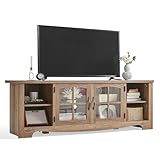
Overview: Designed for larger televisions, this LINSY HOME stand supports TVs up to 75 inches with its 66-inch width and 360-pound capacity. The 22-inch height suits standard viewing setups, while the brown wood grain finish and glass doors deliver farmhouse charm. Engineered wood construction with reinforced support ensures durability for substantial entertainment systems.
What Makes It Stand Out: The expansive 66-inch surface accommodates oversized TVs without overhang, while height-adjustable shelves in the side cabinets adapt to various components. Integrated cord management cutouts maintain clean lines, and the eco-friendly materials with waterproof sealing simplify cleaning. The extra wooden support base provides stability that prevents wobbling under heavy loads.
Value for Money: This stand offers excellent value for large-TV owners, positioning itself competitively against premium brands. The adjustable shelving system and cord management features typically appear in units costing significantly more. While lacking LED extras, the focus on core functionality and robust construction makes it a smart investment for buyers prioritizing practicality over flash.
Strengths and Weaknesses: Strengths include superior size accommodation, sturdy reinforced base, adjustable interior shelving, effective cord management, and easy-clean waterproof surface. The versatile farmhouse style suits various decors. Weaknesses center on the relatively low 22-inch height, which may not suit those preferring elevated viewing, and the absence of premium features like lighting. Assembly can be time-intensive due to size.
Bottom Line: A solid choice for owners of 70+ inch televisions seeking organized, concealed storage. Delivers reliable performance and classic style, making it a practical foundation for serious home theaters.
8. Function Home TV Stand for TVs up to 55 Inch, 3 Tier Entertainment Center, Media Console with Open Storage Shelves for Living Room Bedroom, 47” Modern TV Table with Faux Marble Top Gold Metal Leg

Overview: This Function Home TV stand targets style-conscious buyers with limited space, featuring a faux marble top and gold metal legs that evoke modern glam aesthetics. Measuring 47 inches wide, it supports TVs up to 55 inches and 150 pounds. The three-tier open design provides accessible storage for components while maintaining a minimal footprint ideal for apartments or bedrooms.
What Makes It Stand Out: The combination of faux marble laminate and gold-finished metal creates a luxe look at a fraction of designer furniture costs. Its slender 13-inch depth and open shelving maximize floor space while preventing visual bulk. Protective footpads prevent floor damage and stabilize the unit on uneven surfaces, and the versatile design functions as a console table in entryways or as a coffee table alternative.
Value for Money: This stand excels in affordability for its aesthetic category. Genuine marble and metal frames often cost three to four times more. While materials are budget-appropriate, the visual impact rivals higher-end pieces, making it perfect for renters or those frequently updating decor. The 150-pound capacity suits most 55-inch TVs and components without over-engineering.
Strengths and Weaknesses: Strengths include striking modern design, space-saving dimensions, versatile usage options, protective footpads, and straightforward assembly. The open shelves offer easy access and ventilation. Weaknesses involve the lower weight capacity, lack of cable management features, and open design that exposes clutter. Faux marble surfaces may chip if impacted, and the narrow depth limits larger components.
Bottom Line: Perfect for small-space dwellers prioritizing style and affordability over heavy-duty performance. An excellent entry-level glam piece that punches above its price point visually.
9. Ameriwood Home Carson TV Stand for TVs up to 50", Black (1195496PCOM)

Overview: The Ameriwood Carson TV stand delivers straightforward functionality for modest entertainment setups, accommodating flat-screen TVs up to 50 inches and 55 pounds. Its black laminate finish and contemporary profile suit minimalist or budget-focused consumers. The unit features two cabinet doors concealing internal storage, plus open shelving for frequently accessed components, making it a practical entry-level solution.
What Makes It Stand Out: Simplicity defines this stand. The integrated wire management system, rare at this price point, keeps cables organized behind the unit. Behind each door, one adjustable and one fixed shelf provide customizable storage for DVDs, games, and accessories. The compact footprint fits easily in bedrooms, dorms, or small apartments where space is premium.
Value for Money: Positioned as a budget champion, this stand offers essential features without premium pricing. While constructed from standard particle board, it undercuts competitors by 30-50% while maintaining adequate functionality. For users with smaller TVs and limited component collections, it eliminates unnecessary expense, focusing resources on core utility rather than aesthetic flourishes.
Strengths and Weaknesses: Strengths include affordability, effective wire management, concealed storage behind doors, adjustable interior shelving, and compact size. The black finish resists visible dust. Weaknesses involve the low 55-pound weight capacity, limiting compatibility with heavier TVs, and basic particle board construction that’s vulnerable to moisture damage. The 50-inch TV limit may not suit future upgrades, and assembly hardware quality is basic.
Bottom Line: A no-frills, reliable option for small-TV owners on tight budgets. Delivers essential storage and cable management, but consider upgrading if you anticipate equipment changes or need premium durability.
10. 4-Tier AV Media Stand with 2 Hooks,Heavy Duty Stereo Cabinet Furniture-Large Stereo Rack and Game Console Stand,Wooden Record Player Stand,Audio Stand Perfect for DVD Players/Game Console/TV Box/Xbox

Overview: This heavy-duty AV media stand caters to audiophiles and gamers needing robust, ventilated equipment storage. The metal frame construction supports multiple components across four tiers, while two integrated hooks provide convenient hanging for headphones or controllers. Measuring 16.5 inches wide, it prioritizes vertical storage and equipment accessibility over traditional TV stand aesthetics.
What Makes It Stand Out: The open-frame design ensures continuous air circulation, preventing overheating of amplifiers, gaming consoles, and AV receivers. Adjustable feet stabilize the unit on uneven surfaces, a critical feature for racks holding valuable electronics. The inclusion of two thick wire hooks offers customizable organization for accessories, mounting on either side to suit room layouts. Its compact footprint fits where conventional TV stands cannot.
Value for Money: For specialized AV use, this stand offers strong value. Metal-framed audio racks often command premium prices, yet this unit remains accessible while supporting substantial weight. The open design eliminates costs associated with doors and finishing, focusing investment on structural integrity. Gamers and audio enthusiasts will appreciate the heat management that prevents premature equipment failure.
Strengths and Weaknesses: Strengths include superior ventilation, sturdy metal construction, adjustable stability feet, accessory hooks, and compact vertical design. The open shelves provide easy access for equipment swaps. Weaknesses involve the narrow 16.5-inch width, which limits TV size compatibility, and the exposed design that shows cable clutter. The industrial aesthetic may clash with traditional decor, and cable management isn’t integrated.
Bottom Line: Highly recommended for gamers and AV hobbyists prioritizing equipment cooling and accessibility over concealed storage. A specialized solution that excels in its niche but isn’t suited for general living room aesthetics.
Understanding the 2026 Home Theater TV Stand Landscape
The Evolution from Furniture to Entertainment Hub
The concept of a “TV stand” has undergone a radical transformation in recent years. What once served as a simple pedestal has morphed into an active component of your home theater ecosystem. Today’s stands must accommodate not just your display, but also gaming consoles with massive thermal output, soundbars with upward-firing Atmos drivers, streaming devices, cable boxes, and the increasingly common dedicated media server. The integration of USB-C power delivery, HDMI 2.1 pass-through capabilities, and even built-in wireless charging pads has blurred the line between furniture and technology.
Key Terminology You Need to Know
Before diving into features, familiarize yourself with critical terms that define quality in 2026. “VESA compatibility” now extends beyond mounting patterns to include integrated cable routing standards. “Dynamic load rating” refers to weight capacity during movement or vibration—a crucial metric if you have subwoofers nearby. “Thermal envelope” describes the stand’s ability to dissipate heat across all compartments, while “acoustic transparency” measures how much sound passes through cabinet doors without muffling or coloration.
Critical Sizing Considerations for Modern Displays
Beyond the Diagonal: TV Dimensions vs. Stand Width
The old rule of thumb—stand width should exceed TV width—needs refinement for modern displays. Today’s ultra-thin bezels mean a 77-inch OLED has a significantly smaller footprint than a 65-inch LCD from five years ago. However, the stand must still provide stable support and proportional aesthetics. For 2026’s popular 65- to 85-inch displays, target a stand that’s at least 20% wider than your TV’s actual width (not screen size) to prevent tipping and create visual balance. Remember to account for speaker placement; if you’re using bookshelf speakers, you’ll need additional surface area beyond the TV base.
The 65-Inch Rule and Why It Matters
The 65-inch display size has become the sweet spot for premium home theaters, and stand manufacturers have responded with optimized dimensions. For these displays, stands measuring 58-72 inches wide provide ideal proportions while offering sufficient storage depth—typically 15-18 inches—to accommodate full-sized AV receivers without cramping connections. This size range also allows for proper ventilation clearance on all sides, which becomes critical when housing heat-generating equipment.
Accounting for Future Upgrades
Smart shoppers plan for display upgrades before they happen. If you’re currently using a 55-inch TV but eyeing an 83-inch OLED for next year, purchase a stand sized for your future display now. The incremental cost difference is minimal compared to replacing an undersized stand later. Consider also the trend toward deeper displays; while today’s sets are razor-thin, tomorrow’s premium models with advanced cooling systems and integrated soundbars may require an extra 2-3 inches of depth clearance.
Material Science: What Your Stand Is Really Made Of
Engineered Wood vs. Solid Hardwood
The debate between engineered wood (MDF, particle board with veneer) and solid hardwood involves trade-offs beyond just price. High-density MDF with premium laminate offers superior dimensional stability—meaning it won’t warp with humidity fluctuations that can stress your TV’s mounting points. Solid hardwood provides unmatched aesthetics and repairability but requires climate control to prevent seasonal movement. For 2026’s larger displays, look for engineered wood cores with real wood veneers that combine stability with authenticity, often featuring internal metal reinforcement for weight capacity exceeding 200 pounds.
Metal Frameworks and Weight Distribution
Premium stands increasingly feature internal steel or aluminum frameworks that bear the actual load while wood components provide aesthetics. This hybrid construction allows for slimmer profiles without sacrificing strength. Powder-coated steel frames prevent sagging across wide spans—critical for 70-inch-plus stands—while aluminum offers lighter weight for mobile installations. Check for welded joints rather than bolted connections in high-stress areas, as welds maintain integrity under vibration from powerful subwoofers.
Tempered Glass: Safety and Aesthetics
Tempered glass shelving remains popular for its minimalist look, but 2026 standards require a minimum thickness of 8mm for any load-bearing surface, with 10mm preferred for TV mounting platforms. Look for glass with polished edges and corner radius cuts to prevent chipping. The best designs incorporate glass with beveled edges that catch LED accent lighting, creating a floating effect while maintaining a safety margin four times stronger than standard glass.
Weight Capacity: The Non-Negotiable Safety Factor
Static vs. Dynamic Load Ratings
Manufacturers list two weight capacities: static (stationary) and dynamic (during movement or vibration). A stand might support 150 pounds statically but only 100 pounds dynamically. For home theaters with powerful subwoofers or those located in earthquake-prone regions, dynamic rating is the number that matters. As a rule, your total equipment weight should not exceed 60% of the stand’s dynamic rating to maintain safety margins during intense action scenes with heavy bass.
Calculating Your True Equipment Weight
Most shoppers underestimate their total load. A 77-inch OLED (65 lbs), premium AV receiver (35 lbs), gaming console (10 lbs), center channel speaker (25 lbs), and miscellaneous gear can easily exceed 150 pounds. Add a safety factor of 1.5x for future equipment, and you should target stands rated for at least 225 pounds static capacity. Don’t forget to include the weight of media collections if storing discs or vinyl—those add up faster than you’d think.
Ventilation and Thermal Management
Passive Airflow Design Principles
Modern AV equipment generates significant heat, and enclosed stands can create thermal runaway situations that throttle performance and shorten component lifespan. Expert-approved stands incorporate passive cooling through strategic vent placement based on convection principles: cool air enters through low front vents, rises past hot components, and exits through rear or top vents. Look for stands with at least 2 inches of clearance above heat-generating components and vent patterns that align with your gear’s exhaust ports.
Active Cooling Integration
For high-performance setups with multiple heat sources, passive cooling may prove insufficient. Premium stands now offer integrated active cooling options: whisper-quiet 120mm PC-style fans mounted in rear panels with thermal sensors that activate at predetermined temperatures. The best systems use PWM-controlled fans that ramp speed gradually, maintaining temperatures below 85°F while keeping noise under 25dB—quieter than a whisper. Some even tie into smart home systems, sending alerts if temperatures exceed safe thresholds.
Cable Management in the Wireless Age
Hidden Channel Systems
Despite wireless advances, modern home theaters still require numerous cables for power, HDMI, Ethernet, and speaker connections. Effective cable management starts with dedicated channels that separate power from signal cables to prevent electromagnetic interference. Look for stands with removable rear panels and multiple entry/exit points, allowing you to route cables without disconnecting equipment. The gold standard includes labeled pathways and integrated Velcro straps at 6-inch intervals.
Modular Power Solutions
2026’s best stands move beyond simple surge protection to offer modular power distribution units (PDUs) that mount inside the cabinet. These provide isolated outlets for each component, reducing ground loop potential, and often include USB-C PD ports delivering up to 100W for charging devices or powering streaming sticks without wall warts. Premium models feature power conditioning and voltage regulation, protecting sensitive equipment from fluctuations that can cause crashes or hardware damage.
Acoustic Transparency and Sound Integration
Center Channel Compartment Design
Your center channel speaker is the workhorse of dialogue reproduction, but placing it inside a cabinet can color the sound with unwanted resonance. Expert-approved stands feature dedicated center channel compartments with acoustic transparency fabric panels rather than solid doors, maintaining frequency response while hiding the speaker. The best designs include adjustable internal damping materials and decoupled mounting surfaces that isolate the speaker from cabinet vibrations.
Vibration Isolation Techniques
Subwoofer energy can transfer through floors and stands, causing picture distortion on sensitive displays and muddying audio. High-end stands incorporate vibration isolation through multiple methods: constrained-layer damping (two materials bonded with a viscoelastic layer), spiked feet that couple to the floor, or spring-loaded isolation platforms for turntables and sensitive electronics. For optimal performance, place isolation platforms under AV receivers and source components, not just the TV.
Mobility and Flexibility Features
Integrated Casters vs. Furniture Sliders
Sometimes you need to access rear panels or reconfigure your room. While casters offer convenience, they compromise stability for heavy displays. The 2026 solution: retractable casters that lift off the floor when not in use, or heavy-duty leveling feet with micro-adjustment capabilities. If mobility is essential, look for stands with locking casters rated for at least 50% more weight than your total load, and ensure they distribute weight across at least six contact points to prevent floor damage.
Modular Component Systems
Forward-thinking stands embrace modularity, allowing you to add or remove components as your system evolves. This might include interchangeable side panels to accommodate wider displays, stackable media drawers, or removable equipment bays that convert to wine storage when you downsize to a soundbar. The key is a universal mounting grid system inside the cabinet—typically a pegboard-style pattern that accepts shelves, drawers, and accessories at any height.
Smart Integration and IoT Connectivity
Built-in Charging and Power Delivery
The modern home theater stand doubles as a charging station for controllers, tablets, and phones. Look for stands with Qi wireless charging pads integrated into the top surface, ideally with foreign object detection and overheat protection. USB-C PD ports should deliver at least 65W per port to handle laptops and fast-charging devices, with smart power distribution that prioritizes your TV and AV receiver during high-demand scenarios.
App-Controlled Lighting and Features
LED accent lighting has moved beyond simple strip lights to app-controlled systems with cinema sync capabilities—matching on-screen colors or pulsing with audio. More practical is motion-activated interior lighting that illuminates when you open doors or drawers, using warm 2700K LEDs that won’t affect screen viewing. Some premium stands integrate with home automation platforms, allowing you to create scenes like “Movie Night” that dim lights, close cabinet doors, and activate cooling fans simultaneously.
Aesthetic Trends for 2026 Home Theaters
Minimalist Floating Designs
Wall-mounted, floating TV stands continue gaining popularity, creating the illusion of space while simplifying floor cleaning. These require robust wall anchoring to studs or concrete, with weight capacities that rival floor-standing units. The 2026 twist: floating stands with hidden cable routing that drops wires inside the wall to a basement or crawl space, eliminating visible cables entirely. Ensure any floating design includes anti-tip brackets for earthquake zones and homes with children.
Statement-Making Credenzas
For dedicated theater rooms, the stand becomes a design centerpiece. Statement credenzas in 2026 feature bold materials like fluted wood panels, brushed brass accents, or even concrete composite tops with integrated wireless charging. These pieces prioritize aesthetics but shouldn’t sacrifice function—the best examples hide cutting-edge cable management and ventilation behind vintage-inspired facades. Consider the room’s acoustic treatment when selecting materials; hard surfaces reflect sound while soft fabrics absorb it.
Biophilic and Sustainable Materials
Environmental consciousness has reached furniture design. Stands crafted from FSC-certified bamboo, reclaimed wood, or bio-composite materials made from agricultural waste offer sustainability without compromising performance. These materials often provide natural acoustic damping properties and unique aesthetic character. Verify that sustainable options still meet weight and safety standards; some eco-materials require additional reinforcement to handle 2026’s heavier displays.
Accessibility and Ergonamic Positioning
Optimal Viewing Height Calculations
The center of your TV screen should sit at eye level when you’re seated in your primary viewing position. For most home theaters with recliners or sofas, this means the TV’s center should be 42-48 inches from the floor. Calculate stand height accordingly: subtract half your TV’s height from your target center height. For a 77-inch TV (approximately 38 inches tall), you need a stand around 23-29 inches high. Remember to account for TV feet or soundbar placement if not wall-mounting.
ADA Compliance Considerations
If your home theater may be used by individuals with mobility limitations, consider ADA-compliant stand heights (maximum 34 inches for forward reach) and ensure controls are accessible. This doesn’t mean sacrificing style—many premium stands offer motorized height adjustment, allowing you to lower the TV for wheelchair access or raise it for standing gaming sessions. These systems typically include memory presets and slow, quiet operation to avoid disrupting the viewing experience.
Future-Proofing Your Investment
Modular Expansion Capabilities
Technology will continue evolving, and your stand should accommodate it. Look for designs with removable back panels that can be replaced with updated connectivity modules—imagine swapping a standard HDMI passthrough for future display interfaces without replacing the entire stand. Some manufacturers offer upgrade kits that add new features like USB4 ports or enhanced power delivery, extending your furniture’s lifespan beyond the typical 5-7 year replacement cycle.
8K and Beyond: Preparing for Next-Gen Tech
While 8K adoption remains limited, stands should prepare for the bandwidth and power requirements of next-generation displays. This means cable channels wide enough for thicker, more robust cables, and power systems rated for displays that may consume 500+ watts. Consider stands with dedicated networking compartments for media servers and streamers, as 8K content demands wired connections exceeding 10 Gbps—wireless won’t cut it for uncompressed sources.
Budget Tier Breakdown
Entry-Level Essentials
Budget-friendly stands (under $300) in 2026 focus on core functionality: adequate weight capacity, basic cable management, and straightforward assembly. These typically use engineered wood with laminate finishes and simple metal hardware. While you sacrifice premium materials and advanced features, many entry-level options now include surprisingly robust ventilation and modular shelving. Prioritize weight rating and stability over aesthetics at this tier—an unstable stand risks thousands in equipment.
Mid-Range Sweet Spot
The $500-$1,200 range represents the value proposition for most enthusiasts. Stands in this category combine engineered wood cores with real wood veneers, integrated cable management systems, and thoughtful details like soft-close hinges and adjustable shelving. You’ll find hybrid metal-wood construction, passive cooling designed for AV equipment, and compatibility with aftermarket accessories like fan kits or power modules. This tier balances performance, aesthetics, and longevity without the luxury markup.
Premium Investment Pieces
High-end stands ($1,500+) justify their cost through exceptional materials, bespoke customization, and integrated technology. Expect solid hardwood construction with hand-rubbed finishes, completely hidden cable routing, active cooling with smart controls, and modular systems that adapt to any equipment configuration. These pieces often include white-glove delivery and professional installation, with warranties extending 10+ years. For dedicated theater rooms with five-figure equipment investments, the stand becomes part of the system, not just furniture.
Professional Installation vs. DIY
When to Call the Experts
Consider professional installation if your stand exceeds 72 inches, supports displays over 85 inches, or will be wall-mounted. Technicians ensure proper weight distribution, seismic anchoring where required, and optimal cable routing that meets electrical codes. They can also integrate the stand with home automation systems and calibrate ventilation systems. The cost (typically $200-$500) is negligible compared to the risk of damaging a $3,000 TV or causing a fire hazard through improper power management.
Essential Tools for Self-Assembly
If you’re assembling yourself, you’ll need more than the included Allen wrench. Invest in a cordless drill with torque control, a stud finder for wall-mounted units, a 4-foot level for perfect alignment, and cable fishing tools for clean wire management. A second person is non-negotiable for large stands—attempting solo assembly risks injury and stripped fasteners. Set aside 3-4 hours for assembly, plus time for cable routing and equipment placement.
Maintenance and Longevity
Cleaning Different Materials
Engineered wood requires only microfiber dusting and occasional damp cloth cleaning—avoid silicone-based polishes that can damage laminates. Solid hardwood benefits from quarterly conditioning with furniture-specific oils to prevent drying and cracking. Glass panels need streak-free cleaners and lint-free cloths; clean both sides simultaneously to prevent spotting. Metal frames should be wiped with dry cloths to prevent rust in humid environments; coastal homes may need stainless steel or powder-coated aluminum to resist salt air corrosion.
Seasonal Adjustments for Climate
Wood and engineered materials expand and contract with humidity changes. In dry climates or during winter heating season, use a humidifier to maintain 40-50% relative humidity, preventing joints from loosening. Conversely, dehumidifiers protect against swelling in summer months. Check and tighten hardware seasonally, especially on floating mounts where stress concentrates. If your stand has active cooling, clean fan filters quarterly to maintain airflow and prevent dust buildup inside your expensive electronics.
Frequently Asked Questions
How do I calculate the ideal TV stand height for my seating arrangement?
Measure the distance from your floor to eye level when seated in your primary viewing position—typically 40-44 inches for standard sofas, 38-42 inches for recliners. Subtract half your TV’s height (not diagonal size) from this number. For example, if your eye level is 42 inches and your 65-inch TV is 33 inches tall, your stand should be approximately 25.5 inches high. If using a soundbar, add its height plus 2 inches of clearance to your calculation.
What’s the minimum weight capacity I should look for in a 2026 home theater stand?
Calculate your current equipment weight (TV, receiver, consoles, speakers) and multiply by 1.5x to account for future upgrades. For a typical setup with a 77-inch OLED (65 lbs), AV receiver (35 lbs), gaming console (10 lbs), and center channel (25 lbs), you’re at 135 lbs—meaning you need a stand rated for at least 200 lbs static capacity. Always prioritize dynamic load rating if you have powerful subwoofers or live in earthquake-prone areas.
Are floating TV stands safe for heavy OLED displays?
Yes, when properly installed into wall studs or concrete using lag bolts rated for shear loads exceeding your TV’s weight. Floating stands rated for 150+ pounds can safely support even 83-inch OLEDs. The key is using a stud finder to locate at least two studs (preferably three) and using 3-inch lag bolts with washers. For added safety, install anti-tip straps that anchor the TV to the wall, especially in homes with children or in seismic zones.
How important is active cooling in a modern TV stand?
For basic setups with just a TV and soundbar, passive ventilation suffices. However, if you’re housing an AV receiver, gaming console, and streaming devices in enclosed compartments, active cooling becomes essential. Modern AV receivers can reach 120°F internally when driving 7+ channels, shortening component lifespan. A stand with thermostatically controlled fans maintaining temperatures below 85°F can extend equipment life by 30-40% and prevent thermal throttling during intense gaming or movie sessions.
Can I place my center channel speaker inside a closed cabinet?
Only if the cabinet features acoustic transparency panels—perforated metal or specialized fabric that allows sound to pass without coloration. Solid doors will muffle dialogue and create unwanted resonance. The best stands include a dedicated center channel compartment sized for your specific speaker, with internal damping material and decoupled mounting to prevent cabinet vibration. Measure your speaker’s dimensions including grille depth before purchasing.
What’s the difference between a TV stand and an entertainment center in 2026?
The terms have blurred, but generally, TV stands are lower-profile units (under 30 inches) designed to support the TV directly, while entertainment centers are taller, wall-spanning units that may include the stand as a component. Entertainment centers often integrate display shelving, room for tower speakers, and sometimes projector storage. For dedicated home theaters, entertainment centers provide a cohesive look but require more space and commitment to layout.
Should I buy a stand with built-in surge protection?
Built-in surge protection is convenient but often uses lower-grade components than dedicated power conditioners. If the stand includes it as a bonus feature, that’s fine for basic protection, but critical components like your TV and AV receiver deserve a separate, high-quality power conditioner with isolation transformers. Look for stands with “power conditioner ready” designs that include mounting brackets and cable routing for third-party units like those from Furman or Panamax.
How do I future-proof my TV stand purchase?
Prioritize modular designs with removable back panels, adjustable shelving on universal mounting grids, and cable channels wide enough for future, thicker cables. Ensure power systems have capacity for displays that may draw 500+ watts in the future. Consider stands from manufacturers offering upgrade kits—some provide new connectivity modules, fan systems, or even IoT integration that can be added later without replacing the entire unit.
What’s the best material for a TV stand in a humid climate?
In humid environments (coastal areas, basements), avoid solid hardwoods that can warp and compromise TV stability. Instead, choose powder-coated aluminum frames with high-density MDF cores and moisture-resistant laminates. Stainless steel hardware prevents rust. If you prefer wood aesthetics, select engineered wood with marine-grade veneer and ensure your space stays between 40-60% relative humidity using dehumidifiers. Some premium stands include built-in humidity sensors that alert you to dangerous conditions.
Is professional installation worth the cost for a TV stand?
For stands over $1,000 or supporting displays exceeding 75 inches, professional installation typically pays for itself. Technicians ensure proper weight distribution, seismic anchoring where required, and optimal cable routing that meets electrical codes. They can integrate the stand with home automation, calibrate cooling systems, and provide warranty-backed installation. The $200-$500 cost is minimal compared to risking a $3,000+ TV or creating fire hazards through improper power management. For complex floating mounts or stands with active cooling, consider it mandatory rather than optional.