Table of Contents
Creating a welcoming, functional classroom environment on a tight budget feels like solving a puzzle with missing pieces. Yet one of the most impactful investments you can make—an area rug—often gets overlooked until threads are fraying and stains tell the story of too many art projects gone rogue. The right classroom rug does far more than define a reading corner; it absorbs sound, provides comfortable floor seating, reduces slip hazards, and creates a psychological “home base” where students naturally gather and focus. But not all rugs can survive the daily gauntlet of twenty-five little feet, spilled juice boxes, and impromptu science experiments.
Finding affordable options that don’t disintegrate by winter break requires understanding what makes a rug truly durable versus what just looks sturdy in product photos. This guide cuts through marketing fluff to arm educators, administrators, and parent volunteers with the knowledge to spot quality, negotiate smart purchases, and maintain rugs that last for years—not months. We’ll explore fiber science, backing technologies, safety certifications, and budget strategies that transform rug shopping from a guessing game into a confident investment in your learning environment.
Top 10 Classroom Area Rugs
Detailed Product Reviews
1. MAISONRINA Classroom Rugs Elementary with Colorful Circle, Large Classroom Rug for Preschool Nursery Daycare, Educational Kids Carpet for Kindergarten, 13’x7'7’’ Playmat Seats 24(Black)

Overview: This oversized classroom rug delivers serious square footage for busy learning environments. Measuring an expansive 13’x7'7’’, it comfortably accommodates up to 24 children for circle time, story sessions, or collaborative activities. The eye-catching colorful circle pattern creates defined personal spaces that help maintain classroom order while appealing to young learners. OEKO-TEX certification ensures safety standards meet educator expectations.
What Makes It Stand Out: The upgraded odorless construction sets this apart from typical classroom carpets that emit chemical smells. The polyester fiber surface combined with an improved backing prevents hooking and provides a softer, more premium feel under little knees. Teachers gain an immediate visual organization tool—each colored circle serves as a natural boundary marker that reduces transitional chaos and helps children find their spots independently.
Value for Money: At this size, the price per square foot undercuts most commercial educational rugs significantly. Comparable products from specialized school suppliers often cost 40-60% more for similar dimensions. The lightweight design adds hidden value—teachers can roll it up solo for storage or drying without needing custodial help, saving labor costs and time.
Strengths and Weaknesses: Pros: Massive coverage area seats entire classes; OEKO-TEX certified safety; truly odor-free out of packaging; easy vacuum cleaning; visual seating organization. Cons: Black background shows lint and debris quickly; requires substantial floor space that smaller classrooms may lack; no explicit warranty coverage mentioned.
Bottom Line: Ideal for large preschool and kindergarten rooms where space permits. The combination of safety certification, odor-free materials, and organizational design makes it a smart investment for educators managing big groups.
2. Carpets for Kids KID$Value Plus 72.98 Circletime Early Learning Classroom Rug 6ft x 9ft Oval Blue
 KID$Value Plus 72.98 Circletime Early Learning Classroom Rug 6ft x 9ft Oval Blue](https://m.media-amazon.com/images/I/413tWgZYh+L._SL160_.jpg)
Overview: This USA-made oval rug targets budget-conscious educators who refuse to compromise on durability. The 6’x9’ footprint suits medium-sized classrooms, libraries, or therapy rooms. Its blue background with colorful seating circles provides a calming yet functional aesthetic. The proprietary KIDply backing system prevents curling and buckling—a common failure point in budget rugs.
What Makes It Stand Out: The warranty package is exceptional: 25X stain protection technology cleans with hot water only (no chemicals), an 8-year abrasive wear guarantee, and a no-fault edge warranty covering the serging. This level of protection is virtually unheard of in this price tier. The true stain blocker technology means permanent markers, paint, and juice spills release completely—critical for high-traffic learning spaces.
Value for Money: While the upfront cost exceeds generic alternatives, the warranty coverage and Made-in-USA quality deliver long-term savings. Replacement costs for cheaper rugs that fail within 2-3 years quickly surpass this investment. The hot-water-only cleaning eliminates expensive chemical cleaners, reducing operational costs.
Strengths and Weaknesses: Pros: Industry-leading warranty coverage; genuine stain-blocking technology; American manufacturing quality; stable KIDply backing prevents tripping hazards; chemical-free cleaning. Cons: Limited to 18-20 seating spots; oval shape may not align with rectangular room layouts; blue color shows fading over time in sunny classrooms.
Bottom Line: A workhorse rug for educators prioritizing longevity and low maintenance. The comprehensive warranties justify the premium price, making it cheaper per year of use than budget alternatives.
3. Lahome Modern Abstract Washable 5x7 Area Rugs for Living Room, Colorful Soft Bedroom Rug Low Pile Non Slip,Stain Resistance Dining Room Carpet for Nursery Office Entrance Home Office Decor
 Decor](https://m.media-amazon.com/images/I/51oEtjj2+WL._SL160_.jpg)
Overview: This 5’x7’ abstract rug bridges home decor with light educational use, featuring a faded rainbow watercolor design that suits modern aesthetics. While marketed primarily for residential spaces, its non-slip backing and machine-washable construction make it viable for small Montessori classrooms, daycare reading nooks, or homeschool environments. The 0.3-inch low pile ensures door clearance and reduces tripping risks.
What Makes It Stand Out: True machine-washability at this size is rare—most “washable” rugs require commercial machines. The anti-skid point plastic backing provides superior grip compared to spray-on coatings that deteriorate. Its contemporary design avoids childish motifs, allowing it to transition from toddler playroom to teenage study space, extending its useful lifecycle in home settings.
Value for Money: Priced competitively with residential area rugs, it costs significantly less than dedicated educational carpets. For homeschool families or micro-schools, this represents exceptional value—functioning as both decor and functional learning space. However, it lacks the density and durability of commercial-grade options, making it less suitable for institutional use.
Strengths and Weaknesses: Pros: Genuine machine washable convenience; modern aesthetic grows with children; excellent non-slip backing; low pile for safety; versatile room placement. Cons: No educational graphics or seating organization; 5’x7’ size limits group activities to 8-10 children; stain resistance inferior to commercial treatments; residential-grade durability.
Bottom Line: Perfect for homeschool rooms and small daycare settings where style matters as much as function. Not robust enough for full classroom use, but an excellent value for light educational duty.
4. jinchan Macy 6x9 Kids Area Rug for Classroom Modern Colorful Checkered Diamond Nursery Rug Indoor Washable Soft Non Slip Carpet for Playroom Living Room Bedroom Daycare Circus on Cream

Overview: This 6’x9’ rug brings playful circus energy with its diamond-block pattern in vibrant hues on a cream background. The design balances whimsy with sophistication, making it suitable for both classroom and home environments. Non-slip backing and reinforced overlock edges address common failure points in kids’ rugs. Machine-washability adds practical appeal for busy settings.
What Makes It Stand Out: The aesthetic versatility is remarkable—it functions as a learning tool for color recognition and pattern identification while doubling as attractive room decor. The reinforced overlock edges actively resist shedding, a chronic issue with colorful rugs that lose fibers into classroom air. Its cream base cleverly disguises light debris better than solid dark colors, maintaining a cleaner appearance between vacuuming.
Value for Money: Positioned in the mid-range price bracket, it undercuts specialized educational rugs while offering superior design appeal. The washable feature eliminates professional cleaning costs that accumulate with traditional classroom carpets. For multi-purpose spaces that transition from learning to living areas, this single purchase avoids needing separate rugs.
Strengths and Weaknesses: Pros: Engaging yet tasteful design; genuine machine washability; reinforced edges prevent fraying; cream background hides dust; strong non-slip performance. Cons: No explicit educational labeling or seating guides; lacks warranty coverage; diamond pattern may overstimulate some children; cream color stains more visibly than darker options.
Bottom Line: An excellent hybrid choice for in-home daycares and small classrooms that need to balance educational function with residential aesthetics. The washable design and durable edges make it practical for daily use.
5. HOMORE Kids Educational Rug, Kids Collection Area Rug for Learning Alphabet, Numbers, Colors, Season and Animal Words, Playmat for Classroom Playroom, 4x6 Feet

Overview: This compact 4’x6’ educational rug packs substantial learning content into a small footprint, featuring alphabets, numbers, colors, seasons, and animal words in a single design. The interactive graphics invite children to engage directly with curriculum concepts through movement and play. Strong TP rubber backing ensures stability on hard floors, while the low-pile polyester surface facilitates easy cleaning.
What Makes It Stand Out: Content density is the key differentiator—most educational rugs focus on one concept (alphabet or numbers), but this integrates multiple learning domains. This makes it particularly valuable for special education settings and speech therapy, where varied visual cues support diverse learning objectives. The foldable design with vacuum-sealed packaging reduces shipping costs and storage space when not in use.
Value for Money: As one of the most affordable options, it delivers exceptional educational ROI for tight budgets. The multi-subject design eliminates need for separate learning mats. However, the small size restricts group size to 6-8 children, requiring multiple units for standard classrooms. For individual therapy sessions or homeschool use, the price-to-content ratio is outstanding.
Strengths and Weaknesses: Pros: Comprehensive educational graphics; extremely budget-friendly; strong non-slip backing; low-pile easy cleaning; compact storage. Cons: Too small for group circle time; polyester surface less durable than nylon; arrives heavily wrinkled requiring ironing; no warranty coverage; limited to small spaces.
Bottom Line: Best suited for individual learning stations, therapy rooms, and homeschool environments. While too small for primary classroom use, its educational density and affordability make it an unbeatable supplementary tool.
6. STARUIA Kids Rugs for Playroom & Nursery - 5’x7’ Boho Washable Rainbow Area Rug, Non-Slip Soft Carpet for Classroom, Office & Dining Room

Overview:
The STARUIA 5’x7’ Boho Washable Rug delivers practical functionality for families needing a resilient, easy-clean surface in high-traffic areas. Designed with a cheerful sun pattern, this machine-washable carpet transitions from playrooms to dining spaces, offering versatility beyond typical kids’ rugs. The non-slip rubber backing and 0.3-inch thickness prioritize safety and comfort for active households.
What Makes It Stand Out:
Genuine machine washability distinguishes this rug from spot-clean-only alternatives. The non-slip rubber backing provides reliable grip on hardwood and tile, while the skin-friendly, non-shedding fabric creates a safe play environment. Its boho aesthetic and sun motif blend into various decors, making it suitable for unexpected spaces like offices or dining rooms where spills occur.
Value for Money:
Priced competitively with non-washable options, this rug eliminates professional cleaning expenses, delivering long-term savings. The ability to machine wash on gentle cycle justifies a slight premium, especially for families with young children or pets. Its multi-room versatility further enhances value, functioning as a play mat, hallway runner, or dining area rug without requiring separate purchases.
Strengths and Weaknesses:
Strengths include true machine washability, effective non-slip backing, soft cushioned feel, and adaptable design. The sun pattern adds warmth without overwhelming spaces. Weaknesses involve potential fading after repeated washes, rubber backing degradation over time, and the 5’x7’ size limiting larger room coverage. Folded packaging requires initial flattening, and the colorful design may not suit minimalist aesthetics.
Bottom Line:
This STARUIA rug excels for families prioritizing easy maintenance over premium durability. Ideal for busy households with children or pets, its washable convenience outweighs longevity concerns. Choose it for playrooms, homeschool areas, or spill-prone dining spaces where practicality matters most. For the price, it delivers reliable performance with style flexibility.
7. Flagship Carpets Circle Sampler Abstract Classroom Educational Area Rug for Kids and Teachers, Durable Quality for Schools, Preschool, Daycare, & Learning Centers, 7'6" x 12’, Black

Overview:
The Flagship Carpets Circle Sampler is a commercial-grade educational rug engineered for institutional environments. Measuring 7'6" x 12’, this USA-made carpet serves as both organizational tool and cognitive learning platform. Designed for schools, daycares, and learning centers, it withstands heavy daily use while providing defined seating areas through its colorful circle pattern.
What Makes It Stand Out:
CRI Green Label Plus Certification and Class 1 Flammability rating establish unmatched safety credentials for public spaces. The made-in-USA construction ensures durability for hundreds of children daily. Its interactive design naturally organizes kids into groups, transforming passive floor covering into an active teaching tool. Stain-resistant fibers repel liquids, critical for institutional maintenance.
Value for Money:
While substantially pricier than residential rugs, this commercial product outlasts multiple cheaper alternatives in high-traffic settings. For schools and daycares, the durability justifies the investment through reduced replacement frequency. Home users should only consider it for home daycare operations, as the scale and cost outweigh benefits for typical family use. Professional-grade materials and safety certifications add measurable value.
Strengths and Weaknesses:
Strengths include exceptional durability, rigorous safety certifications, educational functionality, and professional-grade stain resistance. The large size accommodates entire classes. Weaknesses include non-washable design requiring professional cleaning, overwhelming scale for most homes, higher price point, and utilitarian aesthetic that clashes with residential decor. The black background shows dust readily.
Bottom Line:
Purpose-built for educational institutions, this Flagship carpet delivers professional-grade durability and safety. For schools and daycares, it’s a worthwhile investment combining functionality with longevity. Home users should measure carefully and consider maintenance costs. If you need commercial performance and certified safety, this is the professional’s choice over any residential-grade alternative.
8. STARUIA Round Boho Rug 6 Ft Washable Round Area Rug for Playroom, Sunshine Circle Rug for Kids Room, Non-Slip Circluar Rainbow Carpet Soft Large Kids Rug for Classroom Dorm Bedroom

Overview:
The STARUIA Round Boho Rug offers a 6-foot circular alternative for creating defined, intimate spaces in children’s areas. Featuring the same cheerful sunshine motif as its rectangular counterpart, this washable carpet targets parents seeking to establish cozy reading nooks, play zones, or decorative accents under circular furniture. Its portable design suits renters and multi-purpose rooms.
What Makes It Stand Out:
The circular shape naturally delineates play spaces without the rigid boundaries of rectangular rugs, perfect for teepees, round tables, or corner reading areas. At 0.3-inch thickness, it provides adequate padding while remaining lightweight enough to roll up for storage or transport. The washable design maintains consistency with modern family needs for hassle-free maintenance.
Value for Money:
Round rugs typically command premium pricing, yet this model remains affordably priced against rectangular options. For spaces where a circular shape enhances functionality, the form factor justifies any slight cost increase. However, the 6-foot diameter covers approximately 28 square feet versus 35 square feet for a 5’x7’ rectangle, offering less coverage per dollar. Best value emerges in specific applications rather than general room carpeting.
Strengths and Weaknesses:
Strengths include versatile round shape, machine washability, effective non-slip backing, cheerful sunshine design, and easy portability. It stores compactly when not needed. Weaknesses involve initial creasing from folded packaging requiring flattening or ironing, reduced coverage area versus rectangular rugs, and the specific design limiting decor compatibility. Round shapes also constrain furniture placement flexibility.
Bottom Line:
This round rug excels at creating intimate, defined spaces rather than covering large areas. Ideal for reading corners, under play tents, or in dorm rooms where space definition matters. Measure your space carefully to ensure the 6-foot diameter meets your needs. Choose it for its shape and washability, accepting trade-offs in coverage and initial setup effort.
9. Super Soft Rug for Bedroom, 5x7 Ft Beige and White Area Rug Classic Checkered Shaggy Anti-Skid High Pile Soft Fluffy Rug Fuzzy Carpet for Living Room Bedroom Kids Room Nursery, Dorm Home Decor

Overview:
The TOOHUB Super Soft Checkered Rug prioritizes luxury comfort over rugged durability. This 5’x7’ high-pile carpet features memory foam padding and a classic beige-and-white checkered pattern, targeting adults seeking plush comfort in low-traffic areas. While marketed for kids’ rooms, its maintenance requirements make it better suited for bedrooms and formal living spaces.
What Makes It Stand Out:
Cloud-like softness from high-pile fibers and memory foam creates genuine luxury underfoot that cheaper shag rugs cannot match. The timeless checkered design complements various decor styles, from modern to vintage. The dotted anti-skid backing provides stability without the stiffness of solid rubber, maintaining the rug’s plush feel throughout.
Value for Money:
Positioned as a premium residential rug, its value depends entirely on placement. For bedrooms or reading nooks where comfort is paramount and mess is minimal, the quality materials justify the price. However, families with young children or pets will find poor value here—professional cleaning costs quickly exceed initial savings. Non-washable high-pile rugs represent ongoing maintenance expenses that diminish long-term value.
Strengths and Weaknesses:
Strengths include exceptional softness, attractive classic design, effective non-slip backing, memory foam comfort, and neutral color scheme versatility. The high pile feels luxurious. Weaknesses are critical: not machine washable, high pile traps dirt and allergens, requires delicate spot cleaning, unsuitable for messy play or dining areas, and shows footprints and vacuum tracks easily.
Bottom Line:
Best for low-traffic, low-mess areas where comfort outweighs practicality. Perfect for master bedrooms, adult reading rooms, or dorm rooms with careful users. Avoid for playrooms, homes with toddlers, or dining spaces. Treat this as a decorative comfort piece requiring mindful maintenance rather than a family workhorse. Invest only if prepared for proper care.
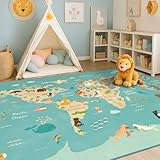
10. Washable Kids Playroom Rug – 5x7 Play Rug for Preschool Toddlers, Baby Girls, Educational with Cute Animals – Non-Slip, Stain Resistant, Soft & Safe for Bedroom, Play Room and Classroom - Blue
Overview:
This Washable Kids Playroom Rug merges educational content with practical design through its animal world map motif. The 5’x7’ blue carpet functions as both interactive learning tool and durable play surface, targeting parents wanting decor that actively contributes to child development while surviving real-world messes.
What Makes It Stand Out:
The educational animal map design transforms passive flooring into an active learning platform, teaching geography and wildlife recognition through engaging illustrations. Unlike generic patterns, this sparks storytelling and exploration. Combined with true machine washability and non-slip latex backing, it merges developmental benefits with family-friendly maintenance requirements.
Value for Money:
Educational toys and washable rugs both represent significant expenses; this product combines them at a moderate price point. The ability to survive machine washing while maintaining a detailed educational print adds considerable value. Compared to purchasing separate play mats and learning materials, this offers integrated savings. Specialized designs typically cost 10-15% more than plain washable rugs, but the developmental benefits justify the premium for parents prioritizing education.
Strengths and Weaknesses:
Strengths include engaging educational design, true machine washability, child-safe non-toxic materials, low 0.25-inch pile that resists crushing, and effective non-slip safety. The world map theme grows with children from toddler to early elementary age. Weaknesses involve the specific blue color and theme limiting decor flexibility, potential for design to feel juvenile as children mature beyond early elementary, and printed details may fade with aggressive washing.
Bottom Line:
An excellent choice for parents prioritizing educational value alongside practicality. Perfect for playrooms, homeschool settings, or classrooms where learning happens organically. The washable design handles spills and accidents while the animal map sparks curiosity and conversation. Accept the slight style limitation in exchange for developmental benefits—this rug proves educational tools can be both beautiful and functional.
Why Classroom Rugs Are Essential Learning Tools
Classroom rugs function as mobile learning real estate. They expand your teaching footprint beyond desks and chairs, creating flexible spaces for circle time, collaborative projects, and sensory breaks. In early childhood settings, rugs often serve as the primary gathering spot where phonics lessons come alive and social skills are practiced daily. For older students, a well-placed rug can anchor a classroom library or makerspace, signaling that certain zones are designed for different types of engagement.
The acoustic benefits alone justify the investment. Hard floors amplify every screech of a shifting chair and tap of a pencil, creating a cumulative noise level that taxes young auditory systems and makes focused work challenging. A quality area rug with proper density can reduce ambient noise by up to 30%, according to acoustic engineering studies, creating a calmer environment where teacher instruction actually reaches student ears without strain.
The Hidden Impact of Flooring on Student Engagement
Consider how physical comfort directly influences attention spans. When students sit on cold, hard floors during read-aloud time, their bodies send constant discomfort signals to the brain, diverting cognitive resources away from comprehension. A cushioned, warm surface eliminates this distraction, allowing full mental energy to flow toward learning. Teachers consistently report fewer fidgeting behaviors and longer sustained attention when students have comfortable floor seating options.
Moreover, rugs visually organize space for developing brains. Young children rely heavily on environmental cues to understand expectations. A brightly colored rug with defined seating spots (like colored circles or squares) provides visual structure that reduces transition time and behavioral corrections. This spatial definition helps students with autism, ADHD, and sensory processing disorders navigate the classroom with greater independence and confidence.
Key Durability Features That Separate Rug Winners from Losers
Durability isn’t about thickness—it’s about construction integrity. A thin, tightly woven commercial-grade rug will outlast a thick, loosely tufted residential rug every time. The first feature to examine is stitch rate or tufting density, measured in stitches per inch. For classroom use, aim for a minimum of 6-8 stitches per inch. You can test this yourself by bending the rug corner back; if you see significant backing material between fibers, the density is too low for heavy traffic.
Face weight, which measures the ounces of fiber per square yard, tells another part of the story. While residential rugs might list face weights of 20-30 ounces, classroom-worthy rugs should exceed 40 ounces for moderate traffic and 50+ ounces for primary gathering areas. Don’t confuse total weight with face weight—some manufacturers add heavy latex backing to make rugs feel substantial while using minimal actual carpet fiber.
Understanding Carpet Fiber Density and Twist
Fiber twist level dramatically impacts how well a rug resists matting and crushing. Twist is measured in turns per inch (TPI), with higher numbers indicating better resilience. For classroom applications, look for fibers with 4-6 TPI. You can sometimes spot high-twist fibers by their springy, “crimped” appearance—they bounce back when compressed rather than lying flat.
Density, calculated by multiplying pile height by stitch rate, determines how much fiber supports each footstep. A dense rug distributes weight across thousands of fiber points, preventing premature breakdown. The best classroom rugs achieve density ratings above 3,000, though this spec is rarely advertised for budget-friendly options. Instead, perform the “finger test”: press your finger firmly into the pile. If you feel the backing immediately, the density is insufficient. If you encounter significant fiber resistance first, you’ve found a durable candidate.
Backing Matters: What Lies Beneath the Surface
The backing is the unsung hero of rug durability. A weak backing leads to curling edges, delamination, and fiber shedding long before the surface shows wear. For classroom use, avoid simple latex or spray-on backings that crack and flake. Instead, seek out rugs with action-back (woven polypropylene) or SoftFlex urethane backings. These materials maintain flexibility while providing dimensional stability.
Waterproof backings serve as crucial moisture barriers, preventing spills from seeping through to damage classroom flooring underneath. This feature also inhibits mold and mildew growth—a non-negotiable in humid climates or rooms without adequate ventilation. Some advanced backings include antimicrobial treatments bonded into the material itself, offering protection that doesn’t wash away with cleaning.
Material Showdown: Which Fibers Actually Survive the School Year?
Fiber selection represents the most critical decision in rug shopping, directly impacting both price and lifespan. Each material brings distinct advantages and compromises that must align with your specific classroom needs. Understanding these differences prevents costly mistakes and unrealistic expectations.
Polypropylene: The Budget-Friendly Workhorse
Polypropylene (also called olefin) dominates the affordable classroom rug market for good reason. This synthetic fiber resists moisture, stains, and fading while costing 30-50% less than nylon. It cleans easily with water-based solutions and won’t support mold growth. Modern polypropylene rugs feature improved fiber engineering that addresses earlier generations’ primary weakness: crushing.
However, polypropylene has limitations. It lacks the inherent resilience of nylon, meaning heavy furniture or constant foot traffic in the same pattern can create permanent compression marks. The fiber also has a lower melting point, so hot items (like a carelessly placed laminator) can cause irreparable damage. For most classrooms, these trade-offs prove acceptable given the significant cost savings. Choose polypropylene for reading nooks, collaborative spaces, and areas with moderate, varied traffic patterns.
Nylon: The Premium Performer on a Budget
Nylon stands as the gold standard for durability, offering exceptional resilience and soil resistance. Its molecular structure includes hydrogen bonds that “remember” fiber shape, allowing it to spring back from compression even after years of use. This makes nylon ideal for primary gathering spots where students sit in the same configuration daily.
The downside? Traditional nylon absorbs stains more readily than polypropylene and typically commands higher prices. However, solution-dyed nylon—where color is added during the liquid polymer stage—offers superior stain resistance and colorfastness. These rugs can often be cleaned with diluted bleach solutions without fading, making them practical for classrooms despite the premium. Watch for “type 6” versus “type 6,6” nylon; the latter provides enhanced durability and is worth the small price difference.
Natural Fibers: When to Choose (and Avoid) Wool and Jute
Wool offers unparalleled luxury and natural soil resistance thanks to lanolin oils, but its high cost and maintenance requirements rarely suit classroom budgets. A wool rug in a teacher’s personal reading corner might make sense, but placing one in general student areas courts disaster. Wool absorbs moisture, can harbor odors, and requires professional cleaning, making it impractical for daily wear.
Jute and sisal present even worse options for classrooms. These plant fibers absorb spills instantly, stain permanently, and shed constantly. While their organic aesthetic appeals to some design sensibilities, their performance in high-traffic educational settings proves abysmal. Avoid natural fiber rugs entirely unless you’re decorating a teacher lounge where food and drinks remain prohibited.
Size and Shape Strategies for Maximum Classroom Impact
Choosing the wrong size rug creates more problems than it solves. Too small, and students fight for border spots while the center remains unused. Too large, and you lose valuable floor space for desks and movement. The sweet spot allows every student to sit with their feet on the rug while maintaining an 18-inch perimeter around the edges for traffic flow.
For standard classrooms serving 20-25 students, a 9’ x 12’ rectangle or 8’ round rug typically accommodates whole-group instruction. Reading corners thrive with 5’ x 7’ or 6’ x 9’ options that define the space without dominating it. Remember that fire codes require maintaining clear paths to exits—measure twice before purchasing to ensure compliance.
Mapping Your Space: The 18-Inch Rule and Other Layout Secrets
The 18-inch rule states that rugs should stop at least 18 inches from walls and built-in furniture, creating a visual breathing room that makes spaces feel larger. This gap also prevents vacuum cleaners from repeatedly bumping edges, which accelerates fraying. In classrooms, this rule doubles as a safety measure, keeping rug edges away from door swings and high-traffic doorways.
Consider the “activity zone” principle when placing multiple rugs. Each rug should anchor a distinct function: one for whole-group instruction, another for quiet reading, perhaps a smaller one for a sensory calm-down corner. This spatial coding helps students transition between activities mentally and physically. Use painter’s tape to outline potential rug sizes on your floor for a full week before purchasing, observing how traffic flows and whether the dimensions support your teaching style.
Safety First: Non-Negotiable Features for Child-Friendly Rugs
Safety certifications matter more in classrooms than residential settings due to liability concerns and children’s developing respiratory systems. Look for GREENGUARD Gold certification, which tests for over 10,000 chemicals and ensures products meet strict standards for low VOC emissions. This certification specifically addresses environments where children spend extended periods.
Flammability standards represent another critical checkpoint. Classroom rugs should meet CPSC FF 1-70 (pill test) requirements at minimum, with commercial-grade options offering additional protection. Request the fire test documentation from suppliers—reputable educational vendors provide this without hesitation. Avoid any rug that feels excessively “chemical” or emits strong odors upon unrolling; these can trigger asthma and allergies.
Slip-Resistant Backing vs. Rug Pads: What Teachers Need to Know
Many affordable rugs claim “non-slip backing” that proves woefully inadequate on polished classroom floors. These thin latex coatings wear away within months, leaving rugs that slide dangerously during active lessons. Instead of relying on backing alone, budget for a separate rubber rug pad designed for commercial use. These pads add cushioning, extend rug life by absorbing impact, and provide genuine slip resistance.
Choose pads made from natural rubber rather than PVC, which can discolor flooring and off-gas chemicals. For carpeted classrooms, select a pad designed for use over carpet (yes, these exist) that prevents bunching and wrinkling. The pad should be 1-2 inches smaller than your rug on all sides to ensure it doesn’t peek out and create a tripping hazard. This small additional investment often doubles your rug’s functional lifespan.
The Low-Maintenance Checklist: Materials That Clean Up Fast
Classroom rugs face a unique assault: washable markers, glitter glue, applesauce, and mysterious substances that defy identification. The key to sanity is choosing materials that release stains rather than bonding with them. Solution-dyed synthetic fibers excel here, as the color runs through the entire fiber rather than sitting on the surface. This means you can use stronger cleaning agents without bleaching the design.
Avoid rugs with high pile heights (over 1/2 inch) in eating areas or early childhood classrooms. While plush feels luxurious, it traps crumbs and requires deep cleaning to truly sanitize. Low-pile commercial carpets (1/4 to 3/8 inch) offer the best compromise between comfort and cleanability. They allow vacuum cleaners to extract debris effectively and dry quickly after spot cleaning, preventing mold growth.
Stain Resistance Technology Explained
Modern stain resistance falls into two categories: topical treatments and inherent properties. Topical treatments like Scotchgard or Stainmaster coatings create a protective barrier that repels liquids initially but wears away with foot traffic and cleaning. These require reapplication every 12-18 months in classroom settings—an often-overlooked maintenance task.
Inherent stain resistance comes from the fiber’s molecular structure. Polypropylene is hydrophobic by nature, repelling water-based stains without any treatment. Solution-dyed nylon achieves similar performance because color permeates the entire fiber, eliminating dye sites where stains typically bond. For classroom use, prioritize inherent stain resistance over topical treatments, which can introduce additional chemicals into your learning environment and create ongoing maintenance costs.
Budget Hacks: Stretching Your Classroom Dollar Without Sacrificing Quality
Smart timing and strategic sourcing can slash rug costs by 40-60% without compromising durability. Many schools miss out on significant savings by shopping during peak back-to-school season when demand drives prices up. Instead, plan purchases for late spring (April-May) when retailers clear inventory, or mid-January after holiday returns flood the market.
Consider “remnant” or “end-of-roll” pieces from commercial flooring suppliers. These are the final portions of carpet rolls, often 9’ x 12’ or larger, sold at steep discounts. While selection is limited to available patterns, the quality matches full-price commercial carpet and typically includes proper backing. Local installers often have relationships with schools and will bind edges for a nominal fee, creating a custom-sized rug at a fraction of retail cost.
Timing Your Purchase for Maximum Savings
Create a purchasing calendar that aligns with retail cycles. Presidents’ Day weekend (February) and Memorial Day weekend (May) bring deep discounts on home goods, including rugs. Online retailers often run flash sales during these periods with additional coupon codes. Set up price alerts on comparison shopping sites for “commercial grade area rugs” and be ready to act quickly when prices drop.
For larger orders (multiple classrooms), contact manufacturers directly. Many offer educational discounts of 15-25% that aren’t advertised publicly. Pool orders with other teachers or across grade levels to meet minimum order quantities. Some companies provide free shipping for school orders, saving hundreds on bulky items. Always request a sample before committing to a large purchase—reputable suppliers send 18" x 18" samples for under $10.
Design for Learning: Colors and Patterns That Actually Help Kids Focus
Rug design influences classroom behavior more than most educators realize. Busy, high-contrast patterns might look cheerful but can overstimulate students with sensory sensitivities or attention challenges. Research in environmental psychology suggests that moderate visual complexity supports engagement without causing distraction. Opt for patterns with low to medium contrast and repeating geometric shapes rather than scattered, random designs.
Color selection should align with your classroom’s primary activities. Cool blues and greens promote calm and concentration, making them ideal for reading areas. Warm yellows and oranges stimulate creativity and energy, perfect for collaboration zones. Red, while attention-grabbing, can increase heart rate and should be used sparingly as an accent rather than a dominant color. Neutral bases with colorful borders offer flexibility, allowing you to refresh the room’s look with inexpensive accessories rather than replacing the rug.
The Psychology of Color in Educational Spaces
Consider the age of your students when selecting colors. Young children (K-2) respond well to bright, clear colors that help them identify spaces and feel emotionally secure. Primary colors work beautifully when used in solid blocks or simple patterns. Older elementary students benefit from more sophisticated palettes—think teal, coral, or sage—that feel mature while still providing visual interest.
Avoid trendy color combinations that may feel dated quickly. Instead, choose timeless bases (navy, charcoal, warm gray) and incorporate trends through smaller, replaceable elements. This approach extends the rug’s aesthetic lifespan, ensuring your investment looks current for 5-7 years rather than 2-3. Remember that color appears different under fluorescent lighting versus natural light; always view rug samples in your actual classroom before finalizing.
Red Flags: Common Rug Shopping Mistakes Educators Make
The most expensive mistake is buying residential-grade rugs for commercial use. Those plush, shaggy rugs from big-box stores feel heavenly underfoot but lack the density and backing to survive classroom conditions. Within months, they mat down, shed fibers that clog vacuums, and develop permanent traffic patterns. Look for terms like “commercial grade,” “contract quality,” or “light commercial use” in product descriptions.
Another pitfall: choosing light-colored rugs for high-traffic areas. While cream or pale gray might match your aesthetic vision, they show soil immediately and require constant cleaning. Instead, select medium-tone colors with subtle patterning that camouflage daily wear. Patterns with small specks of multiple colors (called “heathered” or “berber” styles) hide dirt remarkably well between vacuuming sessions.
Never trust “stainproof” claims without understanding the limitations. All rugs stain eventually; the difference is how easily they release stains and whether cleaning causes damage. Be wary of products that don’t specify cleaning instructions or warn against common cleaners. A truly classroom-ready rug should tolerate mild detergent solutions, enzyme cleaners for organic stains, and spot treatments without voiding warranty.
Warranty Wisdom: What “Wear” Really Means in Classroom Settings
Rug warranties contain language that often excludes classroom use or defines “normal wear” in ways that don’t match educational reality. Most residential warranties cover abrasive wear only—meaning fiber loss from foot traffic—not staining, soiling, or matting. Since classrooms experience all three simultaneously, these warranties offer little real protection.
Seek out warranties specifically designed for commercial or educational environments. These typically cover: fiber loss exceeding 10% over the warranty period, edge raveling, backing delamination, and zippering (seams coming apart). The best warranties don’t require professional cleaning receipts (a common residential warranty clause) and allow for cleaning with common school-approved sanitizers.
Read the fine print regarding exclusions. Many warranties void coverage if rugs are used in areas where food is consumed—a dealbreaker for kindergarten classrooms. Others exclude “rolling loads,” which could apply to moving book carts or adjustable desks. A truly classroom-friendly warranty acknowledges that educational environments are tough and stands behind the product anyway.
Eco-Friendly Options: Sustainable Rugs That Won’t Break the Bank
Sustainable doesn’t have to mean expensive. Recycled PET (polyethylene terephthalate) rugs, made from post-consumer plastic bottles, offer impressive durability at prices comparable to virgin polypropylene. These fibers resist stains and moisture while diverting waste from landfills. Many carry Cradle to Cradle certification, verifying they can be recycled again at end-of-life.
Look for rugs with CRI Green Label Plus certification, which ensures low VOC emissions and safer indoor air quality. This is particularly important in modern, well-insulated schools where off-gassing products can accumulate. Some manufacturers now offer take-back programs, accepting worn rugs for recycling into new products, sometimes providing a small credit toward future purchases.
Natural rubber backings and water-based dyes reduce chemical exposure while maintaining performance. Be cautious of “eco-friendly” claims on bamboo or jute rugs for classrooms—these materials simply don’t hold up to daily wear despite their green appeal. True sustainability means choosing a product that lasts for years, not one that requires frequent replacement.
Installation and Maintenance: Setting Up for Success
Proper installation prevents 90% of premature rug failure. Upon delivery, unroll the rug immediately and allow it to rest flat for 24-48 hours before placing furniture. This lets the backing relax and release packaging creases. During this period, ventilate the room well to dissipate any manufacturing odors, even on low-VOC products.
Vacuum the rug thoroughly before first use—this removes loose fibers from manufacturing and raises the pile to its intended height. Use a vacuum with adjustable height settings; too low a setting can damage fibers and backing, while too high leaves debris trapped. For classroom rugs, a commercial-grade upright vacuum with a beater bar (set to the correct height) proves more effective than canister vacuums at extracting deeply embedded dirt.
The First 30 Days: Breaking In Your Classroom Rug Properly
The initial month sets the tone for your rug’s entire lifespan. Rotate the rug 180 degrees after two weeks of use to ensure even wear, especially if students always enter from the same direction or sit in consistent spots. This simple step prevents permanent traffic patterns and extends aesthetic appeal.
During the first 30 days, address spills immediately using manufacturer-recommended spot cleaning methods. This prevents stains from setting and tests how well the rug responds to cleaning. Document any issues—if a rug shows poor performance early, you may still be within return windows or warranty claim periods. Avoid using fabric protectors or additional treatments during this period; they can interfere with built-in stain resistance and complicate warranty claims.
Establish a cleaning schedule from day one: daily spot cleaning, weekly vacuuming, and monthly deep cleaning in high-traffic areas. Consistency matters more than intensity. Light, frequent maintenance prevents soil from grinding into fibers and backing, where it causes irreversible damage. Train students to help—make spotting and reporting spills part of classroom jobs, teaching responsibility while protecting your investment.
Frequently Asked Questions
How long should a classroom rug realistically last?
With proper selection and maintenance, a commercial-grade polypropylene or nylon rug should last 5-7 years in a typical classroom. High-traffic areas like main gathering spots may show wear sooner, while reading corners can last a decade. The key is matching fiber type to usage intensity and following recommended cleaning protocols.
Can I use a residential rug if I’m on an extremely tight budget?
Only as a very short-term solution (1-2 years) in low-traffic areas. Residential rugs lack the density and backing for classroom use and will need replacement quickly, ultimately costing more than investing in a commercial rug initially. If you must go this route, choose a low-pile, tightly woven option and budget for replacement within 18 months.
What’s the best way to clean classroom rugs during flu season?
Use a steam cleaner with water heated to at least 212°F, which kills most viruses and bacteria without chemicals. For spot disinfection, choose EPA-approved products specifically designed for synthetic carpets, testing in an inconspicuous area first. Avoid over-wetting, which can lead to mold growth in the backing. Increase vacuuming frequency to daily during illness peaks, using a vacuum with a HEPA filter to capture airborne particles.
How do I prevent rug edges from curling and becoming tripping hazards?
Invest in a quality rug pad and consider professional edge binding or serging if not included. For existing curl, apply carpet tape designed for your floor type (not duct tape, which leaves residue) or use a carpet staple gun to tack edges down on wooden subfloors. Rotate rugs regularly to prevent uneven wear that contributes to curling.
Are round or rectangular rugs better for classrooms?
Rectangular rugs typically offer more usable seating area and align better with classroom geometry. Round rugs excel in creating intimate gathering spaces and work well in reading corners or under small tables. For whole-group instruction, rectangular is usually more practical. For flexible seating areas, consider both shapes to create visual variety.
What pile height works best for classrooms with students who have mobility devices?
Keep pile height under 1/4 inch to allow smooth rolling of wheelchairs, walkers, and other mobility devices. Low-pile commercial carpeting provides stable surfaces without sacrificing comfort. Ensure edges are securely bound and flush with the floor to prevent wheels from catching. Test the rug with any mobility device before permanent installation.
Can I place a rug over existing classroom carpet?
Yes, with the correct rug pad designed for use over carpet. Standard rug pads cause bunching and wrinkling when used on carpeted surfaces. Look for “carpet-to-carpet” pads with a mesh design that grips both surfaces without adhesive. Keep the rug size proportional to the room—avoid wall-to-wall layering, which creates moisture traps and cleaning challenges.
How do I handle rug odors from spills and daily use?
Sprinkle baking soda liberally over the dry rug, let sit overnight, then vacuum thoroughly. For persistent odors, use an enzymatic cleaner designed for pet odors—these break down organic matter causing smells. Ensure adequate classroom ventilation, especially after cleaning. Place moisture-absorbing products underneath the rug in humid climates. Never mask odors with sprays; address the source instead.
What’s the difference between “stain-resistant” and “stain-proof”?
“Stain-resistant” means the rug repels stains for a period, giving you time to clean spills before they set. “Stain-proof” is misleading marketing—no rug is completely impervious to all staining agents. Permanent markers, hot sauce, and certain art supplies can stain even the most resistant fibers. The goal is stain resistance that provides a reasonable cleaning window, not impossible perfection.
Should I choose a rug with educational patterns (letters, numbers) or a solid color?
Educational patterns can be visually engaging but may limit flexibility as curriculum changes. They also become dated as teaching methods evolve. Solid colors or simple geometric patterns offer greater longevity and versatility. You can always add educational elements through removable carpet squares, vinyl floor decals, or interactive teaching tools that don’t commit you to a single design for years.
See Also
- 10 Must-Have Kids Area Rugs for Playrooms That Handle Juice Spills
- 10 Affordable Area Rugs for College Dorms That Grip Tile Floors
- 10 Best Outdoor Area Rugs for Patios That Handle Rain in 2026
- 10 Area Rugs for Classrooms That Reduce Noise in 2026
- 10 Top-Rated Area Rugs for Classrooms According to Teachers in 2026