Table of Contents
As your family expands—from toddling first steps to teenagers bringing home friends for dinner—your dining table becomes more than just furniture. It transforms into the command center of family life, where homework sprawls across surfaces, birthday candles are blown out, and Sunday pancakes stack higher each year. But here’s the challenge: how do you invest in a piece that serves your family today without becoming obsolete by next Thanksgiving? The answer lies in the thoughtful selection of an extendable dining table, a decision that requires looking beyond aesthetics to understand mechanics, materials, and long-term value. In 2026, the market offers unprecedented innovation in expandable furniture, making it the perfect time to choose a table that truly grows with you.
This comprehensive guide cuts through marketing noise to equip you with the expert knowledge needed to evaluate extendable dining tables like a furniture industry insider. We’ll explore the engineering principles behind smooth extensions, the material science that determines whether your table survives spaghetti-covered toddler hands or becomes a family heirloom, and the spatial mathematics that prevent your dining room from feeling like a crowded subway car. Whether you’re furnishing your first family home or upgrading from a cramped four-seater, these insights will help you make a confident, future-proof investment.
Top 10 Extendable Dining Tables
Detailed Product Reviews
1. VASAGLE MAEZO Collection - Extendable Dining Table for 4/6/8, Kitchen Table with Tapered Legs, Curved Transitions, for Dining Room, Kitchen, Home Office, Honey Brown UKDT090K01V1
 Table for 4/6/8, Kitchen Table with Tapered Legs, Curved Transitions, for Dining Room, Kitchen, Home Office, Honey Brown UKDT090K01V1](https://m.media-amazon.com/images/I/51fBDh4EmhL._SL160_.jpg)
Overview: The VASAGLE MAEZO extendable dining table delivers mid-century modern aesthetics with practical flexibility. Starting at 55.1 inches and expanding to 63 or 70.8 inches via a center leaf, it accommodates 4-8 diners comfortably. The honey-brown veneered surface pairs with solid wood legs, offering a 265-pound load capacity suitable for daily family meals, studying, or home office work.
What Makes It Stand Out: Its streamlined tapered legs and smooth curved transitions capture authentic mid-century style rarely found at this price point. The thoughtful 0.04-inch safety gap prevents pinched fingers during extension, while bottom latches secure the leaf firmly. The tabletop withstands heat up to 140°C, adding practical durability for hot dishes.
Value for Money: Positioned competitively, this table offers designer aesthetics without the premium price tag of full solid-wood competitors. The combination of a veneer surface and solid wood frame balances cost and durability, making it accessible for style-conscious buyers on moderate budgets seeking versatile sizing options.
Strengths and Weaknesses: Strengths include striking mid-century design, excellent safety features, heat-resistant surface, and straightforward extension mechanism. Weaknesses involve the veneered top (prone to chipping vs solid wood), modest 265-pound capacity, and honey-brown finish that may clash with cooler decor palettes or show scratches.
Bottom Line: An excellent choice for design enthusiasts wanting flexible seating and authentic mid-century flair without breaking the bank, best suited for households prioritizing style and moderate durability over raw material purity.
2. 43.3in-59in Extendable Round Dining Table for 4-8,Modern Kitchen Oval Dining Table with Removable Leaves Space Saving,Wood Base with Storage Shelf for Kitchen Living Room (Walnut)
,Wood Base with Storage Shelf for Kitchen Living Room (Walnut)](https://m.media-amazon.com/images/I/51vF2mzV7BL._SL160_.jpg)
Overview: This versatile round-to-oval dining table maximizes space efficiency while seating 4-8 people. It transforms from a 43.3-inch circle to a 59-inch oval by adding extension leaves stored discreetly underneath. The walnut-finished MDF construction features a cross-shaped base with integrated storage shelf, making it ideal for apartments and smaller dining areas.
What Makes It Stand Out: The clever under-table leaf storage eliminates separate storage needs, while the cross-shaped base provides both stability and a 20.55-inch-wide storage shelf for tableware. Its modern farmhouse aesthetic blends with diverse decors, and the design doubles as a conference table, craft table, or coffee table when collapsed.
Value for Money: This table offers exceptional utility for small-space dwellers. The built-in storage and convertible design effectively combine three functions—dining, storage, and workspace—at a price point competitive with basic extendable tables, delivering multi-purpose value that justifies the investment.
Strengths and Weaknesses: Strengths include space-saving round design, integrated storage, scratch/water-resistant surface, and versatile functionality. Weaknesses are the MDF construction (less durable than solid wood), limited extension range compared to rectangular tables, and the cross base potentially restricting legroom for some seating arrangements.
Bottom Line: Perfect for apartment residents and small-space enthusiasts who prioritize storage and flexibility over premium materials, offering impressive versatility in a compact footprint.
3. Muwuele Solid Wood Extendable Dining Table for 4-8 People with Seamless Extension from 47.2 to 63 Inches, Easy Assembly, Expandable Tables for Small Spaces, Dining Room, Kitchen, Living Room, Walnut

Overview: The Muwuele table delivers pure solid wood construction in an extendable format, expanding from 47.2 to 63 inches to seat 4-8 people. Crafted from 100% FAS-grade rubberwood with thicker angled legs, it supports 300 pounds. The package includes the table only—chairs must be purchased separately.
What Makes It Stand Out: Unlike MDF competitors, this table uses genuine solid rubberwood throughout, offering superior durability and a premium feel. The hidden lift system operates smoothly and silently, with a secure lock mechanism that ensures stability. The seamless extension design transforms faster than traditional leaf systems.
Value for Money: For solid wood purists, this table provides exceptional value. FAS-grade lumber at this price point undercuts many veneer or MDF alternatives while delivering authentic wood grain, longevity, and a 300-pound capacity that promises decades of reliable service.
Strengths and Weaknesses: Strengths include premium solid wood construction, robust weight capacity, smooth silent extension, and easy-clean rounded corners. Weaknesses are the table-only purchase (chairs extra), rubberwood being less prestigious than hardwoods, and a simpler design aesthetic that may not suit all decor styles.
Bottom Line: The best choice for buyers prioritizing genuine solid wood and durability over stylistic frills, offering uncompromising material quality and reliable performance for families seeking long-term value.
4. HOMBIX Extendable Dining Table, Transformer Folding Console Table for 10-12 People, Space Saving Dining Room Table for Apartments & Homes, Walnut

Overview: The HOMBIX transformer table redefines flexibility, collapsing to a 20.1-inch console or expanding to an impressive 118.5-inch banquet table using five removable leaves. It seats 2-14 people with a 660-pound capacity. The high-gloss MDF surface features an aluminum telescopic mechanism and central iron leg for stability.
What Makes It Stand Out: No other table matches this dramatic size range, effectively replacing multiple furniture pieces. The pre-assembled top enables 15-minute setup, while individual leaf insertion lets you customize length precisely. The moisture-proof, heat-resistant surface handles heavy use, and the central iron leg prevents sagging at full extension.
Value for Money: While pricier than standard extendables, it replaces console, dining, and banquet tables—three purchases in one. For those hosting large gatherings regularly, the investment pays dividends in space savings and versatility that cheaper alternatives cannot match.
Strengths and Weaknesses: Strengths include unmatched extension range, exceptional 660-pound capacity, rapid assembly, and modern aesthetic. Weaknesses involve MDF construction (not solid wood), the high-gloss finish showing fingerprints, potential wobble if fully loaded without central support, and being overkill for small families.
Bottom Line: Ideal for urban dwellers needing maximum flexibility and frequent entertainers who require occasional large seating capacity, delivering unparalleled adaptability despite its premium price and engineered wood construction.
5. Jocoevol 47″–63″ Extendable Round Dining Table for 4–8 with Dust-Proof 2-Tier Storage Shelf Space Saving Expandable Wood Oval Circle Dinner Furniture with Pedestal Base (Black)

Overview: This round pedestal dining table extends from 47 to 63 inches, seating 4-8 people while maximizing floor space efficiency. The black MDF tabletop features a 36mm thickness with a sturdy pedestal base incorporating a dust-proof two-tier storage shelf. Its design suits modern and classic interiors alike.
What Makes It Stand Out: The pedestal base offers superior legroom and allows chairs to tuck completely underneath, unlike leg-supported designs. The dust-proof storage shelves keep tableware organized and clean, while the smooth extension system with secure clamps ensures effortless expansion. The thick tabletop provides substantial, premium feel.
Value for Money: Competitive within the round extendable category, the added storage and pedestal design justify the price premium over basic four-leg models. For small spaces, the space-saving base and integrated storage deliver functionality that would otherwise require separate furniture purchases.
Strengths and Weaknesses: Strengths include space-efficient pedestal base, generous dust-proof storage, thick durable tabletop, and versatile styling. Weaknesses are MDF construction (not solid wood), black color showing dust and scratches, pedestal potentially limiting seating configuration flexibility, and the round shape offering less surface area than rectangular alternatives.
Bottom Line: A smart solution for small-space residents seeking pedestal aesthetics and integrated storage, offering excellent functionality and style despite its engineered wood construction and color limitations.
6. PatioPerk 54.3-84.5 Extendable Dining Room Table for 4–10, Space-Saving Family Dining Table with Slide-Out Extension Leaves, Modern Dining Table for Apartment Small Space (Black)

Overview:
The PatioPerk extendable dining table offers a practical solution for small-space living, compact at 54.3 inches for daily use and expanding to 84.5 inches to accommodate up to 10 guests. Its modern black finish and clean lines suit contemporary apartments and condos.
What Makes It Stand Out:
The integrated slide-out extension leaves eliminate the hassle of storing separate panels—a rare feature in this price range. The 300-pound weight capacity and reinforced support structure provide exceptional stability for daily meals, homework sessions, and craft projects. Its heat-, scratch-, and stain-resistant surface withstands real family life.
Value for Money:
This table replaces the need for both a small dining table and a separate larger entertaining surface, offering significant savings. Comparable extension tables often cost 20-30% more or require purchasing storage solutions for leaves. The durable construction ensures years of use, making it a smart long-term investment for growing families.
Strengths and Weaknesses:
Strengths include effortless extension mechanism, robust build quality, and versatile styling that works in kitchens or open living areas. The integrated leaf system is genuinely convenient. Weaknesses are the limited 30-inch extension range compared to competitors, and the black finish may show dust and fingerprints requiring frequent cleaning. The 10-person capacity is optimistic for comfortable seating.
Bottom Line:
Perfect for apartment dwellers who occasionally host gatherings. The seamless extension system and durable build outweigh minor drawbacks, making it a top choice for space-conscious buyers prioritizing convenience.
7. 43-95 Inch Long Round Extendable Dining Table for 4-10, Space Saving Oval Large Dinner Kitchen Table with 3 Leaf, 2 Storage, Fluted Mid Century Modern Dining Room Table for Living Room, Wood, Oak
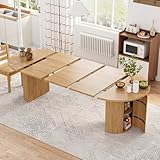
Overview:
This mid-century modern extendable dining table transforms from a 43-inch circle for four to a 95-inch oval seating ten. The oak finish and fluted detailing add sophisticated style, while built-in storage cabinets in the base provide practical organization for cutlery and linens.
What Makes It Stand Out:
The remarkable 52-inch extension range is among the largest available, making it ideal for frequent entertainers. Integrated storage within the table base is a standout feature that maximizes functionality without sacrificing aesthetics. The premium MDF construction with walnut finish offers durability with a high-end look.
Value for Money:
While priced higher than basic extendable tables, the combination of dramatic extension capability, built-in storage, and mid-century design justifies the cost. You’re essentially getting a dining table and storage cabinet in one piece, saving money and floor space compared to buying separately.
Strengths and Weaknesses:
Major strengths include the extensive extension range, clever integrated storage, and stylish fluted design that elevates any dining room. The thickened base eliminates wobbling effectively. Weaknesses include shipment in two packages (potential delivery delays) and more complex assembly requiring patience. The oval shape may not suit all dining spaces or chair configurations.
Bottom Line:
An excellent investment for design-conscious buyers who regularly host large gatherings. The storage solution and impressive extension range make it worth the premium price and assembly effort.
8. Jocoevol 47″–63″ Extendable Round Dining Table for 4–8 with Dust-Proof 2-Tier Storage Shelf Space-Saving Expandable Dining Room Table Wood Oval Circle Dining Table with Pedestal Base (Natural)

Overview:
The Jocoevol round extendable dining table combines space-saving design with practical storage, expanding from 47 to 63 inches to seat four to eight people. Its natural finish and pedestal base make it an attractive centerpiece for smaller dining areas.
What Makes It Stand Out:
The innovative dust-proof two-tier storage shelf hidden beneath the tabletop is a game-changer for organization, keeping essentials accessible but out of sight. The sturdy 36mm thick MDF top offers superior durability, while the pedestal base provides excellent stability and generous legroom without corner legs obstructing seating.
Value for Money:
This table hits a sweet spot between size, storage, and price. While it doesn’t extend as dramatically as some competitors, the built-in storage eliminates the need for separate buffet tables or storage units, representing solid value for families prioritizing organization in tight spaces.
Strengths and Weaknesses:
Strengths include the clever dust-proof storage system, thick durable tabletop, stable pedestal base, and space-saving design that tucks chairs neatly underneath. The round shape maximizes seating efficiency. Weaknesses include the more modest extension range (only 16 inches) and capacity limited to eight people, which may fall short for larger gatherings. The natural finish may clash with very modern decor.
Bottom Line:
Ideal for families of four to six who occasionally host up to eight guests. The storage integration and quality construction make it a practical, stylish choice for compact homes.
9. Fingertip WD 59"-86" Extendable Dining Table for 6-10 Person, Wooden Dining Room Table, Modern Extendable Table for Gatherings, Meeting for Small Kitchens, Dining Office Areas(Natural)

Overview:
The Fingertip WD extendable dining table offers straightforward functionality, adjusting from 59 to 86 inches to accommodate six to ten people. Its natural wood finish and clean design work in dining rooms, kitchens, or even conference rooms, making it a versatile choice for multi-purpose spaces.
What Makes It Stand Out:
The impressive 27-inch extension range provides exceptional flexibility for both intimate family dinners and larger gatherings. Engineered wood construction offers durability for daily use while maintaining a lightweight design. The straightforward assembly process with included tools and guide is a welcome feature for those intimidated by flat-pack furniture.
Value for Money:
This table positions itself as a budget-friendly option without sacrificing core functionality. While it lacks premium features like built-in storage or high-end materials, the competitive price point makes it accessible for first-time homeowners or renters needing adaptable seating capacity without breaking the bank.
Strengths and Weaknesses:
Strengths include the wide extension range, simple modern aesthetic that blends with most decor, and multifunctional use across dining and office settings. The engineered wood surface resists everyday wear. Weaknesses are the absence of storage solutions, basic construction that may not withstand decades of heavy use, and a generic design lacking distinctive character. The weight capacity isn’t specified, which may concern some buyers.
Bottom Line:
A practical, no-frills choice for those prioritizing seating flexibility over style or storage. Excellent value for budget-conscious buyers who need a table that can grow with their entertaining needs.
10. Einhomn Modern Extendable Dining Table for 4-6, 63" Farmhouse Kitchen Table, Rectangular Dining Room Tables for Dining, Kitchen, Office, Living Room, Wooden Tables, Space Saving (Espresso)

Overview:
The Einhomn Modern Extendable Dining Table brings farmhouse charm to small spaces, expanding from 47.3 to 63 inches to seat four to six people comfortably. The espresso finish and clean rectangular design suit kitchens, dining rooms, or home offices seeking rustic warmth.
What Makes It Stand Out:
The reinforced metal frame with triangular structure design provides exceptional stability and a 330-pound load capacity, exceeding many wood-only competitors. The farmhouse aesthetic is authentically executed without being overly rustic, making it versatile for modern and traditional spaces. The 40-minute assembly time is notably quick for extendable tables.
Value for Money:
Positioned as an affordable entry-level extendable table, it offers excellent value for couples or small families who don’t need to seat more than six. The metal reinforcement adds durability typically found in pricier models, while the space-saving design maximizes functionality in tight quarters.
Strengths and Weaknesses:
Strengths include the sturdy metal frame construction, attractive farmhouse styling, quick assembly, and ability to tuck chairs completely underneath. The scratch-resistant MDF laminate is easy to maintain. Weaknesses include the limited seating capacity (max six), modest 16-inch extension range, and lack of storage features. The espresso finish may be too dark for some spaces and shows scratches more than lighter tones.
Bottom Line:
Perfect for small households wanting farmhouse style without sacrificing durability. The metal reinforcement and quick assembly make it a smart buy for those prioritizing sturdiness and aesthetic over maximum extension.
Understanding Your Family’s Growth Trajectory
Before browsing showroom floors or scrolling through online galleries, pause to map your family’s evolution over the next decade. An extendable table purchased for a family of three will face entirely different demands when that same family includes teenagers, aging parents, or a new baby. The most common mistake families make is buying for their current situation rather than their predictable future.
Assessing Current and Future Seating Needs
Start by counting heads at your typical weeknight dinner, then add two seats for growth—that’s your baseline. But think beyond daily meals. How many relatives visit during holidays? Do you host monthly potlucks? Will your children’s friends become permanent fixtures at your table? A family of four should consider a table that extends from six to ten seats, not just four to six. The sweet spot is purchasing a table that accommodates 150% of your current regular seating needs when fully extended. This buffer prevents the awkward scenario of dragging patio furniture inside for birthday parties.
Factoring in Lifestyle Changes
Your dining table must adapt not just to more people, but to evolving activities. Young children need wipeable surfaces for art projects and science experiments. School-age kids require space for laptops and textbooks during homework sessions. Teenagers demand room for board game marathons and pizza parties. Empty nesters might downsize but still want to host holiday gatherings. Consider height-adjustable models that transition from child-friendly lower settings to standard dining height, or tables with removable legs that convert to coffee table height for multi-purpose rooms.
Decoding Extendable Table Mechanisms
The heart of any extendable table lies hidden beneath its surface. The mechanism determines not only ease of use but also long-term durability and structural integrity. In 2026, we’ve seen significant improvements in gear systems and track designs that eliminate the wobbling and sticking that plagued older models.
Traditional Leaf Extensions vs. Modern Butterfly Systems
Traditional drop-leaf tables require manual insertion of separate leaves, which creates storage headaches and risks mismatched wood aging. While these remain budget-friendly, they demand significant physical strength and patience—two things in short supply for parents juggling toddlers. Modern butterfly mechanisms, where leaves fold and store within the table itself, represent the gold standard for busy families. These systems use synchronized gear tracks that pull the table apart while simultaneously lifting the hidden leaf into place with minimal effort. When evaluating these systems, look for ball-bearing glides rather than plastic rollers, and test the mechanism multiple times in the showroom to ensure smooth operation without squeaking or jamming.
The Rise of Self-Storing Leaves
Self-storing leaves eliminate the “where do we keep the extra pieces” dilemma that has frustrated families for generations. These integrated systems typically accommodate one to three leaves within the table’s base, using vertical stacking or horizontal sliding compartments. The key specification to verify is the leaf thickness—thinner stored leaves may warp over time if the storage compartment lacks proper support brackets. Examine how the leaves lock into place when stored; rattling or movement indicates poor engineering that will worsen with years of use.
Material Matters: Durability Meets Daily Life
Material selection directly impacts your table’s ability to withstand the unique abuses of family life: spilled juice, dropped utensils, crayon marks, and the occasional science experiment gone wrong. Each material carries distinct advantages and maintenance demands that must align with your family’s reality.
Solid Hardwood: The Heirloom Investment
Hardwoods like oak, maple, and walnut remain the premium choice for families thinking generationally. Their density resists denting from dropped toys, and their grain structure allows for multiple refinishing cycles over decades. However, not all hardwoods are equal for extendable tables. Quarter-sawn oak offers superior stability across expansion joints, minimizing the seasonal warping that can cause leaves to fit poorly. Look for tables using kiln-dried wood with a moisture content between 6-8%—this specification, often buried in product details, prevents cracking in dry winter heating months and swelling during humid summers.
Engineered Wood: Budget-Friendly Practicality
High-pressure laminate (HPL) tops bonded to engineered wood cores have evolved dramatically, offering scratch resistance that surpasses many natural woods. For families prioritizing easy cleanup over heirloom potential, these surfaces withstand bleach-based cleaners and resist staining from permanent markers or tomato sauce. The critical factor is edge banding quality—poorly sealed edges allow moisture infiltration that causes bubbling and separation. Run your finger along the table’s edge; seamless, rounded edge banding indicates commercial-grade construction that will survive daily wiping.
Metal and Glass: Contemporary Considerations
While less traditional for families, powder-coated metal bases with tempered glass tops solve specific problems. Glass eliminates worries about heat rings from casserole dishes and allows quick visual inspection of the extension mechanism underneath. However, fingerprint smudges become a constant battle, and the hardness of glass amplifies noise from clattering dishes—consider this if you have sensory-sensitive children. Metal bases should have adjustable floor levelers to compensate for uneven tiles or hardwood floors, preventing the wobbling that makes self-extension mechanisms bind.
Size and Space Planning: The 36-Inch Rule
Spatial planning for extendable tables requires thinking in three dimensions simultaneously: the collapsed size for daily use, the expanded size for maximum occupancy, and the clearance space needed for comfortable movement around both configurations.
Room-to-Table Ratio Calculations
The 36-inch rule states that you need a minimum of 36 inches (preferably 42 inches) of clearance from table edge to wall or furniture on all sides. This allows seated diners to push back chairs and walk behind others without performing an awkward sideways shuffle. Measure your room’s length and width, subtract 72 inches from each dimension, and the remaining numbers represent your maximum table dimensions. For extendable tables, calculate this using both collapsed and expanded sizes—your room might comfortably fit a 60-inch daily table but become impassable when extended to 96 inches.
Extended vs. Collapsed Dimensions
The most practical extendable tables for families maintain a reasonable daily footprint while offering dramatic expansion capacity. A table that seats four daily but extends to seat ten should increase by roughly 60% in length. Be wary of tables that more than double in size; the engineering required often compromises stability, creating a center sag that can’t support heavy serving platters. Check the table’s support structure—tables with a central pedestal base often require additional legs that swing out when extended, while four-legged tables may need drop-down center supports that engage automatically.
Safety Features for Young Families
When children are part of the equation, safety transcends aesthetics. The extendable mechanism introduces specific hazards that stationary tables don’t present, requiring vigilant evaluation of design details.
Locking Mechanisms and Stability
Every extension system must include positive locking mechanisms that prevent accidental collapse if a child leans or climbs on the extended section. Test these locks manually—they should require deliberate adult-level force to disengage, with audible clicks that confirm engagement. Tables with automatic locks that engage when the leaf reaches full extension provide peace of mind for distracted parents. Additionally, verify the table’s weight distribution when extended; press down firmly on the extended end. Any wobbling or lifting of opposite legs indicates insufficient counterweighting that could tip if a child hangs on the edge.
Rounded Edges and Non-Toxic Finishes
Sharp corners pose concussion risks for wobbly toddlers and energetic elementary schoolers. Tables with 1-2 inch radius rounded edges significantly reduce injury severity while maintaining a sophisticated profile. Regarding finishes, demand formaldehyde-free, low-VOC (Volatile Organic Compound) certifications like GREENGUARD Gold or OEKO-TEX Standard 100. These ensure off-gassing won’t compromise indoor air quality, crucial for children with asthma or allergies. For the most sensitive families, investigate UV-cured acrylic finishes—though pricier, they cure instantly without chemical solvents and create a harder, more scratch-resistant surface than traditional polyurethane.
Style That Grows With You: Timeless Design Principles
Trendy designs that excite you today may feel dated when your teenager refuses to sit at an “embarrassing” table in front of friends. The most successful family tables embrace timelessness while allowing personality through easily changeable elements.
Focus on clean lines and classic proportions that work across decades. Shaker-style simplicity, mid-century modern tapered legs, or Scandinavian minimalist tops transcend fleeting trends. Avoid ornate turned legs or heavily distressed finishes that lock you into a specific aesthetic. Instead, invest in a neutral base table and express style through replaceable components: colorful chairs that can be updated, removable center runners for seasonal decorating, or reversible leaves with different finishes on each side—one side formal wood stain for holidays, the other side durable white laminate for everyday kid activities.
Budget Allocation: Understanding True Cost of Ownership
The sticker price rarely reflects the actual investment required for a quality extendable table. Families must calculate cost-per-use over the table’s expected lifespan, factoring in hidden expenses that budget models obscure.
A $1,200 table that lasts 15 years costs $80 annually, while a $400 table requiring replacement after 3 years costs $133 annually plus the hassle of shopping again. Allocate your budget with these priorities: 50% for the mechanism and base construction (the non-negotiable foundation), 30% for the top material, and 20% for finish and aesthetics. Be prepared to invest $800-$1,500 for a reliable family-grade table with a smooth mechanism and durable top. Tables below this price point often cut corners on gear systems that will fail under daily extension cycles, while premium tables above $2,500 typically offer diminishing returns in materials you could replicate through careful selection at lower price tiers.
The Environmental Impact of Your Choice
Sustainability considerations have moved from niche concern to mainstream priority, especially for families thinking about the world their children will inherit. The furniture industry’s environmental footprint varies dramatically based on material sourcing and manufacturing location.
Seek FSC (Forest Stewardship Council) certification for wood tables, ensuring the timber comes from responsibly managed forests. For engineered wood, prioritize CARB Phase 2 or TSCA Title VI compliance, which mandates ultra-low formaldehyde emissions. Consider the transportation impact—tables manufactured domestically or in nearby regions reduce carbon emissions compared to pieces shipped from overseas. Some manufacturers now offer take-back programs, agreeing to recycle or refurbish your table at end-of-life, preventing landfill waste. While these eco-conscious options may cost 10-15% more, they align with values many families prioritize in 2026.
Maintenance and Longevity: Protecting Your Investment
An extendable table’s lifespan depends more on maintenance habits than on initial quality. Establishing proper care routines from day one prevents the gradual degradation that turns a beautiful table into a shabby eyesore.
For wood tables, apply a high-quality furniture wax every six months to the extension slides—this prevents the metal-on-wood friction that causes sticking and wear. Never use silicone-based sprays; they attract dust that gums up the mechanism. Clean spills immediately, especially along expansion joints where liquid can seep into the mechanism and cause rust or wood swelling. For families with young artists, keep a dedicated table pad stored within the table’s leaf compartment, ready to deploy during craft time. This protective layer takes the abuse, preserving the finish for formal occasions.
Warranty and Return Policies: Reading the Fine Print
The warranty reveals a manufacturer’s confidence in their engineering. A five-year warranty on the mechanism and structure indicates serious quality, while a one-year limited warranty suggests the company expects issues. Look specifically for coverage of extension mechanisms, leaf warping, and finish defects. Be wary of warranties that exclude “normal wear and tear”—this loophole often denies claims for mechanism failure that occurs through regular use. The best warranties offer in-home repair service, recognizing that disassembling and shipping a dining table is impractical for families. Before purchasing, call the manufacturer’s customer service line with a hypothetical warranty question; their responsiveness during your research predicts the support you’ll receive if problems arise.
Frequently Asked Questions
How do I know if my floor can support a heavy extendable table?
Most residential floors support 40-50 pounds per square foot. A solid wood extendable table weighing 200-300 pounds distributes this load across its legs, well within safe limits. However, if you’re considering a table over 400 pounds or have an older home with questionable floor integrity, consult a structural engineer. For upper-floor installations, place the table perpendicular to floor joists rather than parallel to distribute weight across multiple supports.
Can extendable tables really handle daily extension and collapsing?
Quality tables designed for family use undergo cycle testing—manufacturers run the mechanism thousands of times to simulate decades of use. Look for specifications mentioning “cycle tested to 10,000+ extensions.” Avoid tables marketed as “occasional use” expandables, which use lighter-duty hardware. For daily flexibility, invest in a table with a geared synchronous mechanism rather than simple sliding tracks.
What’s the best shape for an extendable dining table in a small dining room?
Oval or round tables with extension leaves offer the best space efficiency. They lack sharp corners that eat up visual space and provide better traffic flow around the table. When extended, oval tables maintain their organic shape, preventing the boxy feel that rectangular extensions can create in tight rooms. A 48-inch round table extending to a 72-inch oval often fits where a static rectangular table would overwhelm the space.
How many extension leaves should I look for?
Two leaves provide maximum flexibility for most families. A single leaf often creates an awkward middle size—too large for daily use but too small for true entertaining. Three leaves offer ultimate versatility but require sophisticated storage solutions within the table. For families of four planning to host up to ten, a table with two 18-inch leaves typically provides the perfect progression: small daily size, medium for six, and large for ten.
Are glass-top extendable tables safe for families with young children?
Tempered glass tops are actually safer than many assume—they shatter into small, rounded granules rather than sharp shards. However, the noise factor and constant fingerprint cleaning make them challenging for families. If you choose glass, ensure it’s at least ½ inch thick with beveled edges, and verify the extension mechanism includes rubber gaskets between glass sections to prevent pinching fingers during operation.
How do I prevent the extension leaves from warping over time?
Store leaves flat, never on edge, even within the table’s self-storage compartment. Maintain consistent indoor humidity between 35-55% using a humidifier in winter and air conditioning in summer. Rotate leaves annually—swap the stored leaf with one regularly in use to equalize exposure to light and air. Apply furniture wax to leaf edges quarterly to seal against moisture infiltration.
What maintenance does the extension mechanism require?
Annually vacuum the mechanism tracks to remove crumbs and debris that cause grinding. Every six months, apply paste wax (not liquid polish) to metal slides and wooden gear teeth. Check and tighten any visible screws or bolts quarterly—vibration from daily use gradually loosens hardware. If the mechanism becomes stiff, never force it; instead, apply a silicone-free dry lubricant specifically designed for furniture hardware.
Can I add extension leaves to a non-extendable table I already own?
Generally, no. Retrofitting extension mechanisms requires precise engineering of the table’s apron, internal structure, and support system that factory-built tables incorporate from the start. The cost of professional modification typically exceeds purchasing a new extendable table. Instead, consider a table with a separate matching leaf that sits on independent folding legs—a “trestle extension” that butts against your existing table.
How do I clean between the table sections where crumbs accumulate?
Use a soft, dry paintbrush to sweep debris from expansion joints before collapsing the table. For sticky messes, wrap a microfiber cloth around a thin spatula or ruler to reach into gaps. Avoid using water or liquid cleaners in the joints, as moisture causes swelling and mechanism rust. Some high-end tables now include removable joint covers or built-in brushes that automatically clear debris during extension—worth seeking out for families with messy eaters.
What’s the typical lifespan of a quality extendable dining table?
A well-maintained solid wood extendable table with a quality mechanism lasts 20-30 years, often becoming a generational piece. Engineered wood tables typically last 8-12 years before the extension joints show wear. The mechanism itself, if properly lubricated and not overloaded, should function perfectly for the table’s entire lifespan. Budget tables often show mechanism failure within 3-5 years, usually manifesting as sagging in the extended position or leaves that no longer align flush with the main surface.
See Also
- How to Choose the 10 Best Counter Height Dining Tables for Open Kitchens in 2026
- How to Choose the 10 Best Counter Height Dining Tables for Kitchen Islands in 2026
- How to Choose the 10 Best Counter Height Dining Tables for Apartments in 2026
- How to Choose the 10 Perfect Farmhouse Dining Tables for Rustic Kitchens in 2026
- How to Solve Dining Chair Squeaks with the 10 Best Round Pedestal Tables in 2026