Table of Contents
Finding the right office chair shouldn’t feel like squeezing into an airplane seat designed for someone half your size. For plus-size professionals who spend eight, ten, or even twelve hours at their desks, a standard office chair isn’t just uncomfortable—it’s a daily source of pain, poor posture, and long-term health complications. As we move into 2026, the office furniture industry has finally awakened to the reality that bodies come in all sizes, and “one size fits all” has always been a myth. But with more options comes more confusion: which features actually matter? Which specifications are marketing fluff? And how do you invest in a chair that won’t start sagging after six months?
This comprehensive guide cuts through the noise to arm you with everything you need to know about selecting a heavy-duty office chair that truly supports your body, your work style, and your wellbeing. We’re not just talking about higher weight capacities—we’re diving deep into the engineering, ergonomics, and real-world performance factors that separate exceptional plus-size seating from chairs that simply claim to be “heavy duty.”
Top 10 Big Tall Office Chairs
Detailed Product Reviews
1. GTRACING Big and Tall Gaming Chair 400lbs Heavy Duty Office Chair with Foot Rest & Ergonomic Pocket Spring Lumbar Support, High Back 3D Saddle Shaped Cushion for Back Pain Relief, Matte-Black
 Relief, Matte-Black](https://m.media-amazon.com/images/I/41uOFQeAhUL._SL160_.jpg)
Overview:
The GTRACING Big and Tall Gaming Chair delivers exceptional support for users up to 400 pounds, combining gaming aesthetics with serious ergonomic engineering. This chair addresses the common failure points of standard seating through reinforced construction and thoughtful design elements tailored for larger frames.
What Makes It Stand Out:
The integrated pocket spring lumbar support system sets this chair apart from typical foam-only designs, providing dynamic response that adapts to movement. The 3D saddle-shaped cushion distributes weight across a broader surface area, while the included footrest and 150-degree recline range transform it from workstation to relaxation station. The thickened headrest and wraparound backrest sides create a cocooning effect that cradles rather than constrains.
Value for Money:
Priced competitively within the heavy-duty chair category, it undercuts premium brands while delivering comparable weight capacity and superior adjustability. The deluxe PU leather offers durability that justifies the investment, though it lacks the prestige of genuine leather alternatives costing twice as much.
Strengths and Weaknesses:
Strengths include robust 400-pound capacity, innovative spring-supported lumbar system, versatile recline functionality, and comprehensive body support. Weaknesses involve the gaming aesthetic that may not suit conservative offices, potential breathability issues with PU leather during extended use, and assembly that requires 15-30 minutes despite tool inclusion.
Bottom Line:
Ideal for heavy users seeking feature-rich seating that transitions between work and leisure. The spring lumbar support and high weight capacity make it a standout choice for home offices where gaming and professional use intersect.
2. Big and Tall Office Chair 700lbs with Ergonomic W Wide Thick Seat Cushion, Oversized Mesh Desk Chair with Adjustable Lumbar Support, Computer Chair with Upgraded 4D Armrests
, Computer Chair with Upgraded 4D Armrests](https://m.media-amazon.com/images/I/41KswGOjUPL._SL160_.jpg)
Overview:
The Big and Tall Office Chair 700lbs represents the pinnacle of heavy-duty seating engineering, accommodating users up to 700 pounds with unprecedented structural integrity. This chair abandons conventional design in favor of a sophisticated support system that treats ergonomic support as a science rather than an afterthought.
What Makes It Stand Out:
The remarkable 700-pound weight capacity immediately distinguishes it from competitors, but the engineering depth truly impresses. Twenty-eight integrated spring pockets create a mattress-like support structure, while the oversized W-shaped cushion actively contours to the body. The 4D armrests offer unmatched customization—adjusting in height, depth, width, and angle—complemented by manually adjustable lumbar panels that move in four directions for precise spinal alignment.
Value for Money:
This sits at the premium end of the market, yet justifies its price through commercial-grade components and BIFMA certification. For users exceeding typical chair limits, the cost represents insurance against replacement and potential injury from inadequate support, making it economically sensible despite the initial investment.
Strengths and Weaknesses:
Strengths include industry-leading weight capacity, comprehensive adjustability, breathable mesh back, and professional aesthetics suitable for executive environments. Weaknesses involve a steeper learning curve for adjustment controls, potential over-engineering for users under 400 pounds, and a price point that may strain budgets.
Bottom Line:
An uncompromising solution for users requiring maximum weight capacity and surgical precision in ergonomic adjustment. The investment pays dividends in durability and personalized comfort.
3. Serta Fairbanks Big & Tall Executive Office Chair, Ergonomic Comfy High-Back ComputerChairs with Lumbar Support, Semi-Plush Seat Cushion, Padded Armrests, Nylon Swivel Base, Bonded Leather, Black

Overview:
The Serta Fairbanks Big & Tall Executive Office Chair brings reputable mattress craftsmanship to office seating, supporting up to 350 pounds with traditional executive styling. This chair prioritizes approachable comfort over complex adjustability, making it an accessible upgrade for standard office environments.
What Makes It Stand Out:
Serta’s legacy in comfort engineering manifests in layered body pillows and quality non-toxic foam that maintains resilience over time. The semi-plush cushioning strikes an immediate comfort impression unlike firmer ergonomic chairs requiring break-in periods. The 22.5-inch wide seat accommodates larger users without dominating office aesthetics, while the subtle lumbar contours provide baseline support without aggressive posture correction.
Value for Money:
Positioned in the mid-range price tier, you partially pay for the Serta name recognition. While construction quality justifies the cost, the limited adjustability and modest weight capacity compared to specialized brands mean value depends on prioritizing brand trust over raw specifications.
Strengths and Weaknesses:
Strengths include trusted brand reputation, generous plush cushioning, smooth 360-degree casters, and straightforward assembly with USA-based support. Weaknesses involve the 350-pound capacity limiting the heaviest users, bonded leather’s questionable long-term durability, minimal ergonomic customization, and a recommendation for two-person assembly that suggests weight challenges.
Bottom Line:
A solid choice for users seeking recognizable brand comfort in conventional offices. However, those exceeding 350 pounds or wanting advanced ergonomic features should consider more specialized alternatives.
4. COMHOMA Big and Tall Office Chair, High Back Leather Gaming Chair with Footrest, Executive Ergonomic Office Chair with Pocket Spring Lumbar Support and with Outward Fixed Soft Armrests
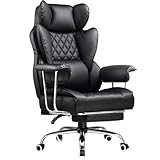
Overview:
The COMHOMA Big and Tall Office Chair delivers surprising feature density at a competitive price point, supporting up to 300 pounds with amenities typically reserved for premium models. This chair targets budget-conscious buyers unwilling to sacrifice functionality for affordability.
What Makes It Stand Out:
The inclusion of an adjustable footrest and pocket spring lumbar support at this price tier defies market expectations. Metal armrest frames provide durability uncommon in budget chairs, while the 3D wrapping backrest with dual-layer foam offers sophisticated contouring. The 135-degree recline range and 10cm height adjustment accommodate users from 5'1" to 6'2", demonstrating remarkable versatility.
Value for Money:
Exceptional value proposition—footrests and spring lumbar systems usually command premium pricing. The BIFMA-certified base and SGS-tested gas lift provide certified safety assurance rarely found at this level. While material quality reflects the price, the feature-to-cost ratio remains unmatched.
Strengths and Weaknesses:
Strengths include outstanding affordability, included footrest, metal component reinforcement, quick assembly, and responsive customer service. Weaknesses involve the modest 300-pound capacity limiting true “big and tall” suitability, potential durability questions with intensive daily use, and less refined aesthetics compared to executive models.
Bottom Line:
Perfect for average to moderately large users seeking maximum features on a budget. The footrest and ergonomic adjustments punch well above the price class, though heavy users should verify capacity margins.
5. La-Z-Boy Delano Big & Tall Executive Office Chair, Ergonomic Mid-Back Body Pillow Lumbar Support, ComfortCore Memory Foam Cushion, Mahogany Wood Arms & Swivel Base, Bonded Leather, Chestnut Brown

Overview:
The La-Z-Boy Delano Big & Tall Executive Office Chair trades on iconic brand heritage and sophisticated aesthetics, supporting up to 350 pounds with mid-century inspired design elements. This chair positions itself as furniture that happens to have wheels rather than pure ergonomic equipment.
What Makes It Stand Out:
The mahogany wood armrests and base overlay immediately signal executive status, distinguishing it from generic black nylon alternatives. La-Z-Boy’s ComfortCore memory foam layering provides pressure relief that conventional foam cannot match, while the tailored bonded leather with double-stitching demonstrates furniture-grade craftsmanship. The gentle curves and sloping arms create a residential comfort aesthetic suitable for corner offices.
Value for Money:
Premium pricing reflects brand prestige and material upgrades rather than capacity or adjustability. The mahogany accents and La-Z-Boy engineering justify costs for design-conscious buyers, but functionally equivalent chairs cost significantly less. This purchases style and brand reassurance alongside seating.
Strengths and Weaknesses:
Strengths include prestigious brand name, sophisticated wood-trimmed design, quality memory foam cushioning, quiet dual casters for carpeted offices, and straightforward fingertip controls. Weaknesses involve the mid-back design providing less comprehensive support than high-back alternatives, limited recline functionality, 350-pound capacity restricting the heaviest users, and bonded leather durability concerns over time.
Bottom Line:
Optimal for executives prioritizing aesthetic sophistication and brand recognition. Those needing maximum weight capacity or advanced ergonomic support should look elsewhere, but style-conscious users will appreciate the furniture-quality detailing.
6. Sweetcrispy Big and Tall Office Desk Chair with Lumbar Support, 500lbs Heavy Duty Mesh Ergonomic Computer Chair with 4D Armrest and Wide Comfy Seat, Wheels for Adult

Overview: The Sweetcrispy Big and Tall Office Chair delivers exceptional support for users up to 500 pounds, positioning itself as a true heavyweight contender in ergonomic seating. With an extra-large seat measuring 22"D x 26.77"W and 4.33 inches thick, this chair prioritizes spacious comfort for larger body types.
What Makes It Stand Out: The 4D adjustable armrests provide unprecedented customization, moving in four directions to support various working positions. Unlike standard chairs, the adjustable lumbar support allows forward and backward control, targeting pressure relief precisely where needed. The three-stage SGS-certified cylinder and BIFIMA-approved metal base exceed typical safety standards.
Value for Money: Heavy-duty chairs often command premium prices, but this model justifies every dollar through commercial-grade metal construction and certifications that ensure longevity. Comparable chairs with 500lb capacity typically cost significantly more, making this an investment-grade piece at a mid-range price point.
Strengths and Weaknesses: Strengths include the highest-in-class 500lb weight capacity, breathable mesh fabric preventing heat buildup, waterfall seat edge promoting circulation, and robust metal components throughout. The 360° swivel and tilt tension control enhance versatility. Weaknesses include bulkiness that may overwhelm smaller workspaces and mesh material that lacks the plush feel some users prefer.
Bottom Line: For larger users requiring uncompromising support and durability, this chair delivers professional-grade performance. The 4D armrests and adjustable lumbar support make it a top-tier choice for heavy daily use.
7. Dowinx Big and Tall Office Chair with Pocket Spring Cushion,High Back Computer Gaming Chairs with Adjustable Armrests,Executive Desk Chairs with Lumbar Support and Footrest,PU Leather-Brown

Overview: The Dowinx Big and Tall Office Chair redefines office comfort by incorporating sofa-like pocket spring technology into a heavy-duty frame. Designed for extended sitting sessions, this chair features a dual-layer backrest that combines soft cushioning with structural support for users seeking premium comfort.
What Makes It Stand Out: The individual pocket spring seat cushion adapts independently to body contours, eliminating pressure points unlike standard foam cushions. The flexible 90-135° recline range accommodates both focused work and relaxed reading. Offering both PU leather and breathable tech cloth options allows customization for climate and aesthetic preferences.
Value for Money: While priced above basic office chairs, the spring cushion system and dual-layer construction mirror high-end sofa technology rarely seen in seating under $400. The one-year repair service adds peace of mind, making it a smart middle-ground investment between budget and luxury ergonomic chairs.
Strengths and Weaknesses: Strengths include superior seat comfort from pocket springs, versatile recline function, material choice flexibility, and robust construction for daily use. The double-layered backrest provides exceptional support. Weaknesses include a 400lb capacity that falls short of some competitors, and the chair’s substantial footprint may not suit compact offices. The armrest adjustment range could be more generous for taller users.
Bottom Line: This chair excels for users prioritizing seat comfort over maximum weight capacity. The sofa-like springs make it ideal for those spending 8+ hours seated daily.
8. GABRYLLY Ergonomic Office Chair, High Back Home Desk Chair with Headrest, Flip-Up Arms, 90-120° Tilt Lock and Wide Cushion, Big and Tall Mesh Chairs for Man Woman, Black Task Chair

Overview: The GABRYLLY Ergonomic Office Chair targets tall users between 5'5" and 6'2" with a 400-pound capacity mesh design. Its flip-up armrests and four-point support system create a versatile solution for home offices where space and breathability matter most.
What Makes It Stand Out: The 45° flip-up armrests allow the chair to slide completely under desks, maximizing floor space—a rarity in big-and-tall category. The three-year warranty significantly exceeds industry standards, demonstrating manufacturer confidence. Four dedicated support points for head, back, hips, and hands ensure comprehensive ergonomic coverage throughout the workday.
Value for Money: This chair punches above its weight class with premium features at a competitive price point. The extended warranty alone adds $50-75 of value compared to standard one-year coverage, while the space-saving design prevents costly office rearrangements.
Strengths and Weaknesses: Strengths include breathable mesh preventing overheating, flip-up arms for space efficiency, generous 400lb capacity, and quiet PU wheels safe for hardwood floors. The 90-120° recline lock provides adequate positioning options. Weaknesses include limited cushioning that may feel firm during initial use, and the recline range is narrower than lounging-focused competitors. The height range excludes users under 5'5".
Bottom Line: Perfect for space-conscious tall users wanting durability and warranty protection. The flip-up arms and mesh construction make it ideal for warm climates and compact offices.
9. COMHOMA Big and Tall Office Chair 400LBS Wide Ergonomic Gaming Chair with Deluxe Embossing Designed Leather with Foot Rest,150°Reclining Adjustable Armrests Pocket Spring Back Support and Pillow

Overview: The COMHOMA Big and Tall Office Chair merges gaming chair aesthetics with heavy-duty office functionality, supporting 400 pounds through its wingback design and pocket spring system. The embossed clover-pattern leather creates a bold statement piece for modern home offices seeking personality.
What Makes It Stand Out: The 150° recline range surpasses most office chairs, enabling near-horizontal resting positions when paired with the integrated footrest. The hugging wingback design provides lateral support uncommon in traditional task chairs. Deluxe embossing on scratch-resistant PU leather elevates visual appeal beyond standard black mesh options while maintaining professional credibility.
Value for Money: Gaming-style heavy-duty chairs typically carry 20-30% price premiums, but this model balances flair and function competitively. The included footrest and pocket spring lumbar support—features often sold separately—add significant value for users wanting all-in-one relaxation capability without premium pricing.
Strengths and Weaknesses: Strengths include deepest recline in its class, stylish embossed leather, built-in footrest, and wingback comfort. The pocket spring lumbar maintains support during extended use. Weaknesses include the 400lb capacity limiting the heaviest users, and the PU leather may retain heat during summer months. The wingback design restricts side movement slightly for active sitters.
Bottom Line: Ideal for buyers wanting gaming chair excitement with office-appropriate sophistication. The deep recline and footrest make it perfect for multitasking work-leisure environments.
10. EXCEBET Big and Tall Office Chair with Footrest, PU Leather High Back Executive Office Chair 400lbs, Ergonomic Computer Chairs Lumbar Support for Heavy People (Blue)

Overview: The EXCEBET Big and Tall Office Chair delivers executive sophistication with heavy-duty credentials, supporting 400 pounds through a spring-reinforced cushion and FSC-certified wood frame. The embossed PU leather and retractable footrest blend boardroom elegance with lounge-worthy comfort for demanding users.
What Makes It Stand Out: FSC certification for the wood frame demonstrates rare environmental responsibility in heavy-duty seating. The spring-infused high-density sponge cushion provides bounce and support unlike pure foam designs. Adjustable armrests with soft pads and a 135° recline with footrest create versatile positioning for both work and restorative breaks.
Value for Money: Executive-styled heavy-duty chairs often exceed $500, but this model offers premium materials and certifications at a mid-tier price. The SGS Class 4 cylinder and BIFMA-approved metal base ensure commercial-grade durability without luxury pricing, representing strong long-term value.
Strengths and Weaknesses: Strengths include eco-certified construction, plush spring cushion, stylish embossed leather, integrated footrest, and robust 400lb capacity. The generous seat accommodates cross-legged sitting comfortably. Weaknesses include PU leather’s potential heat retention and a 20-30 minute assembly time that’s longer than tool-free designs. The executive aesthetic may not suit casual home offices.
Bottom Line: Excellent choice for environmentally conscious buyers wanting executive looks with heavy-duty performance. The spring cushion and footrest make it ideal for long workdays requiring occasional recline.
Understanding the Unique Needs of Plus-Size Seating
Why Standard Office Chairs Fall Short
Standard office chairs are typically engineered and tested for users weighing up to 250 pounds, with seat dimensions based on average body measurements that haven’t been updated since the 1980s. The foam density in budget chairs often compresses permanently within weeks under heavier loads, creating pressure points that cut off circulation and cause hip and tailbone pain. Armrests mounted too close together force shoulders into unnatural positions, while narrow seat pans dig into thighs and restrict blood flow. Perhaps most critically, the pneumatic gas cylinders and tilt mechanisms aren’t designed for the cyclic loading patterns of plus-size users, leading to premature failure that can happen suddenly—and dangerously.
The Real Cost of Inadequate Support
The hidden expense of an inadequate chair extends far beyond the purchase price. Chronic back pain, sciatica, and pelvic misalignment from insufficient lumbar support can result in thousands of dollars in physical therapy or chiropractic care. Reduced productivity from constant discomfort and fatigue has a direct impact on your earning potential. A chair that breaks after a year creates a frustrating replacement cycle that costs more over time than investing in quality seating once. When you factor in the mental toll of feeling your furniture isn’t built for you, the true cost becomes impossible to ignore.
Weight Capacity: The Non-Negotiable Starting Point
Decoding Weight Ratings and Safety Margins
Weight capacity isn’t just a suggestion—it’s a critical safety specification determined by stress testing every component. A chair rated for 400 pounds should maintain structural integrity at that load for thousands of cycles, but smart buyers look for a 20-30% buffer above their body weight. This accounts for dynamic forces when you sit down quickly, lean back, or shift positions. In 2026, you’ll find chairs rated from 300 to 500+ pounds, but pay attention to whether the rating applies to the entire chair or just the base. Some manufacturers play games by rating the steel frame at 500 pounds while the casters and cylinder are only certified to 350.
BIFMA Standards vs. Real-World Performance
The Business and Institutional Furniture Manufacturers Association (BIFMA) sets the industry benchmark for testing, but their standard protocols simulate a 275-pound user. Some brands now undergo supplemental “big and tall” testing that far exceeds BIFMA minimums. Look for certifications like “BIFMA X5.11 for Large Occupant Seating” which specifically tests chairs for users up to 400 pounds. However, certification alone doesn’t guarantee comfort—it’s the starting line, not the finish line. The best manufacturers test their plus-size models with real users for months before release, collecting data on pressure distribution and wear patterns.
Critical Dimensions That Actually Matter
Seat Width and Depth: Room to Breathe
Forget the advertised “overall width”—what matters is the usable seat pan width between the armrest mounting points. Plus-size users typically need a minimum of 22 inches of clear seat width, with premium options offering 24-26 inches. Seat depth should accommodate your thigh length without pressing behind your knees; look for adjustable depth mechanisms that provide 20-22 inches of usable space. A waterfall seat edge (gently sloping downward) prevents painful pressure on the backs of your thighs and improves circulation during long sitting sessions.
Backrest Height and Width: Full Torso Support
A proper high-back chair for plus-size users should support the entire spine, from lumbar curve to upper thoracic region. Minimum backrest height of 30 inches ensures your shoulders don’t hang over the top, while width of 20+ inches prevents the feeling of being squeezed. Contoured designs that follow the natural S-curve of your spine are essential, but the contouring must be subtle enough to accommodate broader backs without creating pressure points at the shoulder blades.
Armrest Span and Adjustability
Fixed armrests are the enemy of comfort. Look for chairs where armrests adjust outward to create a span of at least 22-24 inches between them. Four-dimensional adjustability—height, width, depth, and angle—allows you to position support exactly where your elbows rest naturally. Pay attention to the armrest cap size; broader caps (at least 4x10 inches) distribute weight better and prevent painful pressure on the ulnar nerve.
Frame Construction and Material Integrity
The Truth About Star Bases and Casters
The five-star base bears the entire load, and material choice is critical. Nylon bases might be rated for high weight but develop stress fractures over time. Solid aluminum bases provide superior durability and typically carry the highest weight ratings. Casters deserve equal scrutiny—look for 60mm or larger wheels with reinforced steel axles and high-grade polyurethane treads. Cheap casters flatten under load, making the chair hard to roll and potentially damaging flooring. Some 2026 models feature load-sensitive casters that automatically adjust tension based on user weight.
Gas Lift Cylinder Specifications
The gas cylinder is the most common failure point in heavy-duty chairs. Class 4 cylinders are the minimum for plus-size users, but the best chairs now use Class 5 “heavy-duty” cylinders with thicker walls and nitrogen-charged pistons. Check the stroke length—premium cylinders offer 5+ inches of height adjustment to accommodate both standard and tall desks. Some advanced models include velocity-sensitive dampening that prevents the chair from dropping too quickly when you stand up, reducing wear on the mechanism.
Upholstery Options for Durability and Comfort
Mesh vs. Fabric vs. Leather: Performance Analysis
Each material has trade-offs for plus-size users. Mesh offers superior breathability but can stretch and sag under heavy weight, creating a hammock effect that misaligns your spine. Look for high-tensile mesh with integrated suspension systems, not just stretched fabric. Traditional fabric upholstery with high-density foam (at least 2.5 lbs/cu ft) provides consistent support but can retain heat. Genuine leather or premium vegan leather offers durability and easy cleaning but requires perforation or ventilation channels to prevent sweating. In 2026, hybrid designs combine mesh backs with padded fabric seats for the best of both worlds.
Breathability and Heat Management
Heat buildup isn’t just uncomfortable—it accelerates foam degradation and creates hygiene issues. Advanced chairs now feature phase-change materials (PCMs) in the seat foam that absorb and dissipate heat. Ventilated backrests with strategic airflow channels keep your core temperature regulated. Some premium models incorporate silver-ion antimicrobial treatments in the upholstery to prevent odor-causing bacteria growth, a game-changer for chairs that see heavy daily use.
Ergonomic Adjustability Features
Lumbar Support Systems That Adapt
Static lumbar pillows are outdated technology. Modern plus-size chairs feature dynamic lumbar systems that automatically adjust depth and firmness based on your sitting position and weight distribution. Look for lumbar mechanisms with at least 2 inches of depth adjustment and independent height positioning. Some 2026 models use pneumatic lumbar bladders that you can fine-tune like a blood pressure cuff, providing customized support that changes with your body throughout the day.
Tilt Mechanisms and Recline Functionality
The tilt mechanism controls how the seat and backrest move together. Synchro-tilt (where the back reclines at a 2:1 ratio to the seat) is ideal for plus-size users because it prevents the seat from tilting too far back and creating instability. Look for tilt tension controls that actually work at higher weight ranges—some cheaper chairs’ tension springs max out before providing proper resistance. A tilt lock with multiple positions lets you find the perfect angle for different tasks, from upright typing to a relaxed reading position.
Armrest Customization for Optimal Positioning
Your arms account for roughly 10% of your body weight, and poorly positioned armrests translate that weight into shoulder and neck strain. Height adjustability is just the beginning. Width-adjustable armrests that slide in and out accommodate broader torsos, while pivoting caps support your forearms during tasks like mousing or writing. Some cutting-edge 2026 models feature load-compensating armrests that automatically adjust height based on how much weight you’re resting on them, maintaining perfect elbow alignment.
Warranty and Longevity Indicators
What a Strong Warranty Really Covers
A manufacturer’s warranty reveals their confidence in their product. For plus-size chairs, look for at least 5-year warranties on the frame and mechanisms, and 2-3 years on upholstery and foam. The best brands offer 10+ year warranties on structural components. Read the fine print carefully—some warranties are prorated, meaning coverage decreases over time. Others exclude “commercial use” or have weight limits buried in the terms that void coverage if exceeded. A true heavy-duty chair warranty won’t have these weasel clauses.
Red Flags in Fine Print
Be wary of warranties that require you to ship the chair back for service at your expense—this can cost hundreds of dollars. Look for manufacturers that send replacement parts with detailed DIY installation guides. Check whether the warranty covers “normal wear and tear” versus “defects”—the former is what actually happens to chairs. Also investigate the company’s reputation for honoring claims; some brands make warranty service so difficult that customers give up.
Budget Realities and Value Proposition
Investment vs. Replacement Cycle Math
A $1,200 heavy-duty chair that lasts 10 years costs $120 annually. A $300 chair that sags and breaks in 18 months costs $200 annually plus the hassle of replacement. When you factor in potential health costs from poor ergonomics, the expensive chair is often the cheaper option. In 2026, quality plus-size chairs start around $600 for reliable entry-level models, with premium options ranging from $1,000 to $2,500. The sweet spot for most users is $800-$1,200, where you get commercial-grade components without luxury pricing.
Hidden Costs of Budget Options
Cheap heavy-duty chairs cut corners where you can’t see them. They use lower-density foam that compresses permanently, thinner gauge steel in the frame, and plastic bushings instead of metal bearings in the tilt mechanism. These chairs often feel fine for the first month but deteriorate rapidly. The real hidden cost is your time spent researching replacements and the physical toll of subpar ergonomics. Budget chairs also rarely include white-glove delivery, leaving you to wrestle a 70-pound box up stairs and assemble dozens of components.
Where to Shop and Test in 2026
Online vs. In-Store: Mitigating Risk
The pandemic accelerated online furniture sales, but buying a plus-size chair sight-unseen remains risky. If purchasing online, prioritize retailers with 60+ day return policies and free return shipping. Look for detailed measurement diagrams and weight distribution charts—not just photos. Some innovative 2026 direct-to-consumer brands offer virtual fitting sessions where you video chat with an ergonomics specialist who assesses your needs. When possible, visit showrooms that specifically stock heavy-duty models; general office stores often don’t floor them. Sit in the chair for at least 20 minutes, shifting positions to test how it responds to your movement patterns.
Return Policies and Trial Periods
A 30-day trial is the industry minimum, but plus-size users need longer to assess true comfort. Foam break-in periods can take 2-3 weeks, and mechanism issues might not appear immediately. The best retailers now offer 90-120 day trials specifically for heavy-duty chairs. Understand the return condition requirements—some companies demand the chair be in “like new” condition with original packaging, which is unrealistic after a month of use. Look for brands that accept reasonable wear during trials and provide free pickup for returns.
Maintenance and Care for Extended Lifespan
Daily Habits That Preserve Your Investment
Simple routines dramatically extend chair life. Weekly vacuuming of upholstery prevents grit from acting like sandpaper on fabric fibers. Monthly checks of all bolts and fasteners catch loosening before it causes damage. Avoid using the armrests to lift yourself out of the chair—this stresses the mounting points. If you have hardwood floors, clean the casters monthly to remove hair and debris that forces the wheels to drag. For mesh backs, a soft brush prevents dust buildup that degrades the material.
When to Replace vs. Repair
Learn to recognize the warning signs of imminent failure. A gas cylinder that slowly sinks throughout the day is failing and should be replaced immediately—sudden drops can cause injury. Creaking or popping sounds from the tilt mechanism indicate worn bushings that will eventually seize. Upholstery tears larger than an inch will spread and should be repaired with upholstery tape or professional patching. Most quality chairs have modular designs allowing you to replace individual components, but when the frame shows stress cracks or the seat foam has compressed more than an inch, it’s time for a full replacement.
Common Buying Mistakes to Avoid
The “Good Enough” Trap
Many plus-size buyers settle for chairs rated exactly at their body weight, thinking it’s sufficient. This ignores dynamic loads and safety margins. Others choose chairs based on brand reputation for standard models, assuming the quality transfers to their heavy-duty line—it doesn’t always. Another common error is prioritizing aesthetics over ergonomics; that sleek leather executive chair might look impressive but lack the adjustability your body actually needs. Never buy a chair without checking the seat pan depth and width measurements against your own body dimensions.
Vanity Specs That Don’t Matter
Manufacturers love to tout impressive-sounding features that don’t improve comfort. “360-degree armrest rotation” sounds great but offers little practical benefit over 45-degree pivot. “Memory foam” is meaningless without density specifications—low-density memory foam fails faster than high-density conventional foam. “Reinforced stitching” is only valuable if it’s in stress areas; decorative double-stitching adds nothing. Focus on measurable specs: foam density (aim for 2.5+ lbs/cu ft), steel gauge (14-gauge or thicker), and cylinder class (Class 4 or 5).
Future Trends in Plus-Size Ergonomic Design
Smart Features and Weight-Sensing Technology
The chairs of 2026 are getting smarter. Integrated pressure sensors in the seat pan can alert you when you’ve been sitting too long in one position. Some models automatically adjust lumbar firmness throughout the day based on detected posture changes. Weight-sensing tilt mechanisms calibrate tension the moment you sit down, eliminating manual adjustment. While these features add cost, they represent genuine innovation rather than gimmickry. Look for chairs with simple, reliable smart functions rather than over-engineered apps that try to do everything.
Sustainable Materials and Inclusive Design
Environmental consciousness is reshaping heavy-duty chair manufacturing. Recycled ocean plastics are being engineered into high-strength base components. Bio-based foams derived from soy or castor oil offer performance matching petroleum-based materials. Modular designs that allow component upgrades rather than full replacement reduce waste. The most progressive brands now design chairs for a weight range from 150 to 500 pounds, creating truly inclusive seating that doesn’t segregate users into “standard” and “plus-size” categories. This universal design approach benefits everyone while normalizing diverse body types.
Frequently Asked Questions
What weight capacity should I actually look for if I weigh 350 pounds?
Aim for a chair rated for at least 450-500 pounds. This 30% safety margin accounts for dynamic forces when you sit down, lean back, or shift suddenly. It also ensures the foam and mechanisms won’t be operating at their maximum threshold, which accelerates wear. Remember that weight ratings are static measures, but real-world use involves constant movement and variable loading.
How do I measure myself to ensure a chair will fit comfortably?
Sit on a flat surface and measure your hip width at the widest point—add 2-3 inches for comfortable clearance. Measure your thigh length from the back of your glutes to the back of your knee; this is your minimum seat depth requirement. For backrest width, measure across your shoulders with arms relaxed at your sides. Always compare these numbers to the chair’s internal dimensions, not overall width which includes outer frames.
Are mesh chairs really suitable for plus-size users, or will they sag?
High-quality mesh chairs designed specifically for heavy use perform excellently, but cheap mesh will stretch permanently. Look for “high-tensile” or “suspension mesh” with integrated support structures. Premium brands use multi-layer mesh with different tension zones. Avoid chairs where the mesh is simply stretched over a frame without additional support. Test by pressing firmly with your hand—quality mesh should feel firm and spring back instantly without deforming.
What’s the ideal seat height range for a plus-size user?
This depends on your height and desk configuration, but generally you want a seat height range of 18-22 inches from floor to seat pan. Tall users (6'2" and above) may need chairs that extend to 24+ inches. The key is ensuring your feet rest flat on the floor with thighs parallel to the ground and elbows at 90 degrees when typing. Many heavy-duty chairs now offer extended-height cylinders for tall desk setups.
How long should a quality plus-size office chair last?
With proper care, a commercial-grade heavy-duty chair should last 8-12 years. The foam may soften slightly over time but shouldn’t compress permanently. Mechanisms should operate smoothly for the warranty period plus several years. Budget chairs might only last 1-3 years under heavy use. If you’re replacing chairs every two years, you’re spending more long-term than buying quality once.
Is it worth paying extra for 4D armrests?
For most plus-size users, yes. The width adjustment alone justifies the cost, preventing the armrests from squeezing your torso. Depth and pivot adjustments let you support your forearms during different tasks, reducing shoulder strain. However, if a chair has perfect seat dimensions and you don’t use armrests heavily, 3D (height, depth, width) may suffice. Avoid 2D armrests on a plus-size chair—they’re too limiting.
Can I replace components myself when they wear out?
Most quality heavy-duty chairs are designed for component replacement. Gas cylinders, casters, armrest pads, and even tilt mechanisms can typically be swapped with basic tools and manufacturer-provided instructions. This modular approach extends chair life and reduces waste. However, seat foam and upholstery usually require professional reupholstering. Check whether the manufacturer sells replacement parts directly—some restrict parts to authorized dealers.
What’s the difference between “big and tall” and “plus-size” chair designations?
“Big and tall” typically refers to chairs designed for users over 6'2" with proportional weight, focusing on extended seat height and backrest length. “Plus-size” chairs prioritize higher weight capacity and wider dimensions, though many users need both. The best chairs combine both approaches, but marketing terms are inconsistent. Always verify actual measurements and weight ratings rather than relying on category labels.
How do I know if a chair’s foam is high enough quality?
Ask for the foam density specification—aim for 2.5 pounds per cubic foot or higher. Press your hand into the seat; it should feel firm and spring back quickly without leaving an indentation. Sit for 20+ minutes and check if you feel the base board underneath. Quality foam may feel initially firm but breaks in slightly over 2-3 weeks. Avoid “plush” or “soft” descriptions in heavy-duty chairs; you need supportive, not squishy.
Are there any specific brands known for excellent plus-size warranties?
While we don’t recommend specific brands, look for manufacturers offering 10+ year warranties on structural components and 5+ years on mechanisms. The best warranties include in-home service for the first year and free replacement parts shipping throughout the coverage period. Read customer reviews specifically mentioning warranty claims—how easy was the process? Did the company honor claims without hassle? A warranty is only as good as the company’s reputation for standing behind it.
See Also
- 10 Best Office Chairs for Plus-Size Users with Wide Seats in 2026
- The 10 Ultimate Best Petite Office Chairs for Shorter Users in 2026
- The 10 Best Big and Tall Office Chairs for 400-lb Users in 2026
- The 10 Ultimate Best Petite Office Chairs for Users Under 5'4" in 2026
- How to Choose the 10 Best Office Chairs for Short People in 2026